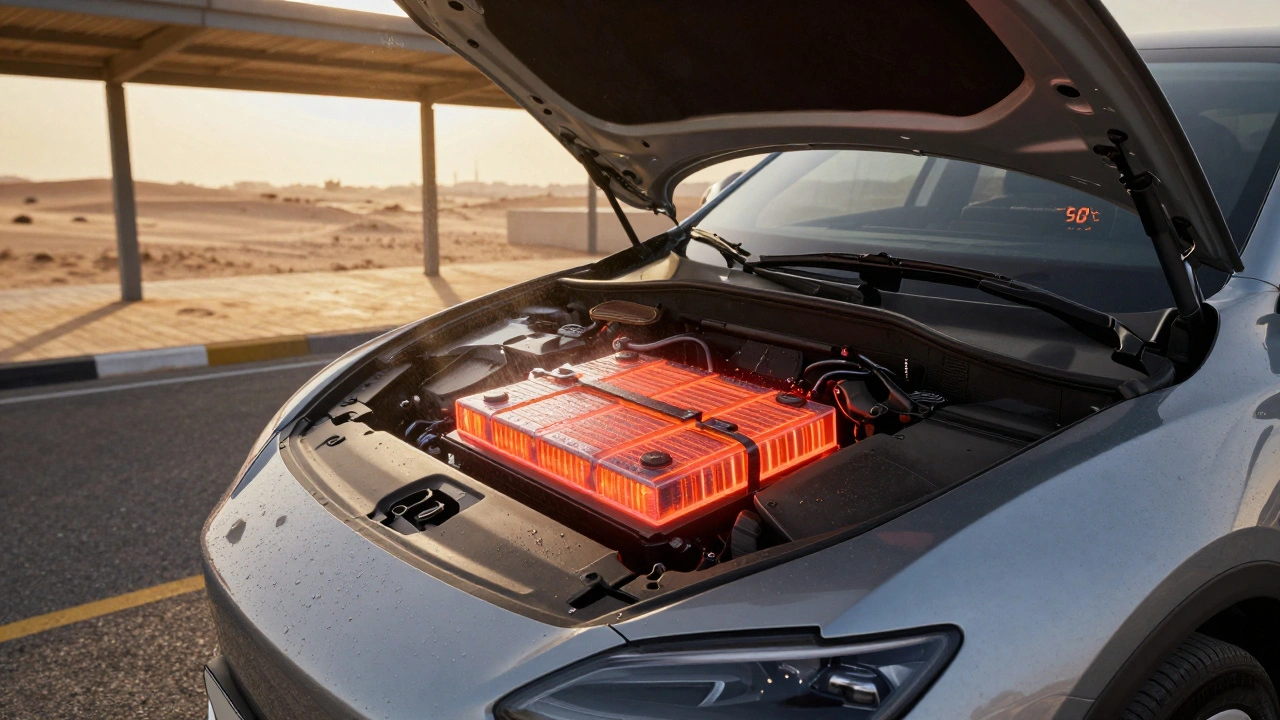
Driving a hybrid car in the UAE isn't like driving one in Portland or Toronto. The heat here doesn't just make you uncomfortable-it threatens the core systems that keep your hybrid running. When outside temperatures hit 50°C and your car sits on black asphalt for hours, your battery, cooling system, and engine are under siege. If you're not adjusting your maintenance routine, you're setting yourself up for expensive repairs-or worse, a breakdown in the middle of the desert.
Hybrid Battery: The Most Vulnerable Component
Your hybrid's battery isn't just a power source; it's the heart of the whole system. But in the UAE, heat kills batteries faster than anything else. High temperatures cause the electrolyte inside to evaporate and the internal plates to corrode. This isn't theory-it's what mechanics see every day. Most hybrid batteries in the UAE last only 2 to 3 years, compared to 5-8 years in cooler climates.
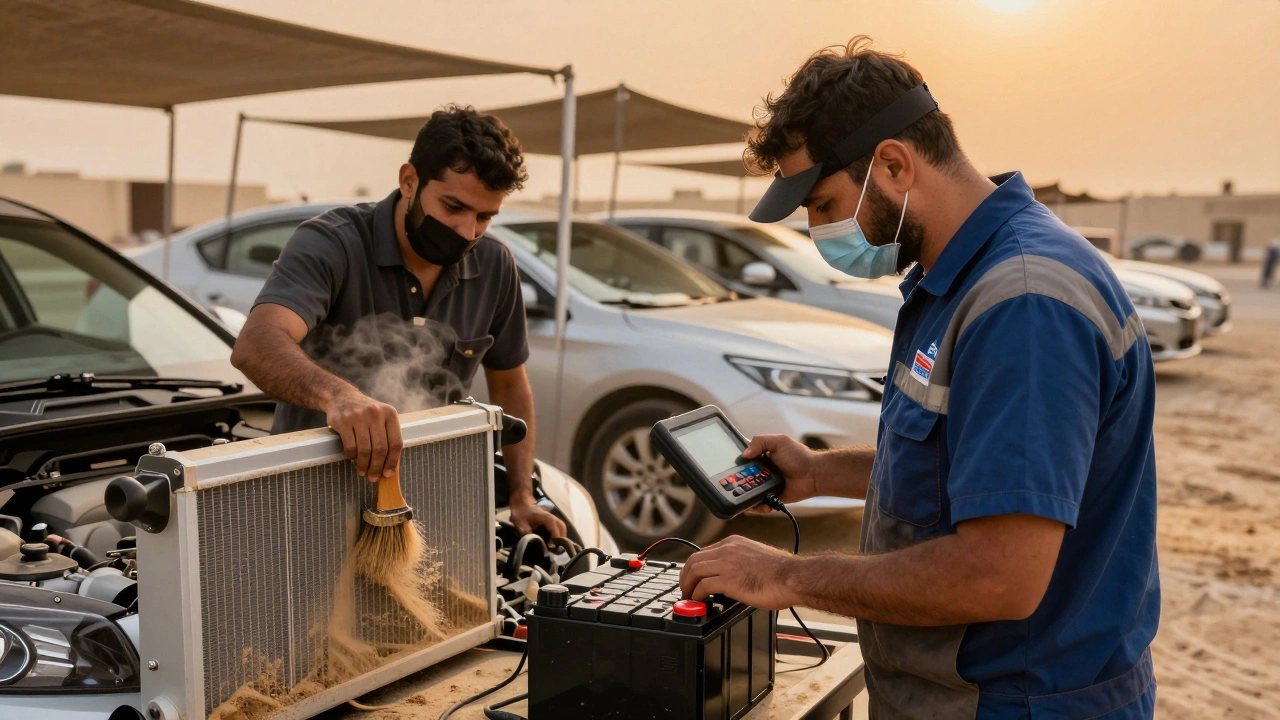
Don't wait for warning lights. Get your battery tested every 3-6 months during summer. A professional diagnostic will check its state of charge and state of health, not just voltage. If your battery is losing capacity, don't go cheap. Only use OEM (Original Equipment Manufacturer) replacements. Aftermarket batteries may save you money upfront, but they fail sooner and can damage other parts of your hybrid system.
Also, never charge your car during the hottest part of the day. Charging adds heat to an already overheated battery. If you can, park in a shaded garage or under a tree. Even a carport helps. Avoid parking on asphalt for long periods-heat radiates upward and cooks the underside of your vehicle.
Cooling System: Your Hybrid's Lifeline
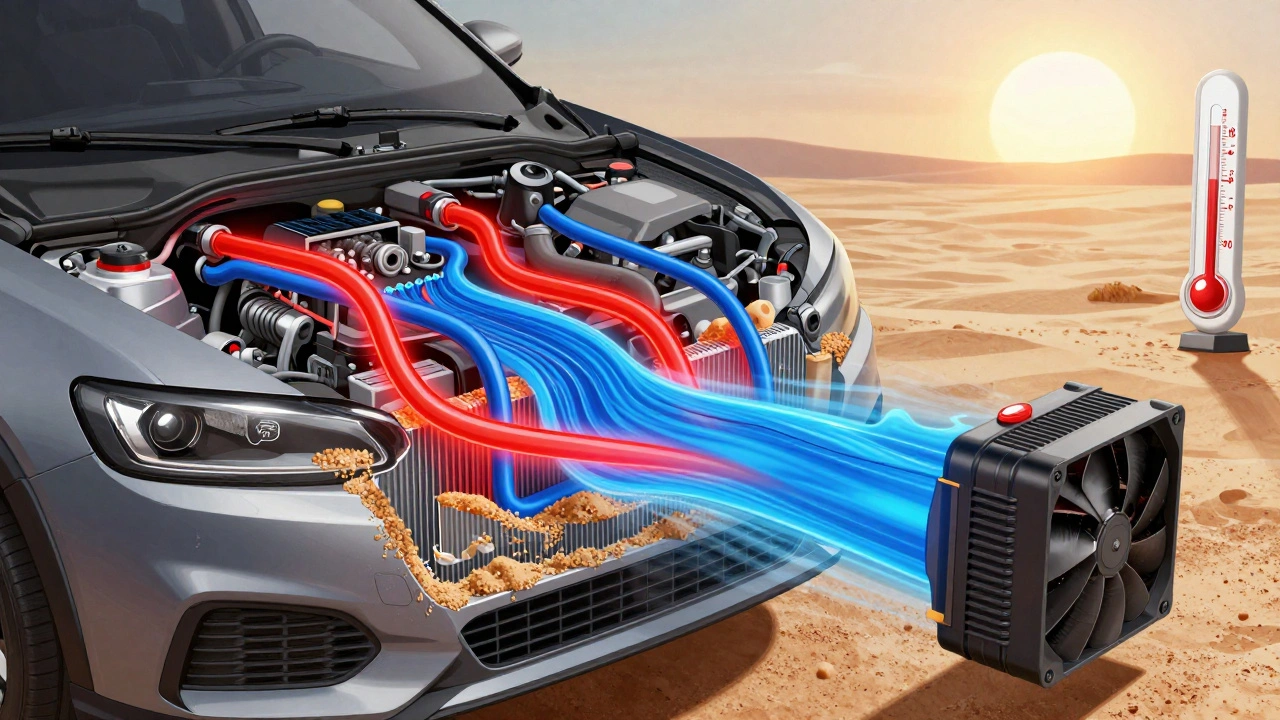
Your hybrid doesn't just have an engine cooling system-it has multiple cooling loops. One for the engine, one for the battery, and another for the inverter and electric motor. All of them are critical in UAE heat.
Check coolant levels every month. When the engine is cold, look at the expansion tank. If it's below the minimum line, top it up with the exact coolant type your manufacturer recommends. Never mix types. A 50/50 mix of coolant and water is standard unless your manual says otherwise.
Replace the coolant every 2 years. Heat breaks down coolant faster than you think. Old coolant doesn't transfer heat well, and that leads to overheating. While you're at it, have a pressure test done. Hairline leaks in hoses, water pump seals, or the radiator won't show up as drips, but they’ll cause your system to lose fluid over time. Replace brittle hoses and weak clamps-they fail suddenly in extreme heat.
Clean the radiator fins. Sand and dust from desert winds clog them like a clogged air filter. Use a soft brush and low-pressure water to gently rinse them. Don't use a pressure washer-it bends the delicate fins. Also, check that the cooling fans turn on when the engine warms up. If they don't, your system can't shed heat.
Engine Oil: Degradation Happens Fast
In the UAE, engine oil doesn't last 10,000 km. It degrades in half that time. Heat causes oil to oxidize, thin out, and lose its protective properties. Turbocharged engines, common in hybrids, suffer even more.
Change your oil every 5,000-7,500 km, or every 3-6 months-whichever comes first. Use full synthetic oil. It resists heat better than conventional or semi-synthetic. Check the oil level every 1,000-1,500 km during summer. High heat increases consumption, and running low can cause engine damage in minutes.
Don't forget the oil filter. Always replace it with every oil change. A clogged filter forces dirty oil through the engine, accelerating wear.
Air Filters: Sand Is the Enemy
Desert air doesn't just feel dry-it's full of fine sand. This stuff gets into everything. Your engine air filter can clog in as little as 5,000 km if you drive on unpaved roads or during sandstorms.
Inspect the air filter every month in peak summer. If it looks dirty, replace it. A clogged filter doesn't just hurt fuel economy-it increases intake temperature, which stresses the engine and reduces efficiency. The cabin filter matters too. If your AC smells musty or airflow is weak, the cabin filter is likely choked. Replace it every 10,000 km or sooner. Clean filters mean better cooling and less strain on the AC system.
Brakes: Regenerative Doesn't Mean Wear-Free
Many think hybrid brakes last forever because of regenerative braking. Not true in the UAE. Heavy traffic means frequent stops. And when you're braking hard in 45°C heat, brake pads wear faster.
Get your brakes inspected every 3-6 months. Look for uneven wear, thin pads, or warped rotors. Don't ignore squeaking or vibration-these are signs your system is overheating. Brake fluid absorbs moisture over time, and heat speeds up that process. Replace brake fluid every 2 years to prevent corrosion and loss of braking power.
AC System: It's Working Nonstop
In the UAE, your air conditioner runs 300+ days a year. That’s not normal anywhere else. The condenser-located at the front of the car-gets coated in dust and sand. When it's clogged, the AC can't release heat. That means it works harder, uses more energy, and eventually fails.
Have the AC system tested annually. A professional will check refrigerant levels, compressor function, and airflow. Clean the condenser fins with a soft brush and water. Replace the cabin filter at the same time. If your AC blows warm air after a long drive, it's not just the heat-it's a maintenance issue.
Tire Pressure: Heat Makes Air Expand
When the pavement hits 60°C, your tire pressure can jump by 5-8 PSI. Overinflated tires reduce grip, wear unevenly, and are more likely to blow out.
Check tire pressure every week-when the tires are cold. Use a reliable gauge. Don't trust the ones at gas stations. Inflate to the pressure listed on the driver’s door jamb, not the tire sidewall. Rotate tires every 10,000 km and get an alignment check once a year. Uneven wear in desert heat can lead to premature replacement.
What to Do Every Month (UAE Hybrid Maintenance Checklist)
- Check engine oil level
- Check coolant level (cold engine)
- Check tire pressure (cold tires)
- Inspect air filter for dust buildup
- Check cabin filter for odor or weak airflow
- Top up washer fluid
What to Do Every 3-6 Months
- Change engine oil and filter
- Test hybrid battery health
- Clean battery terminals (remove corrosion)
- Inspect brakes
- Replace cabin air filter if dirty
What to Do Annually
- Replace coolant
- Flush and replace brake fluid
- Test AC system performance
- Rotate tires and check alignment
- Inspect radiator, hoses, and cooling fans
Smart Driving Habits for UAE Heat
Good maintenance helps-but smart driving helps more.
- Avoid long drives between 11 a.m. and 4 p.m. when possible.
- Use parking shades or garage parking. Even a sunshade on the windshield makes a difference.
- Don't leave phones, energy drinks, or aerosols inside the car. Heat can make them explode.
- Let your car idle for 30 seconds after a long drive. This lets the cooling system keep working as the engine cools down.
Hybrid cars in the UAE aren't just cars-they're high-tech machines under extreme stress. The key to longevity isn't just following the manual. It's adapting to your environment. If you treat your hybrid like it's in a temperate climate, you'll pay for it later. Stay ahead. Check, clean, replace. Your wallet-and your battery-will thank you.
How often should I replace my hybrid battery in the UAE?
In the UAE, hybrid batteries typically last 2-3 years due to extreme heat accelerating degradation. This is much shorter than the 5-8 years seen in cooler climates. If your battery's charge capacity has dropped significantly, replace it with an OEM unit to ensure performance and safety.
Can I use regular coolant in my hybrid car in the UAE?
No. Always use the coolant type specified by your vehicle's manufacturer. Mixing coolants or using the wrong type can cause corrosion, blockages, or overheating. A 50/50 mix of coolant and distilled water is standard unless your manual says otherwise. Replace it every 2 years to maintain optimal heat transfer.
Why does my hybrid use more fuel in summer?
Several factors: Hot air is less dense, making the engine work harder. The AC runs constantly, pulling power from the battery. Clogged air filters and overheating systems reduce efficiency. Also, tire pressure rises in heat, increasing rolling resistance. Regular maintenance-oil changes, filter replacements, and tire checks-can restore lost fuel economy.
Should I park my hybrid in the shade even if it has a sunroof?
Yes. Sunroofs don’t block infrared heat-they let it in. The interior can reach 70°C in direct sun, stressing the battery, electronics, and upholstery. Parking in shade reduces cabin temperature by 15-20°C, which directly helps battery life and prevents dashboard cracking.
Is it safe to charge my hybrid overnight in the UAE?
It depends. Overnight charging is fine if temperatures drop below 35°C. But in summer, nighttime temps often stay above 30°C. If possible, charge between midnight and 5 a.m., when it's coolest. Avoid charging during the day or early evening. Always use a certified charger and never leave the car charging unattended for days.