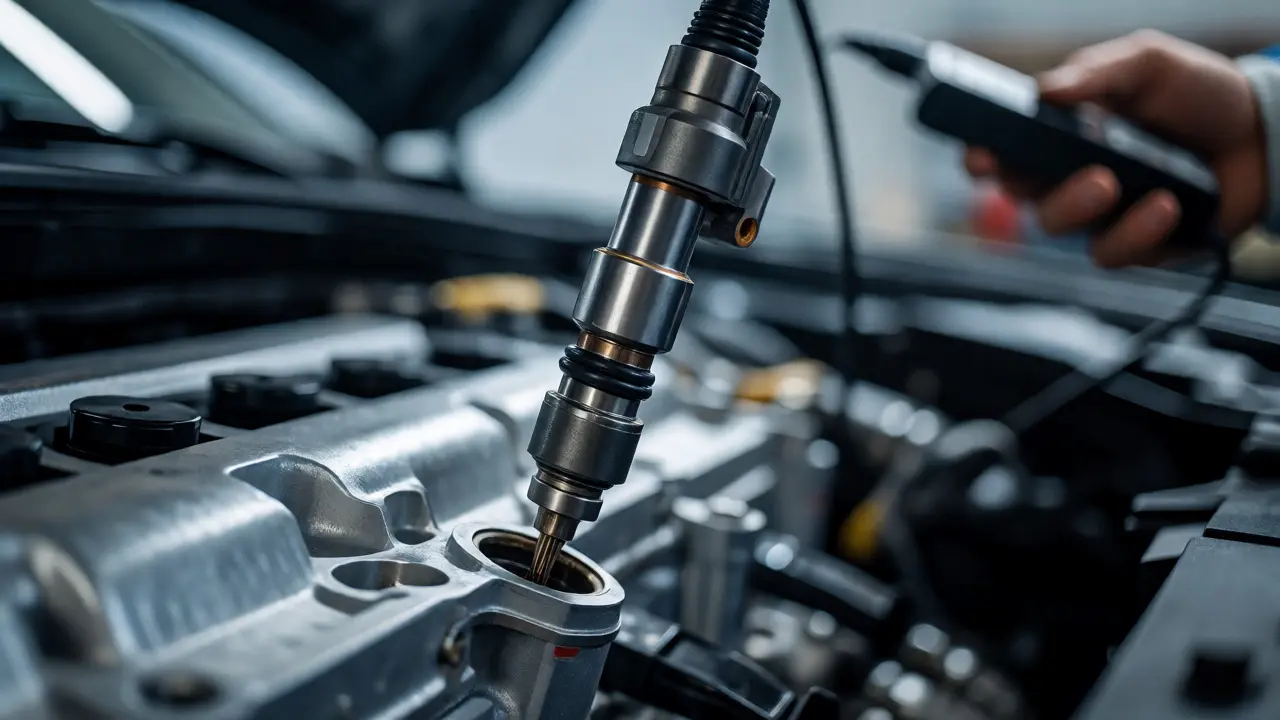
You just spent good money on new fuel injectors. They’re clean, they’re tested, and they look perfect. But when you fire up the engine, it’s rougher than before. Or maybe you swapped a used injector in because the old one failed, and now your check engine light is blinking like a disco ball at a club. Sound familiar? Here’s the hard truth: modern engines don’t just "accept" new parts anymore. They need to know exactly who is sitting in that cylinder.
This is where injector coding and ECU calibration come into play. It’s not magic; it’s data matching. If you skip this step, you’re essentially asking your car’s computer to guess how much fuel each injector delivers. And if there’s one thing cars hate, it’s guessing. Let’s break down why this process matters, how it actually works, and what happens when you ignore it.
Why Your Car Needs to Know Its Injectors
Think of your engine control unit (ECU) as a conductor in an orchestra. Each fuel injector is a musician. If the conductor doesn’t know which violinist plays slightly flat or which trumpet hits notes a millisecond late, the whole performance falls apart. In automotive terms, manufacturing tolerances mean no two injectors are identical. Even within the same brand and model batch, flow rates can vary by 1-3%. For a gasoline direct injection (GDI) or common rail diesel system, that variance is huge.
Fuel Injector Balance Rates are the metric mechanics use to monitor this consistency. When you install a new injector without coding it, the ECU assumes it behaves exactly like the old one. If the new part flows 5% more fuel, the ECU keeps injecting for the same duration, causing a rich mixture in that cylinder. You get smoke, poor mileage, and potential damage to the catalytic converter or diesel particulate filter (DPF). Coding tells the ECU, "Hey, this specific serial number has a unique correction factor." Now, the computer adjusts pulse width precisely for that unit.
The Difference Between Coding and Calibration
People often use these terms interchangeably, but they do different jobs. Getting them mixed up can lead to headaches when diagnosing issues.
- Injector Coding: This is about identity. Modern injectors have a QR code or barcode etched onto the body. This code contains specific data: flow rate curves, response time characteristics, and internal resistance values. When you scan this code with a diagnostic tool, you write these parameters directly into the ECU’s memory. It’s like giving the ECU the user manual for that specific part.
- Calibration: This is broader. It involves adjusting the overall map that controls fuel delivery across all cylinders. After coding, you might run a calibration routine where the engine idles and revs while the ECU learns the baseline behavior of the newly coded set. It fine-tunes the idle speed and base timing to accommodate the new hardware.
If you only calibrate without coding, you’re treating all injectors as generic replacements. If you code without calibrating, the ECU knows the specs but hasn’t learned the real-world interaction between the new parts and the rest of the engine. You usually need both for optimal results.
When Do You Actually Need to Code?
Not every repair requires a scanner and a laptop. If you’re driving a 2005 Honda Civic with port fuel injection, you probably don’t need to worry about this. The system is simpler and less sensitive to minor flow variances. However, if you own anything built after roughly 2010 with GDI, turbocharged engines, or any modern diesel, coding is mandatory.
| Engine Type | Coding Required? | Reason |
|---|---|---|
| Port Fuel Injection (PFI) | Rarely | Less precise pressure control; tolerant of small variances. |
| Gasoline Direct Injection (GDI) | Yes | High pressure (up to 3,000 psi); tiny errors cause big emissions spikes. |
| Common Rail Diesel | Absolutely | Extremely high pressure (up to 30,000+ psi); strict emission compliance. |
| Turbocharged Engines | Yes | Knock sensors and boost maps rely on precise fuel metering. |
Here’s a rule of thumb: If your owner’s manual mentions "fuel trim adaptation" or "injector learning," you need to code. Also, if you are replacing just one injector instead of the full set, coding is critical. A single new injector among three worn ones will stick out like a sore thumb unless the ECU compensates for its fresher, cleaner state.
The DIY vs. Pro Shop Debate
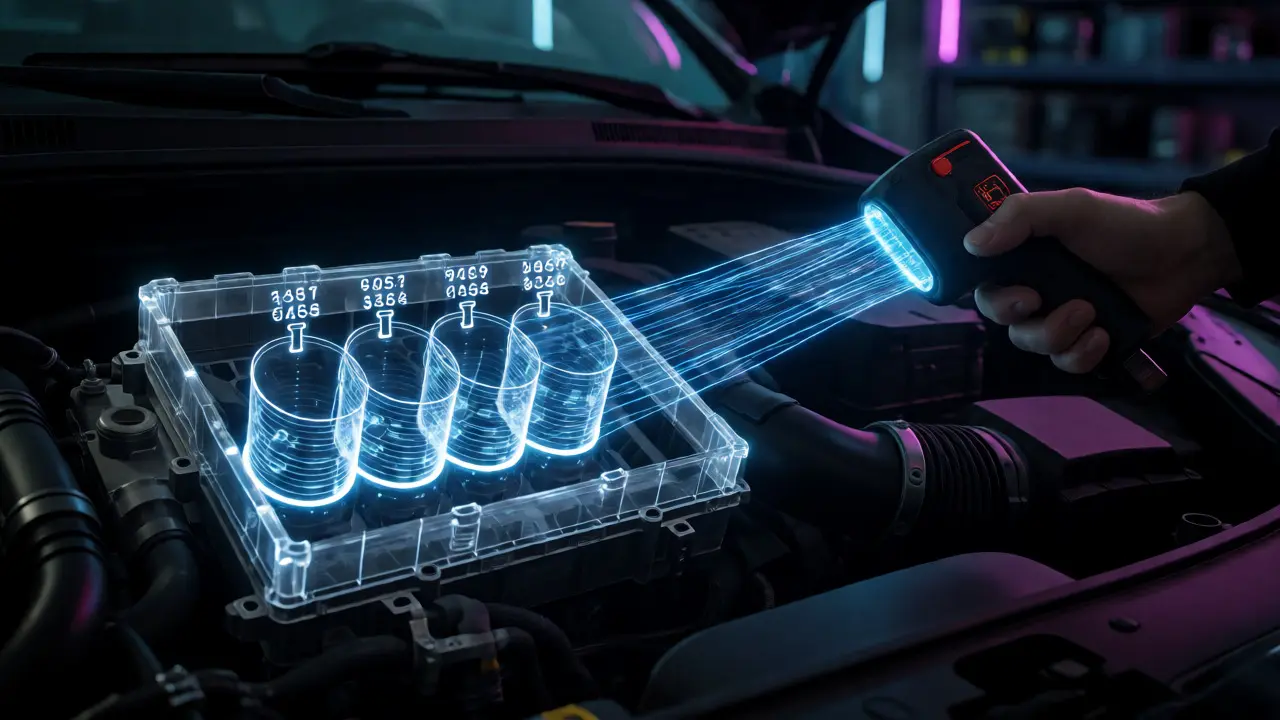
Can you do this yourself? Yes, but it depends on your gear. You can’t just use a basic OBDII reader from AutoZone. Those cheap scanners read codes; they don’t write them. To code injectors, you need a bidirectional scan tool capable of "writing" data to the ECU. Brands like Autel, Launch, or Snap-on offer tools that support this, but they cost anywhere from $300 to $1,500.
Furthermore, you need access to the manufacturer’s software database. Some brands, like BMW or Mercedes, require online authentication to download the correct calibration files. Others, like Ford, allow you to input the 16-digit code manually if you know where to find it. If you mess up the entry-say, typing a 'B' as an '8'-the engine will run poorly until you fix it.
Pro shops charge $75-$150 for this service. Is it worth it? If you only have one car and won’t use the tool again, yes. If you work on multiple vehicles or plan to swap turbos later, buying the tool pays for itself. Just make sure you back up the original ECU file before writing new data. If something goes wrong, you want a restore point.
What Happens If You Skip It?
Ignoring injector coding doesn’t always result in immediate failure. Sometimes, the car runs "okay" for months. But the hidden costs add up.
- Poor Fuel Economy: The ECU may enrich the mixture across all cylinders to compensate for one lean-running injector, wasting gas.
- Emissions Failures: Unbalanced combustion leads to higher hydrocarbons (HC) and nitrogen oxides (NOx). This is the #1 reason modified or repaired cars fail smog checks.
- DPF Clogging: In diesels, unburned fuel ends up in the exhaust, clogging the Diesel Particulate Filter. Replacing a DPF costs $2,000-$4,000. Coding costs $100.
- Catalytic Converter Damage: Rich mixtures overheat the cat, melting the honeycomb structure inside.
I’ve seen customers come in complaining of a "rough idle" after installing cheap aftermarket injectors. They assumed the parts were defective. In reality, the parts were fine, but the ECU was fighting them because it didn’t know their true flow characteristics. Once we coded them, the idle smoothed out instantly.

Step-by-Step: How the Process Works
Whether you’re doing it yourself or watching a tech, here is the typical workflow for a standard GDI vehicle:
- Install the Injectors: Ensure they are seated correctly with fresh O-rings. Torque to spec.
- Connect Scanner: Plug in a professional-grade bidirectional scanner.
- Select Function: Navigate to "Fuel System" > "Injector Coding" or "Write Injector IDs."
- Read Old Data: The tool asks if you want to clear old IDs. Say yes.
- Input New Codes: Scan the QR code on each new injector or type the alphanumeric string found on the top of the part.
- Write to ECU: Confirm the data transfer. Wait for the "Programming Complete" message. Do not turn off the ignition during this phase.
- Key Cycle: Turn the key off, wait 30 seconds, then start the engine.
- Verify: Check live data for "Fuel Trim" or "Balance Rates." They should be close to zero (within +/- 5%).
Final Thoughts on Long-Term Health
Modern engines are marvels of precision engineering, but they are also fragile regarding data integrity. Treating injector replacement as a simple mechanical swap is outdated thinking. The electronic handshake between the part and the brain is just as important as the physical fitment.
If you’re planning a DIY job, invest in the right knowledge and tools first. If you’re paying a shop, ask them explicitly: "Did you code the injectors?" If they look confused, walk away. Your engine’s smooth performance depends on that digital introduction being done right.
Do I need to code injectors if I buy OEM parts?
Yes. Even genuine Original Equipment Manufacturer (OEM) injectors have individual manufacturing tolerances. While they are closer to spec than aftermarket parts, they still differ slightly from the previous units. Coding ensures the ECU accounts for these micro-variations for peak efficiency.
Can I drive my car without coding the injectors?
You can drive it, but it’s not recommended. The car may run roughly, stall, or throw check engine lights. Long-term, you risk damaging expensive components like the catalytic converter or DPF due to improper fuel mixture. It’s a temporary workaround, not a solution.
What does error code P0201 mean in relation to coding?
P0201 indicates a circuit malfunction in Injector Cylinder 1. While often electrical, it can sometimes trigger if the ECU receives data for an injector ID that doesn't match the physical installation, confusing the driver module. Always check wiring first, but verify coding if the hardware seems intact.
Is injector coding the same as remapping?
No. Remapping changes the entire fuel and ignition strategy (e.g., increasing power). Coding simply updates the identification numbers so the stock factory program recognizes the new parts. You can code injectors without changing the car's power output.
How long does injector coding take?
With a proper scanner, the process takes 5-10 minutes per vehicle. The actual writing of data is fast, but navigating menus and verifying connections adds time. Professional shops usually include this in the labor time for injector replacement.