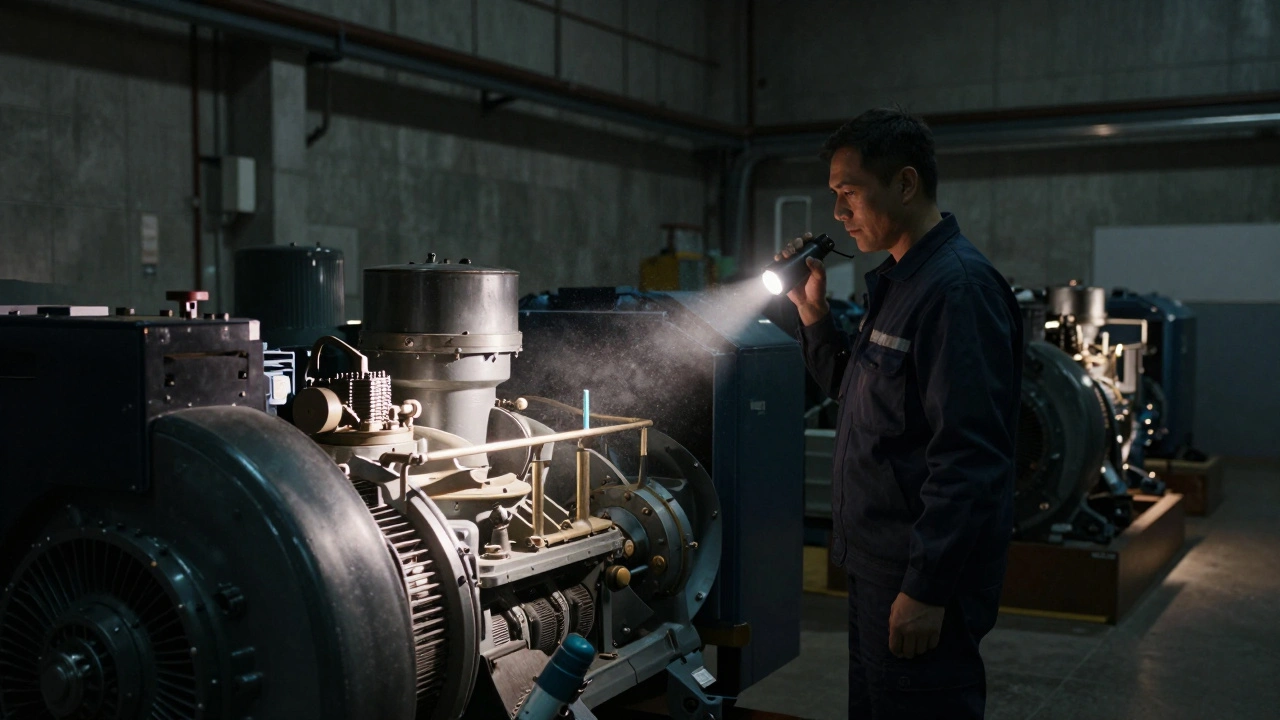
Have you ever booked a maintenance slot, only to get there and realize the work takes three times longer than expected? That feeling of watching the clock tick while you wait for the technician to finish is frustrating. In the world of industrial maintenance and fleet operations, guessing how long an inspection takes isn't just annoying-it's a financial risk. Getting the Inspection Time Estimate right means the difference between meeting your deadline and facing costly downtime.
The Foundation of Prediction
When we talk about estimating inspection time, we aren't just pulling numbers out of thin air. It starts with understanding the basics of failure rates. Think of it like predicting how often a car needs an oil change based on how hard you drive it. For large organizations, this gets mathematical. The Federal Railroad Administration (FRA) uses a formula to determine how frequently trains or similar units need checking. The core idea is calculating the failure rate by dividing the number of failed units found during an inspection (D) by the total population of units (N). That gives you R = D/N.
This might sound intimidating, but let's break it down. If you inspect 100 pieces of equipment and find 2 failing, your failure rate is 2%. Using this, you can predict when future failures will happen without needing to physically check every single bolt every day. The goal is to figure out the inspection interval-the gap between checks. If the math shows things fail quickly, you check more often. If they hold up well, you extend the timeline.
One tricky part is the transition phase. When you move to a new inspection schedule, you don't switch overnight for everyone. There's a "phase-in" period. Usually, the whole process happens within two full cycles of the new interval. Imagine moving from annual checks to semi-annual ones. You don't stop checking halfway through the year; you ramp up the frequency gradually across the entire fleet to manage labor costs and appointment availability smoothly.
Handling Specific Equipment Needs
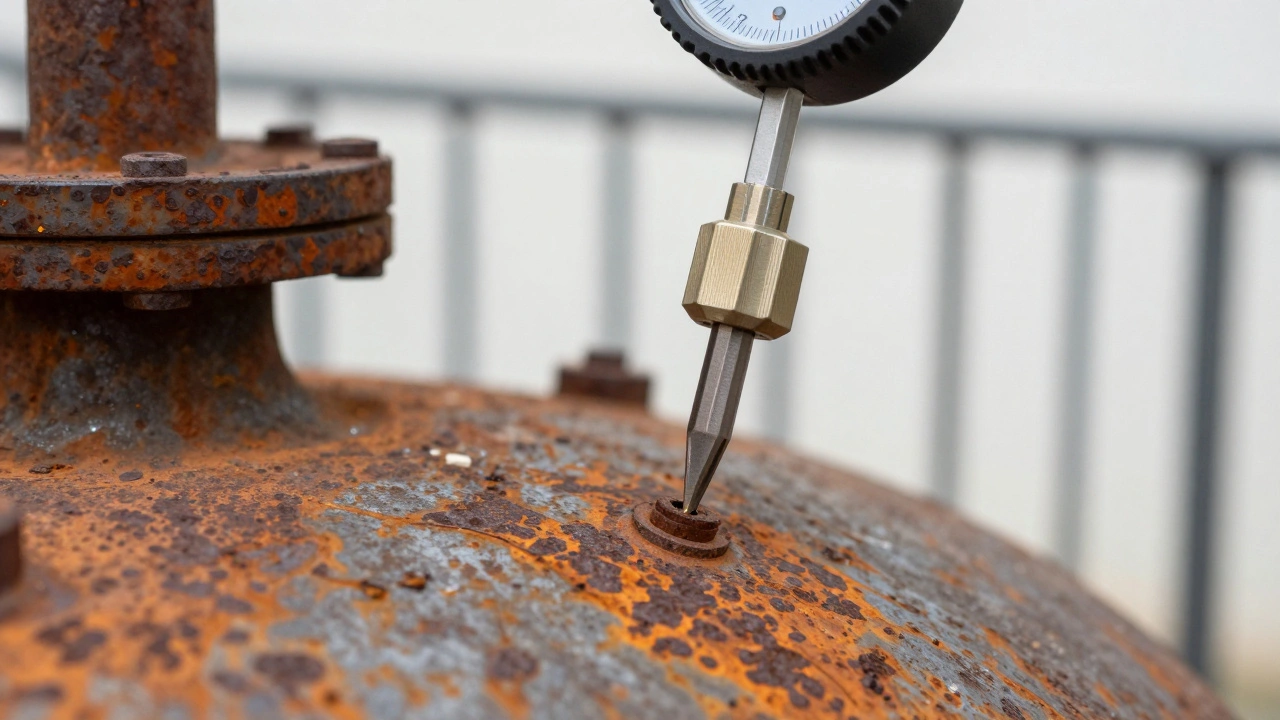
Different assets age differently. A metal pipe corrodes faster than a rubber seal. For specialized gear like pressure vessels, we look at Corrosion Rate. Industries often rely on standards like API 510 to dictate how thick walls need to stay before a replacement becomes mandatory. The calculation for the next inspection date depends heavily on remaining life. We subtract the renewal wall thickness from the current thickness to get the allowance. Then, divide that by the corrosion rate to see how many years of life are left.
To be safe, experts recommend applying an "interval factor." A common practice is multiplying the remaining life by 0.5. Why half? Because it builds in a safety buffer. If the math says a tank has 10 years left, don't schedule the next check for year 10. Schedule it for year 5. This conservative approach prevents surprises. If conditions worsen-say, humidity spikes in the storage area-you still have a margin before the equipment actually breaches safety limits.
We also have specialized calculators for this now. Instead of doing math on napkins, you can input current thickness and last inspection dates into a tool that spits out the Next Inspection Date. These tools automate the API recommendations and help standardize your scheduling. They take the guesswork out of tracking thousands of different asset types.
Project Planning Methods for Inspections
Sometimes an inspection isn't just one task; it's a complex sequence. This is where project management techniques come into play. One powerful method is the Critical Path Method (CPM). Think of it as mapping out a domino effect. Some tasks must finish before others start. The forward pass calculation helps you find the earliest an inspection can end (EF = Earliest Start + duration). The backward pass tells you the latest you can start without delaying the overall project.
| Method | Best For | Complexity Level | Accuracy Potential |
|---|---|---|---|
| Critical Path Method | Multi-step projects | High | Very High |
| Three-Point Estimation | Uncertain variables | Medium | Medium-High |
| Parametric Estimation | Large populations | Low-Medium | High (statistically) |
| Bottom-Up | Detailed tasks | High | High |
Another vital tool is Three-Point Estimation. Instead of saying an inspection takes exactly four hours, you define three scenarios. You ask yourself: What's the best case? (Optimistic). What's normal? (Most Likely). And what goes wrong? (Pessimistic). Then you average them out. This accounts for the reality that sometimes the technician finds something unexpected, causing the appointment duration to stretch. By planning for the "pessimistic" scenario, your customers aren't kept waiting longer than necessary, and your team doesn't burn out working overtime constantly.
There are two main ways to gather this data: bottom-up and top-down. Bottom-up means breaking a big job into tiny parts-checking a bolt here, testing voltage there-and adding the times together. Top-down looks at historical data. If similar inspections took three months last year, you start there and adjust for inflation or efficiency gains. Parametric Estimation uses this historical ratio method heavily. It works great for large fleets where statistical averages smooth out individual anomalies.
Managing Wait Times and Scheduling
Estimating how long the inspection takes is only half the battle. The other half is the actual appointment slot and the wait time before the technician arrives. Organizations track this by measuring hours spent managing inspections per week against staff capacity. If you book ten slots but only have enough hands for six, the wait times skyrocket.
Consider the logistics of a real-world scenario. You book a Tuesday morning slot for a pressure vessel check. The technician arrives. They have to set up calibration gear, which takes 30 minutes. The actual visual scan takes an hour. The reporting takes another hour. Plus, travel time. If you didn't account for the 30-minute setup in your "appointment duration," that extra hour spills over into the client's next scheduled task, causing a ripple effect of delays.
Avoiding this requires distinct approaches for immediate duration versus long-term intervals. The immediate duration relies on complexity and resources. How many people do you need on-site? Do they need special access permits? Long-term interval planning is about failure rates and degradation. Both need distinct calculations, but they must work together. If you schedule a return visit for 12 months later, that appointment duration must still be accurate so the calendar doesn't fill up prematurely with overestimated tasks.

Troubleshooting Common Errors
Even with the best formulas, errors happen. The FRA notes that their equations can be inaccurate in small populations. If you only have five machines to inspect instead of fifty, the math gets wobbly. Your best bet is to add a buffer. Don't trust the raw formula blindly when sample sizes are low.
Another common pitfall is ignoring "float" or slack time. In project management terms, float is how long a task can slip without hurting the finish date. If an inspection is on the critical path, zero slack means any delay kills the timeline. Identifying these dependencies helps you decide where to push back appointments without risking the project completion. Always review the float before finalizing the schedule.
How do I calculate the correct inspection interval?
Start by determining the failure rate of your units. Divide the number of failed units found by the total number inspected. Use this rate to project when failures will occur, then set your inspection interval slightly before that projected failure point, ideally using an interval factor of 0.5 for safety buffers.
What affects appointment duration the most?
Task complexity and resource availability are key. Factors like travel time, equipment setup, calibration requirements, and access restrictions significantly increase the time needed compared to the actual testing duration.
Is parametric estimation accurate for small fleets?
Not always. Parametric estimates work best with large populations where statistics stabilize results. For smaller groups of equipment, historical data might skew results, so use detailed bottom-up estimating or add larger safety margins.
Why use three-point estimation over a single guess?
Single guesses ignore uncertainty. Three-point estimation includes optimistic, realistic, and pessimistic scenarios. This provides a range that accounts for potential roadblocks like bad weather or unexpected mechanical issues.
What is the "interval factor"?
It's a multiplier applied to the calculated remaining life to schedule inspections conservatively. An industry standard is 0.5, meaning you inspect at half the predicted remaining life to ensure safety before equipment fails.
Final Thoughts on Scheduling Success
Mastering inspection time estimates is about blending math with practical experience. It isn't enough to just know the formula for corrosion rates; you need to understand the workflow of the technician holding the clipboard. Whether you are using software to crunch the numbers or using a manual approach with a spreadsheet, the goal remains the same: predictability. Accurate planning reduces the headache of waiting and ensures safety protocols are met without unnecessary panic. Stick to the methods, validate your assumptions regularly, and your appointment schedules will run much smoother.