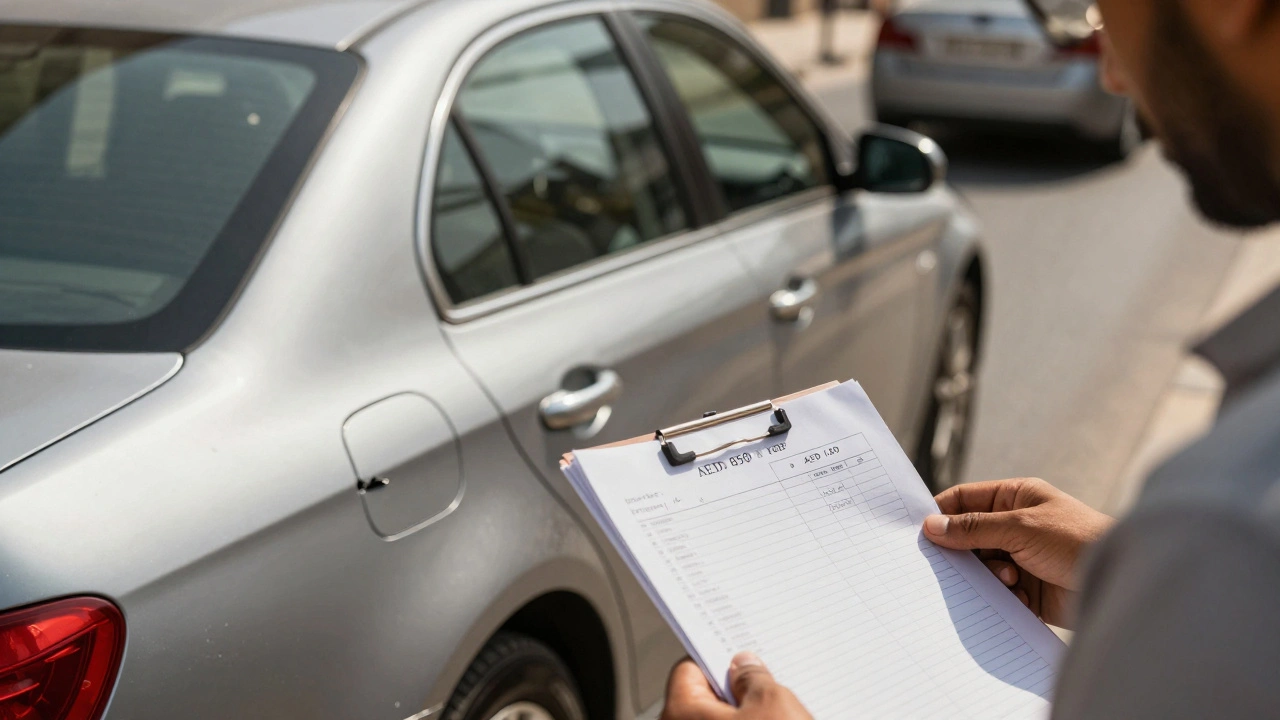
When your car gets dented or scratched in the UAE, the first thing you might think about is how much you’ll have to pay out of pocket to fix it. That’s where insurance excess comes in. It’s not a hidden fee or surprise charge-it’s a set amount you agreed to pay when you bought your policy. And if you don’t understand how it works, you could end up paying way more than you expected-even if you have full coverage.
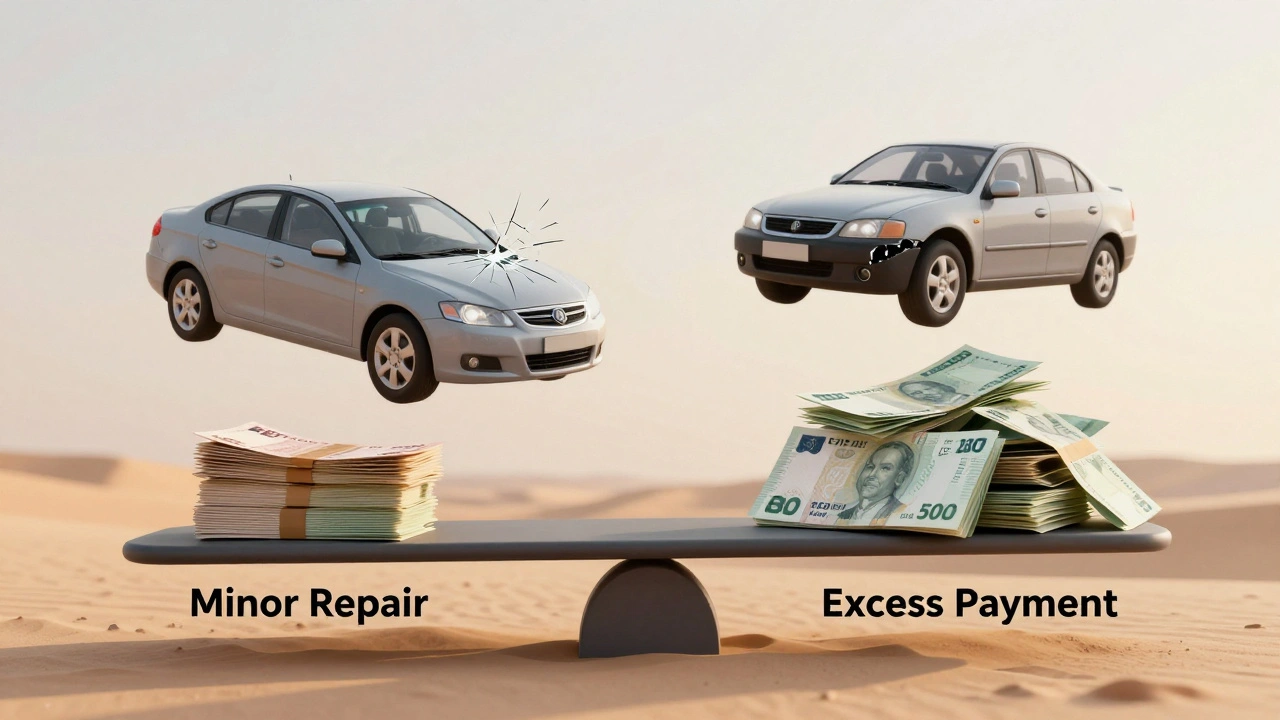
Let’s say you hit a pole and the repair bill comes to AED 1,800. You have a policy with AED 500 compulsory excess and AED 300 voluntary excess. That means you pay AED 800. The insurance company pays the rest: AED 1,000. Simple, right? But here’s the catch: if the damage is only AED 600, and your total excess is AED 800, you pay the full AED 600 yourself. No claim. No help from insurance. That’s because the repair cost is less than your excess. Many drivers don’t realize this until they’re standing at the garage with a bill they didn’t plan for.
What Is Insurance Excess, Really?
Insurance excess-sometimes called a deductible-is the amount you pay before your insurer starts covering repairs. In the UAE, it’s not optional. Every comprehensive car insurance policy includes a mandatory minimum, called compulsory excess. This amount is set by the insurer based on your risk profile. Young drivers, new license holders, or those with past claims usually pay more. Drivers with clean records and older, less expensive cars often pay less.
The average compulsory excess in the UAE ranges from AED 350 to AED 1,500. But it’s not random. Insurers look at your age, driving history, vehicle value, and even where you live. If you drive a BMW 7 Series in Dubai Marina, your excess will be higher than someone driving a Toyota Corolla in Sharjah. There’s no negotiation. You can’t walk into an office and ask to lower it mid-policy. It’s locked in when you sign up.
Voluntary Excess: Pay Less Now, Pay More Later
Here’s where things get tricky. Most insurers let you choose a voluntary excess-an extra amount you agree to pay on top of the compulsory one. Why would you do that? Because it lowers your monthly premium. If you pick a voluntary excess of AED 1,000, your annual premium might drop by 15-25%. Sounds great, right?
But here’s the trade-off: if you ever need to make a claim, you’re on the hook for both amounts. So if your compulsory excess is AED 600 and you added AED 1,000 voluntary, your total excess is AED 1,600. That means any repair under that amount? You pay it all. No claim. No help.
Think of it like this: if you rarely drive, rarely get into accidents, and can afford to pay AED 1,600 if something happens, then going high on voluntary excess makes sense. But if you drive daily in heavy traffic, park on the street, or live in an area with lots of road debris? A high voluntary excess could leave you stranded when you need help the most.
When Does Excess Apply to Body Repair?
Excess kicks in only when you file a claim under your comprehensive insurance. That covers:
- Accidents where you’re at fault
- Damage from theft or attempted theft
- Fire, flood, or falling objects
- Hit-and-run incidents (if you can’t identify the driver)
It doesn’t apply to third-party liability claims. If you hit someone else’s car and they file a claim against you, your liability insurance covers their repairs up to AED 250,000-500,000. But if their car is worth AED 1 million and you only have AED 500,000 coverage? You pay the rest out of pocket-no excess involved. That’s a different kind of risk.
For your own car’s body damage, excess is always applied. Even if you’re not at fault, if you use your own insurance to fix your car (because the other driver is uninsured or disappeared), you still pay your excess. The only exception? If the other driver’s insurer accepts full responsibility and pays for your repairs directly. In that case, your insurer might waive your excess-but only if you provide proof and your policy allows it. Don’t assume it’ll happen. Always ask.

What You Need to File a Claim
Before your insurer pays a single dirham, you need documents. The UAE is strict about this.
- A police report (mandatory for all accidents involving injury, property damage, or if the other party is involved)
- A detailed repair estimate from an approved garage
- Proof of insurance and driver’s license
- Photos of the damage (if available)
The estimate must be in both Arabic and English. Many garages skip this, and then your claim gets delayed. Always confirm the garage is on your insurer’s approved list. If they’re not, you might pay upfront and struggle to get reimbursed.
Also, if the repair cost exceeds AED 5,000 (exact threshold varies by insurer), your insurer must notify the third-party insurer if another vehicle was involved. This adds days to the process. Plan ahead.
Excess Protection: Is It Worth It?
Some insurers offer excess protection as an add-on. For a small extra fee (usually AED 100-300 per year), they cover your entire excess amount if you make a claim. So if your excess is AED 1,200 and you get into an accident, you pay nothing. The excess protection policy pays it for you.
It sounds perfect. But here’s the catch: if you don’t make a claim all year, you paid AED 250 for nothing. That’s a pure loss. This coverage only makes sense if you’re a high-risk driver-someone with a history of claims, a new car, or who drives in high-accident zones like Dubai’s highways.
For most people, it’s not worth it. Instead, build your own emergency fund. Save AED 1,000-1,500 in a separate account. That’s cheaper than paying for excess protection, and you can use it for anything-not just car repairs.
Special Cases: Windshields and Claim-Free Discounts
Windshield damage is different. The UAE gets sandstorms, flying debris, and rocks kicked up by trucks. Many insurers offer free windshield replacement with no excess. That’s a big deal. A cracked windshield can cost AED 800-1,500. If your policy includes this, use it. Don’t pay out of pocket.
Also, if you go three full years without filing a claim, most insurers reduce your compulsory excess by 15%. That’s a real reward for safe driving. One driver in Abu Dhabi dropped from AED 1,200 to AED 1,020 after three clean years. That’s AED 180 saved per claim. It adds up.
Repair Guarantees: What You Get After Paying Excess
Once you pay your excess and the insurer approves the repair, you’re not done. You need to know what you’re getting.
- Bodywork and paint: 12-month guarantee
- Mechanical repairs: 6-month guarantee
These aren’t optional. Approved garages must offer them. If they don’t, ask for another. You paid for the repair. You deserve quality work.
What Happens If the Repair Costs Less Than Your Excess?
This is the most overlooked scenario. If your total excess is AED 1,000 and the damage is AED 850, you pay the full AED 850. No claim. No insurance involvement. That’s why some drivers choose to fix minor dents themselves-using paint pens, dent pullers, or local body shops that charge AED 300-500. It’s cheaper than filing a claim and losing your no-claim discount.
But be careful. If you fix it yourself and later find hidden damage (like a bent frame), you can’t go back to your insurer. Once you pay and walk away, the claim is closed.
Final Advice: Know Your Numbers
Before you renew your policy, ask your insurer:
- What’s my compulsory excess?
- What’s my voluntary excess?
- What’s my total excess?
- Does my policy include free windshield replacement?
- Will my excess be reduced if I go claim-free?
Write these numbers down. Keep them in your phone. If you’re ever in an accident, you’ll know exactly how much you owe before you even get to the garage.
Insurance excess isn’t a trick. It’s a financial tool. Use it wisely. Don’t let low premiums blind you to high out-of-pocket costs. In the UAE, where road conditions and traffic are unpredictable, being prepared means avoiding big surprises when your car needs fixing.
Is insurance excess the same as a deductible in the UAE?
Yes. "Excess" is the term used in the UAE and most Commonwealth countries, while "deductible" is used in the US and some other markets. They mean the same thing: the amount you pay out of pocket before your insurance covers the rest.
Can I change my excess amount during my policy term?
No. Your compulsory excess is fixed for the entire policy period. You can only adjust your voluntary excess when you renew your policy. Some insurers may allow mid-term changes, but it’s rare and usually requires re-underwriting your risk profile.
What if I’m not at fault in an accident? Do I still pay excess?
If you use your own insurance to fix your car-even if you’re not at fault-you still pay your excess. But if the other driver’s insurer accepts full responsibility and pays for your repairs directly, your insurer may waive your excess. You must provide proof (police report, claim acceptance letter) and confirm this with your insurer before repairs begin.
Does excess apply to third-party claims?
No. Excess only applies to claims on your own comprehensive policy. If you damage someone else’s car, your third-party liability insurance covers their repairs up to your policy limit (AED 250,000-500,000). You don’t pay excess here-you might pay the difference if the damage exceeds your limit.
Can I avoid paying excess by fixing minor damage myself?
Yes. If the repair cost is less than your total excess, it’s often smarter to pay out of pocket. Filing a claim for small damage can raise your future premiums or reset your no-claim discount. For dents under AED 1,000, local body shops offer affordable fixes without involving insurance.