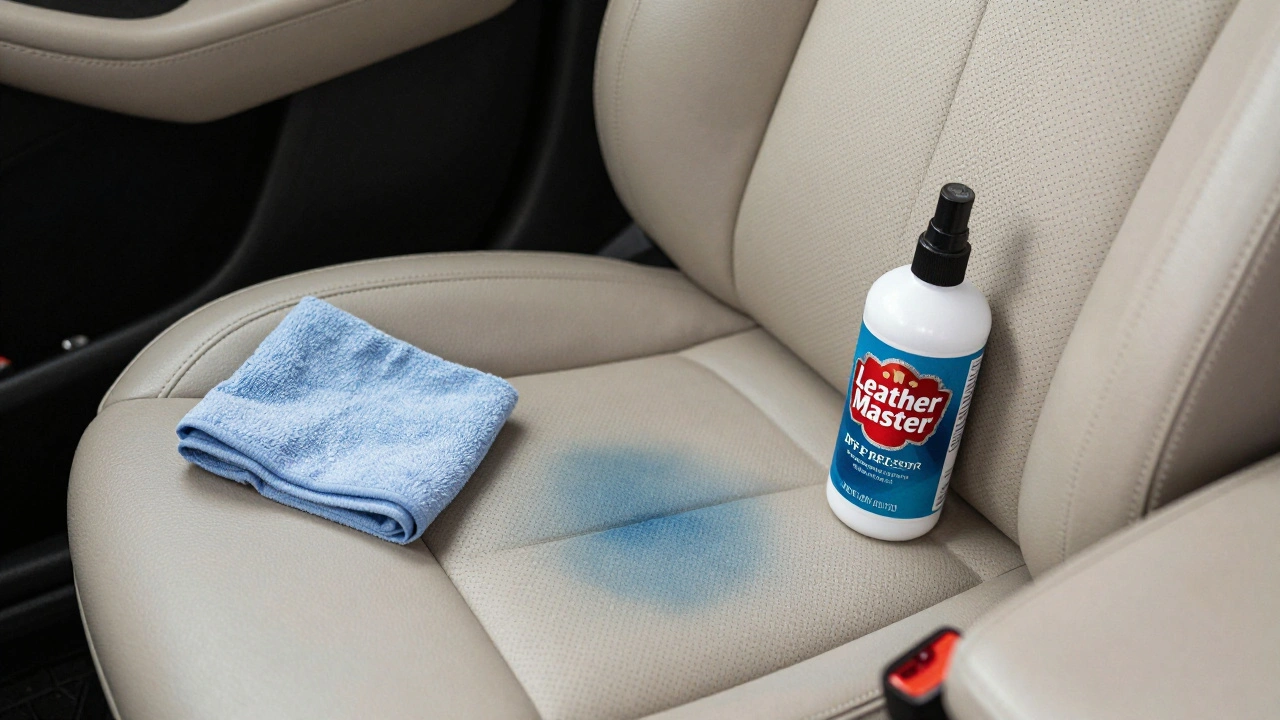
Light-colored leather car seats look luxurious-but they’re also magnets for blue dye from jeans, dark belts, and other fabrics. If you’ve ever sat down in your car after wearing new denim and noticed a bluish smear on the seat, you’re not alone. This isn’t just a stain-it’s leather dye transfer, and it gets worse the longer you ignore it.
Unlike regular dirt, dye transfer doesn’t wipe off with a damp cloth. The pigments from dark clothing bond with the leather’s surface coating, sinking in over time. The longer it sits, the harder it is to remove. A stain from yesterday’s jeans? Easy fix. A stain from last summer? You might need professional help.
Why Dye Transfer Happens on Light Leather
Light leather-especially aniline or semi-aniline types-has little to no protective coating. That makes it soft, breathable, and beautiful. But it also means it absorbs everything: body oils, sweat, and yes, dye from denim. The friction from sitting, shifting, and sliding against the seat acts like sandpaper, grinding the dye into the surface. Driver-side seats take the worst hit because they get the most contact with clothing.
Factory-applied sealants on protected leather offer some defense, but even those can break down over time due to heat, UV exposure, and repeated friction. Once the protective layer wears thin, dye slips right in.
The Four-Step Professional Removal Process
Professionals don’t guess. They follow a proven four-step system. Skip any step, and you risk making things worse-or leaving damage behind.
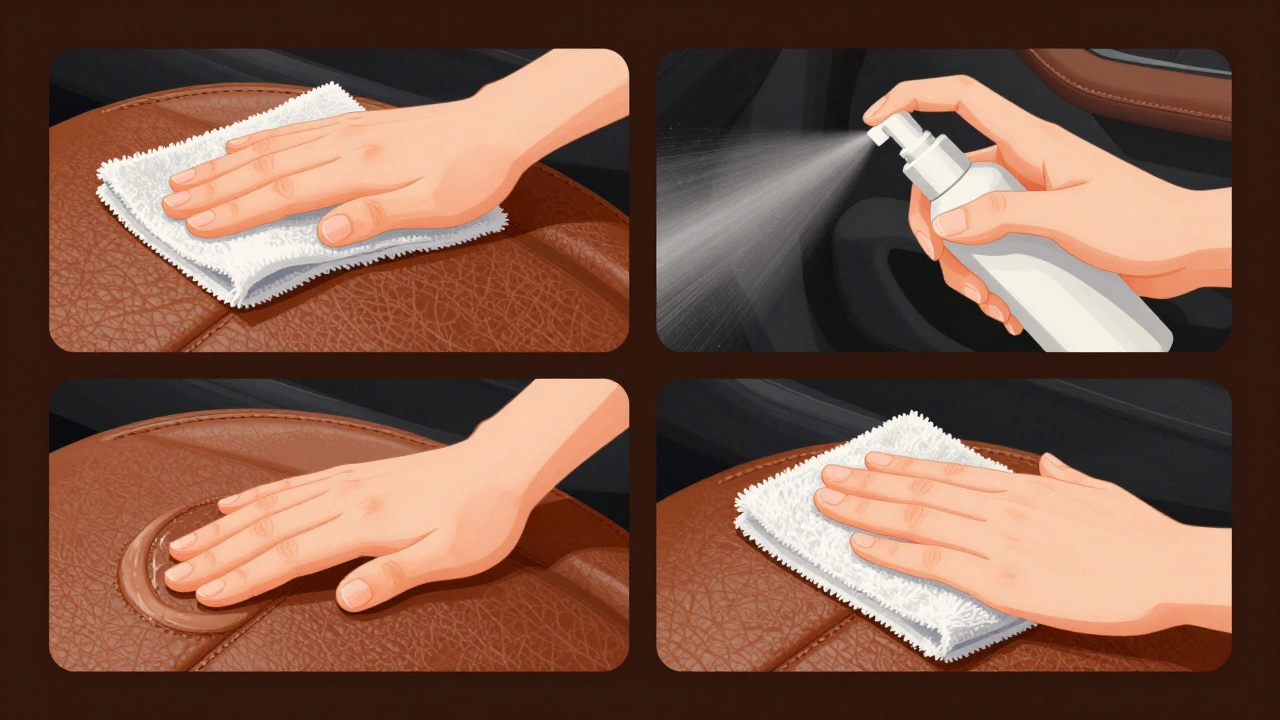
- Clean first-never skip this. Use a pH-balanced leather cleaner like Pinnacle Black Label Hide-Soft Leather Cleaner. This removes dirt, oils, and grime that block the dye remover from working. A dirty surface means the cleaner can’t penetrate. Apply with a microfiber towel, gently wipe, then let it dry completely.
- Apply dye transfer remover-this is where specialized products matter. Leather Master Dye Transfer Cleaner is designed specifically to break down pigment bonds without harming leather. Spray lightly onto a microfiber pad (never directly on leather), then gently work it into the stained area using circular motions. Don’t scrub hard. Let it sit for 2-3 minutes, then wipe away with a clean, dry towel.
- Condition-cleaning strips moisture. After removing the dye, apply Hide-Soft Leather Conditioner with bare hands. Massage it in slowly, letting it soak into the fibers. This restores flexibility and prevents cracking. Wait 15 minutes, then buff off excess with a clean cloth.
- Protect-this is the part most people skip. Apply Black Label Leather & Vinyl Coating using a microfiber applicator pad. One or two light sprays cover an entire seat. Let it cure for 24 hours. This creates a barrier that repels future dye, spills, and UV damage.
Done right, this process can restore seats to nearly new condition-even if the dye has been there for weeks. But if you wait months? The pigment may have bonded too deeply. At that point, you might need leather restoration, not just cleaning.
What NOT to Do
Every year, people ruin their leather trying to fix dye transfer with household products. Here’s what you should never use:
- All-purpose cleaners like 409 or Windex-they strip protective layers and leave leather dry and brittle.
- Magic Erasers-they’re melamine foam. They scrape off the top coating like sandpaper, leaving deep stains in creases.
- Alcohol or acetone-they dissolve the dye but also dissolve the leather’s finish. Permanent damage.
- Scouring pads or stiff brushes-they scratch the surface and create micro-tears where dye can hide.
One customer used a magic eraser on her driver’s seat after a denim stain appeared. It removed the blue-but left a dark gray shadow in the creases. She tried conditioner, then cleaner, then more eraser. Eventually, the leather cracked. She had to replace the entire seat.
DIY Alternatives? Proceed With Caution
Some DIY methods circulate online-like mixing baking soda, water, and mild soap. While this can work on very light stains, it’s inconsistent. Baking soda is abrasive. If you rub too hard, you’ll scratch the leather. And if the dye has been there more than a few days, it won’t budge.
YouTube tutorials show magic erasers and vinegar solutions working-but they rarely show the long-term damage. Those methods might look good for a week, then the leather starts to crack or fade. You’re trading short-term results for long-term cost.
Prevention Is Better Than Cure
The best way to avoid dye transfer? Stop it before it starts.
- Wait for new jeans to fade-wear them at least 3-5 times before sitting in light leather seats.
- Use a seat cover-a removable, washable cotton cover during high-risk times (like after laundry day) saves you headaches.
- Apply protective coating every 4-6 months-Black Label or Colourlock sealants create a durable shield. They’re invisible, non-sticky, and last longer than wax.
- Inspect weekly-check your driver’s seat every time you wash the car. Catching a faint blue tint early means you can fix it in 10 minutes.
For newer cars with perforated, heated, or cooled seats, use foam-based cleaners like Colourlock’s New Leather Kit. It doesn’t oversaturate the leather, which is crucial for avoiding moisture damage under the surface. Just spray, spread with a sponge, and let dry. No wiping needed.
When to Call a Professional
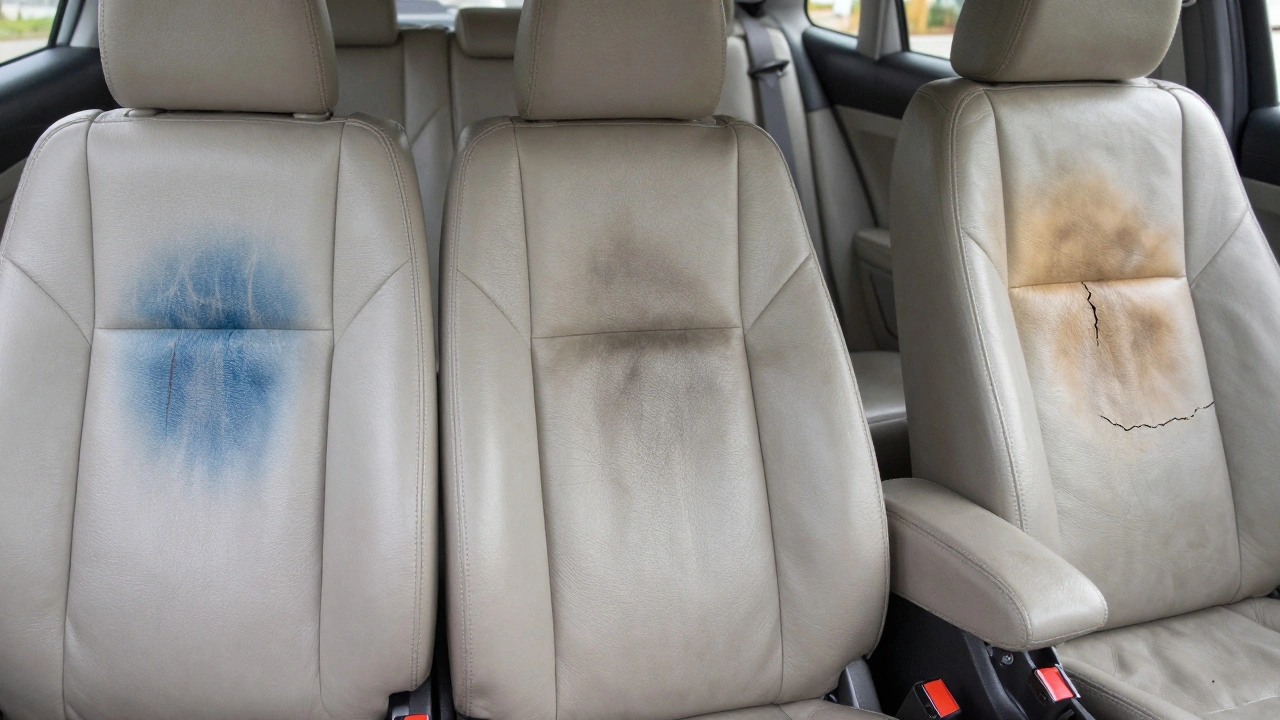
If you’ve tried the four-step method and the stain remains-if it’s deep in the creases, if the leather looks dull or cracked after cleaning, or if you’ve used the wrong product-stop. Don’t keep scrubbing.
Deep dye transfer can require leather re-dyeing or refinishing. That’s not a DIY job. A professional detailer has access to color-matched dyes, heat guns, and micro-sanding tools that restore leather without leaving visible patches.
Think of it like paint on a car: a scratch can be polished. A deep gouge? Needs repainting. Same with leather.
How Often Should You Maintain Light Leather?
Light leather in a daily driver needs attention every 4-6 months. Why? Because heat from sun, friction from clothing, and body oils add up. Even if you don’t see stains, the leather is slowly drying out and losing its protective layer.
High-end vehicles with light interiors (think BMW, Mercedes, Lexus) often come with factory maintenance schedules that include leather care. Follow them. It’s cheaper than replacing seats.
And don’t forget other surfaces: steering wheels, shift knobs, door panels, and dashboards get dye transfer too. A single application of Black Label Leather & Vinyl Coating protects all of them at once.
Final Thought: Speed Matters
Dye transfer isn’t a mystery. It’s a race between time and treatment. The faster you act, the better your results. A stain from yesterday? You can fix it yourself. A stain from three months ago? You might need help. A stain from six months? You’re looking at a costly repair.
Keep a small bottle of Leather Master Dye Transfer Cleaner and a microfiber pad in your glove box. When you notice a faint blue mark, grab it. Clean. Condition. Protect. Done in 15 minutes. No drama. No damage. Just a seat that still looks brand new.
Can I use baby wipes to remove leather dye transfer?
No. Baby wipes contain moisturizers and preservatives that can leave a residue on leather, attracting more dirt and potentially causing long-term discoloration. They’re not formulated to break down dye pigments and won’t remove the stain. Stick to professional-grade cleaners designed for automotive leather.
Does leather dye transfer happen on all types of leather?
It’s most common on light aniline and semi-aniline leathers because they have little to no protective coating. Protected leathers (with factory sealants) resist dye better, but they’re not immune. Over time, heat and friction wear down the coating, making dye transfer possible. Darker leathers show it less, but the transfer still occurs-it’s just harder to see.
Can I use vinegar and water to clean leather seats?
No. Vinegar is acidic and can break down the leather’s natural oils and protective layers. While it might lift some surface dye, it dries out the leather, leading to cracking and stiffness over time. Always use pH-balanced leather cleaners instead.
How long does it take for dye transfer to become permanent?
Dye transfer starts bonding within hours, but it becomes difficult to remove after 2-4 weeks. After 2-3 months, the pigment often sinks deep into the leather’s coating, requiring professional restoration. The sooner you treat it, the better your chances of full recovery.
Is it safe to use a steam cleaner on leather seats?
No. Steam cleaners use high heat and moisture, which can warp leather, loosen stitching, and damage perforated or heated seats. The moisture can also seep into the foam underneath, causing mold or mildew. Stick to dry or lightly damp cleaning methods with approved products.