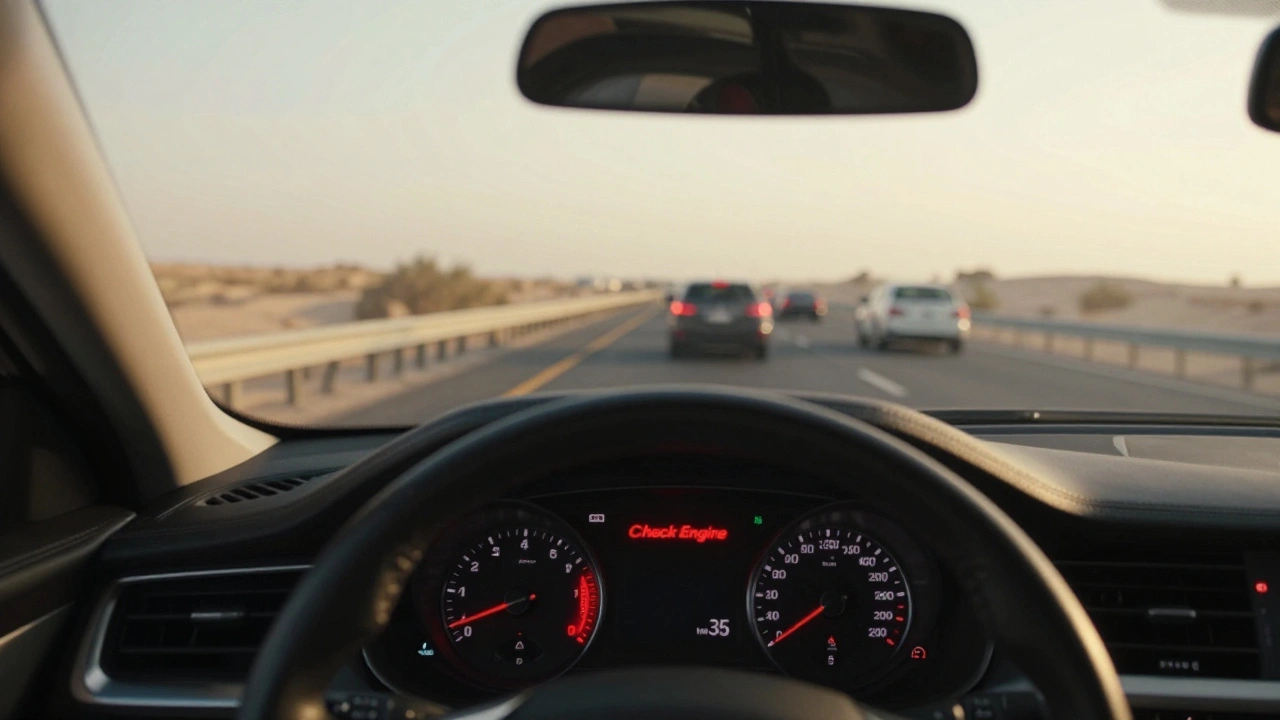
You're driving down the highway, maybe merging onto a busy lane, and suddenly your car feels like it's wading through mud. You press the gas pedal, but nothing happens. The speedometer hovers stubbornly around 35 mph, and no matter how hard you stomp on the accelerator, the engine won't rev past 2,000 or 3,000 RPM. Panic sets in. Is your engine about to blow? Did you just lose all power? Take a deep breath. Your car hasn't died. Instead, it has entered limp mode. This is not a random glitch; it is a deliberate safety feature designed by your vehicle's computer to keep you alive and save your engine from catastrophic damage. Understanding why this happens-and what to do next-is the difference between a minor repair bill and replacing an entire transmission.
What Exactly Is Limp Mode?
Limp mode, also known as "limp home mode," is a built-in protection strategy in modern vehicles. When the electronic control systems detect a serious fault in critical areas-like the engine, transmission, cooling system, or emissions controls-the computer deliberately limits engine power, caps engine speed, and often restricts transmission operation. Think of it as your car's version of a circuit breaker. If too much current flows, the breaker trips to prevent the house from burning down. Similarly, if sensors detect dangerous conditions-such as overheating, low oil pressure, or erratic sensor data-the Electronic Control Unit (ECU) cuts power to prevent those small issues from becoming expensive, irreversible failures. According to experts at Kelley Blue Book and the Royal Automobile Club, this mode allows you to drive slowly enough to reach a safe location or a repair shop, but not fast enough to destroy the vehicle. It typically caps road speed at roughly 35 mph and engine RPM between 2,000 and 3,000. Non-essential features, like air conditioning, are often disabled to reduce the load on the engine.
Why Does My Car Enter Limp Mode?
The ECU constantly monitors hundreds of data points. When readings fall outside predefined safe parameters, it triggers limp mode. Here are the most common culprits:
- Sensor Malfunctions: Modern cars rely on countless sensors for oxygen, throttle position, and airflow. If one fails or sends incorrect data, the computer assumes the worst and restricts power to be safe.
- Overheating: If the coolant level is low or the thermostat is stuck, engine temperatures can spike. Limp mode activates to reduce heat generation while you find a safe place to stop.
- Transmission Issues: Low transmission fluid, slipping gears, or solenoid failures can cause the transmission control module to lock the gearbox into a single gear (often second or third) to prevent mechanical seizure.
- Electrical Problems: Loose wiring, corroded connectors, or even a weak battery voltage can confuse the ECU. A drop in voltage might make the computer think a sensor has failed, triggering the safety protocol.
- Turbocharger Faults: In turbocharged engines, boost pressure must be precise. Leaks in the intake hoses or a faulty wastegate can cause overboost or underboost, prompting the ECU to cut power immediately to protect the engine block.
Signs Your Car Is in Limp Mode
You don't need a degree in automotive engineering to recognize when your car has gone into protection mode. The symptoms are distinct and usually happen simultaneously:
- Severe Power Loss: Acceleration becomes sluggish. Merging onto highways or climbing hills becomes nearly impossible.
- RPM Cap: The tachometer needle refuses to climb past a certain point, usually around 2,000-3,000 RPM, regardless of how hard you press the gas.
- Speed Limiting: Even with the pedal floored, the car struggles to exceed 30-35 mph.
- Gear Locking: Automatic transmissions may get stuck in one gear. You might notice the car jerking slightly or refusing to upshift or downshift naturally.
- Warning Lights: The Check Engine Light is almost always on. You may also see transmission warning lights or temperature gauges rising.
- Disabled Accessories: Your air conditioning might turn off automatically to reduce strain on the engine.

Immediate Steps: What To Do When Limp Mode Activates
Panic leads to bad decisions. If your car goes into limp mode while driving, follow these steps to ensure your safety and minimize further damage:
- Stay Calm and Signal: Don't slam on the brakes abruptly. Turn on your hazard lights to alert other drivers that you are moving slower than traffic flow.
- Move to Safety: Ease off the accelerator and steer toward the shoulder of the road or a safe parking area. Avoid stopping in active traffic lanes if possible.
- Turn Off the Engine: Once safely stopped, turn off the ignition. Wait at least 60 seconds. This acts like rebooting a computer, clearing temporary glitches in the system memory.
- Restart and Test: Start the car again. If the issue was transient (like a momentary voltage drop), the car may return to normal operation. Drive gently to see if power returns.
- Check Fluid Levels: If it's safe to do so, pop the hood. Check the engine oil, coolant, and transmission fluid levels. Low fluids are a frequent trigger for limp mode. Top them off if they are below the minimum mark.
DIY Checks vs. Professional Diagnosis
While some causes of limp mode are simple fixes, others require professional tools. Here is how to decide your next move.
| Action | Do It Yourself | Call a Mechanic |
|---|---|---|
| Check Fluid Levels | ✓ Yes (Oil, Coolant, Brake Fluid) | ✗ No |
| Inspect Air Filter | ✓ Yes (Replace if clogged) | ✗ No |
| Visual Wiring Check | ✓ Yes (Look for loose connectors) | ✗ No |
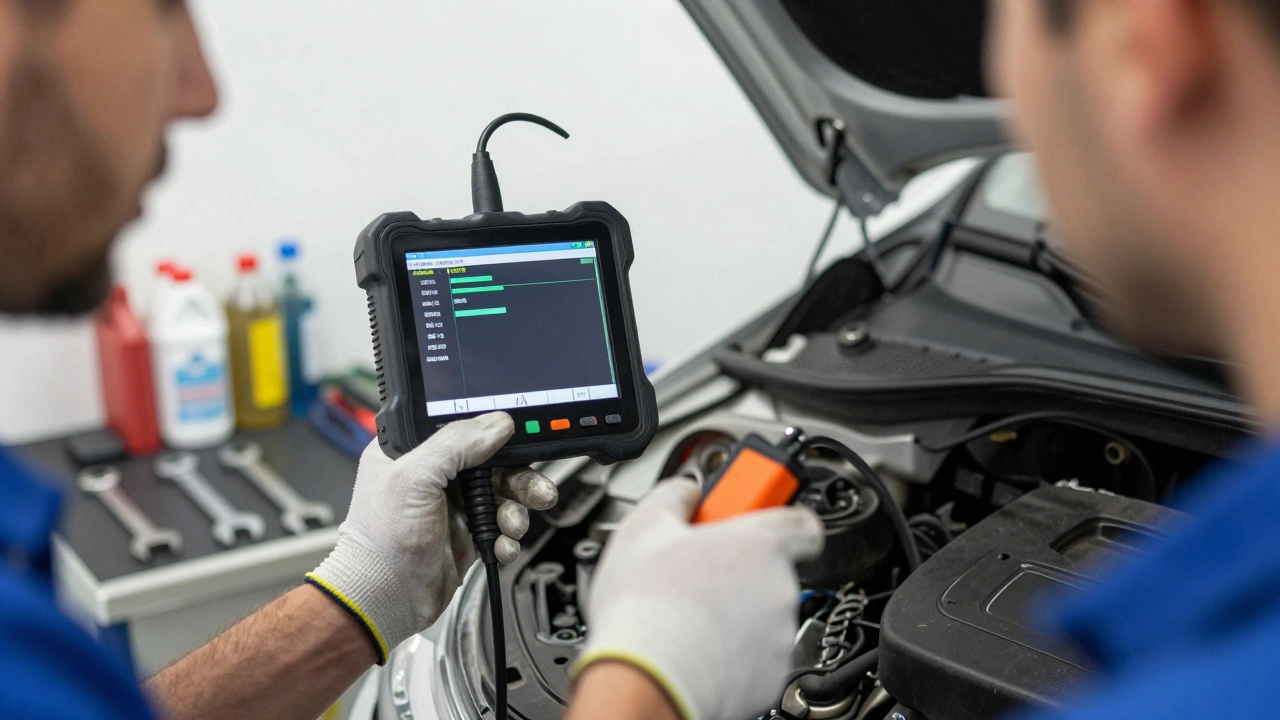
| Read Error Codes | ~ Maybe (Basic OBDII scanner) | ✓ Yes (Professional diagnostic tool needed for deep analysis) |
| Fix Turbo/Transmission | ✗ No | ✓ Yes (Requires specialized equipment) |
Can You Reset Limp Mode Permanently?
No. Limp mode is a symptom, not the disease itself. Turning the car off and on might reset the warning lights temporarily, but if the underlying fault remains-say, a leaking vacuum hose or a failing sensor-the ECU will detect the abnormal condition again and re-enter limp mode, possibly sooner than before. Ignoring the root cause risks turning a $100 sensor replacement into a $4,000 engine rebuild. Always treat limp mode as a urgent request for attention, not a nuisance to be bypassed.
Preventing Future Limp Mode Events
The best defense against limp mode is proactive maintenance. Since many triggers relate to fluid levels, temperature, and sensor health, sticking to your manufacturer's maintenance schedule is crucial.
- Change Oil Regularly: Clean oil ensures proper lubrication and cooling. Sludge buildup can trigger pressure sensor faults.
- Monitor Coolant: Ensure the cooling system is free of leaks and the thermostat functions correctly.
- Replace Spark Plugs and Filters: Worn spark plugs can cause misfires, which the ECU interprets as a serious engine fault.
- Address Warning Lights Immediately: Don't wait for limp mode to appear. If the Check Engine Light comes on, have it diagnosed early.
Is it safe to drive in limp mode?
It is only safe to drive in limp mode for a short distance to reach a safe location or a repair shop. The mode is designed to prevent catastrophic damage, not to allow normal daily driving. Prolonged driving in this state can still cause wear or allow the underlying issue to worsen.
How much does it cost to fix limp mode?
The cost varies wildly depending on the cause. A simple fix like topping off coolant or replacing a dirty air filter costs little to nothing. Replacing a faulty sensor might cost $100-$300. However, if the limp mode is caused by transmission failure or turbocharger damage, repairs can range from $1,000 to several thousand dollars.
Will resetting the battery fix limp mode?
Disconnecting the battery may clear the error codes and temporarily exit limp mode, but it does not fix the underlying mechanical or electrical fault. The car will likely enter limp mode again once the ECU detects the same abnormal conditions during driving.
Does limp mode affect the transmission?
Yes. Limp mode often locks the transmission into a single gear (usually second or third) to reduce stress on the gearbox. This is why you may feel the car struggling to accelerate or refusing to shift gears normally.
Can a bad battery cause limp mode?
Yes. Modern ECUs are sensitive to voltage fluctuations. A weak battery or failing alternator can cause voltage drops that mimic sensor failures, tricking the computer into activating limp mode as a precaution.