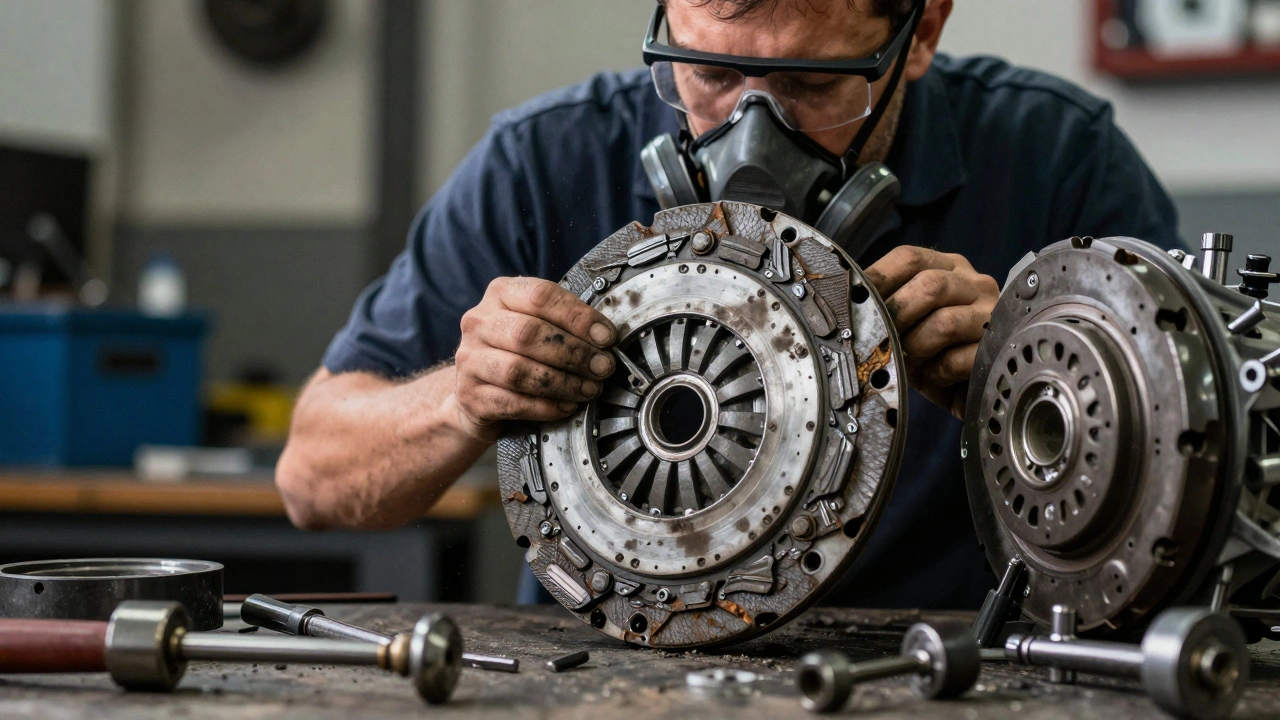
When your car starts slipping out of gear or the engine revs high but the car doesn’t speed up, you’re not imagining things. That’s the clutch giving out. A worn clutch doesn’t just make driving frustrating-it can leave you stranded. Replacing a manual clutch isn’t a quick fix, but if you’re comfortable with tools and have a few hours to spare, doing it yourself saves hundreds compared to a shop. This isn’t about swapping brake pads. This is one of the more involved jobs in automotive repair, and it’s not something you do unless you have to.
When You Know It’s Time
You don’t replace a clutch because it’s old. You replace it because it’s failing. The signs are clear if you know what to look for. If you press the gas and the engine RPM climbs but the car doesn’t accelerate like it should, that’s clutch slip. It means the friction material on the clutch disc is worn thin and can’t grip the flywheel anymore. You’ll also notice rough gear shifts, especially in higher gears. Sometimes, the clutch pedal feels spongy or goes all the way to the floor without engaging. These aren’t minor quirks. They’re red flags.Clutch dust is a silent killer. Over time, the friction material wears down into fine particles that get blown into the air. Breathing that in over months or years isn’t safe. That’s why you wear a mask when you’re in there. It’s not just about the car-it’s about your health.
What’s Inside the Clutch Assembly
A manual clutch isn’t one part. It’s a system. You’ve got the clutch disc, which is the heart of the whole thing. It’s sandwiched between the flywheel and the pressure plate. The pressure plate uses spring force to clamp the disc down. The release bearing (also called the throw-out bearing) pushes against the pressure plate when you press the pedal. And underneath it all, the flywheel spins with the engine. Then there’s the pilot bearing, which centers the transmission input shaft in the middle of the crankshaft. And don’t forget the rear main seal-the one that keeps engine oil from leaking out the back.Here’s the thing: you can’t reuse the release bearing. Even if it looks fine, it’s been under constant stress. Reusing it is asking for trouble. The same goes for the pilot bearing. Both are cheap parts, but they’re critical. Replace them every time. The flywheel? It depends. If it’s scored, cracked, or warped, it needs to be replaced. If it’s just worn smooth, it can be resurfaced. But most shops just replace it. It’s faster and safer.
Preparation: Getting Ready to Dig In
Start by disconnecting the battery. Always. No exceptions. Then, remove the shift knob and the shift linkage in the cabin. Usually, that’s just two bolts. Next, raise the car on jack stands. Never rely on a jack alone. You need solid support. Drain the transmission fluid if your car has a dipstick-it’s messy, but better than spilling it later.If your car uses a cable clutch, disconnect the cable from the clutch fork. Loosen the adjustment nuts at the firewall. If it’s hydraulic, you’ll find a slave cylinder on the transmission. You don’t need to drain the fluid yet, but you’ll need to bleed it later. Label every hose, wire, and vacuum line you disconnect. Write it down. Trust me-you’ll forget.
Removing the Transmission
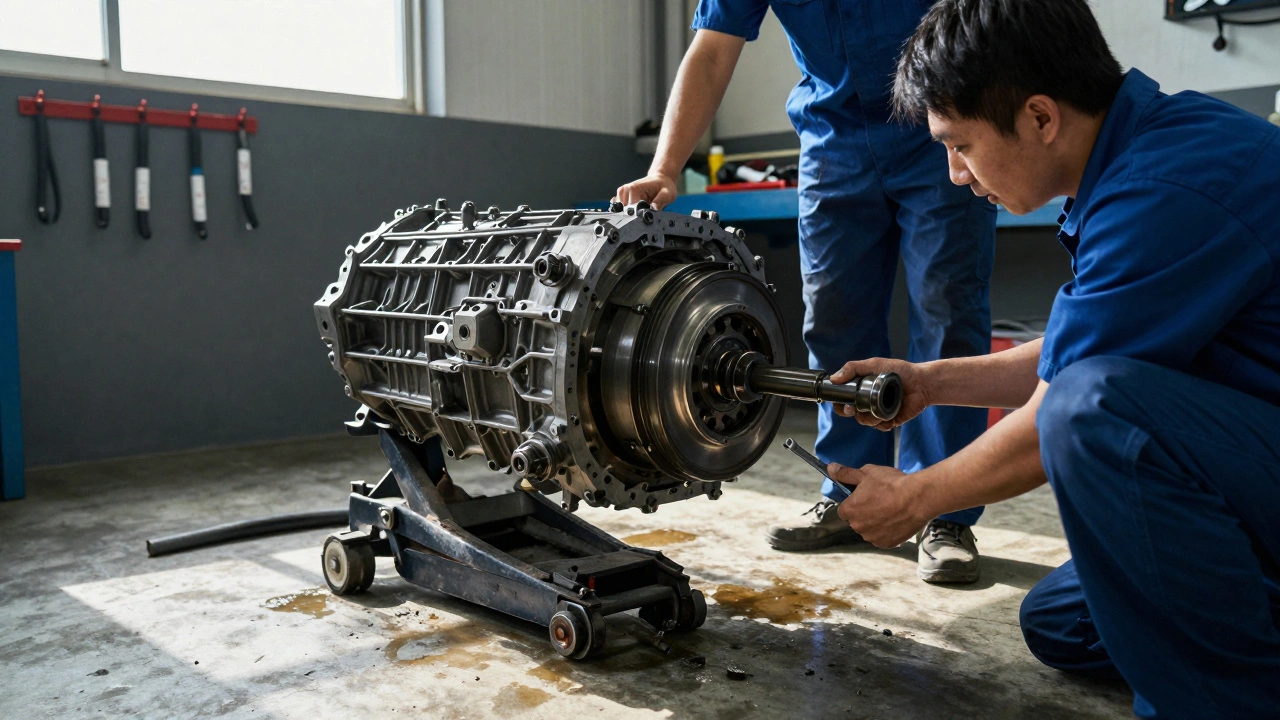
This is where it gets heavy. Literally. The transmission can weigh over 100 pounds. You need a jack with a cradle to support it. Start by removing the starter motor. It’s in the way. Then, unbolt the bellhousing bolts. These are tricky. You’ll need long extensions, a swivel head, and maybe a breaker bar. Some bolts are buried deep. Don’t force them. Spray them with penetrating oil the night before if you can.Next, remove the driveshaft or axle. On rear-wheel-drive cars, it’s a U-joint. On front-wheel-drive, it’s a CV joint. Either way, mark the position before pulling it out. Reinstalling it crooked can cause vibrations or even damage the differential. Slide it out slowly. Then, remove the transmission crossmember. Undo the bolts connecting it to the transmission mount, then the ones connecting it to the subframe. Lower the transmission slowly as you go. Once the crossmember is out, the transmission should slide back and down. You might need to lift the front of the engine slightly to clear the bellhousing. Have someone help. This isn’t a one-person job.
Clutch Disassembly and Inspection
With the transmission out, you’ve got full access. Put on your safety glasses and dust mask. Clutch dust is toxic. Start by removing the pressure plate bolts. They’re usually in a star pattern. Loosen them a little at a time, going in order. Don’t remove them all at once. The pressure plate is under tension. Let it release slowly.Once the pressure plate is off, the clutch disc comes out. It’s heavier than you think. Don’t drop it. Then, remove the pilot bearing. It’s pressed into the end of the crankshaft. A bearing puller works best, but if you don’t have one, carefully pry it out with a flathead. Don’t scratch the crankshaft. The release bearing slides off the input shaft. Check it for play or noise. If it’s gritty, replace it. Even if it spins quietly, replace it. You’re already this far.
Now, inspect the flywheel. Look for grooves, cracks, or bluing (a heat discoloration). If it’s worn, it needs to be resurfaced or replaced. Most auto parts stores rent flywheel resurfacing tools. If you’re not sure, replace it. A bad flywheel ruins a new clutch in weeks.
Installing the New Clutch
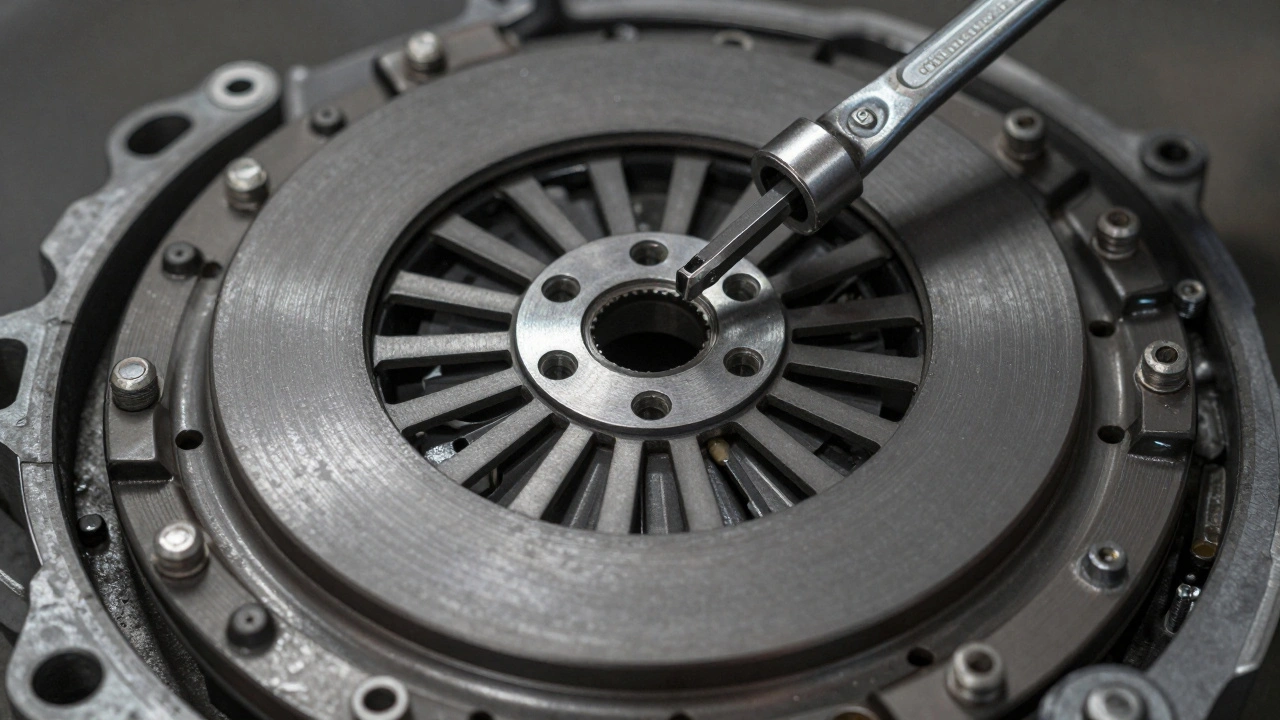
This is where precision matters. First, lubricate the transmission input shaft. Use a small brush to coat the splines with high-temperature grease. Don’t overdo it. Too much grease attracts dirt and can slip out. Then, lubricate the pilot bearing hole in the crankshaft. A tiny bit of grease helps the new bearing slide in.Now, the clutch disc. Slide it onto the input shaft. The side with the springs facing the pressure plate goes toward the engine. The side with the flat surface goes toward the transmission. Use a clutch alignment tool. This is non-negotiable. Trying to line it up by eye wastes hours. The tool keeps the disc centered so the input shaft slides in straight. Slide the input shaft into the clutch disc in one smooth motion. Don’t stop halfway. Don’t twist it. If it doesn’t slide in, stop. You’re misaligned. Pull it back out and try again.
Once the disc is aligned, bolt the pressure plate to the flywheel. Use the star pattern again. Torque them to spec. If you don’t have a torque wrench, don’t guess. A loose bolt can come out while driving. A too-tight bolt can crack the pressure plate. Follow the manual.
Reinstalling the Transmission
This is the reverse of removal, but it’s harder. The input shaft has to slide into the clutch disc while you lower the transmission. Have a second person help. One person guides the transmission into place while the other holds the alignment tool. The input shaft should slide in with little resistance. If it’s stiff, you’re not aligned. Don’t force it. Lift the transmission, reposition, and try again.Once the transmission is seated, bolt it back to the engine. Then, reinstall the crossmember, driveshaft, and starter. Tighten all bolts to spec. If your car has a hydraulic clutch, now’s the time to bleed the system. Pump the clutch pedal slowly until it feels firm. If it’s spongy, you still have air. Bleed it again. Repeat until it’s solid.
Final Checks and Adjustments
Reconnect the battery. Reattach the shift linkage and cable. Adjust the clutch cable if needed. Most manuals say 1 to 1.5 inches of free play at the pedal. Test it. Press the pedal. Does it engage smoothly? Shift through all gears with the engine off. No grinding? Good. Start the car. Let it idle. Press the clutch. Does it disengage fully? If the car creeps forward with the clutch pressed, something’s wrong. Recheck alignment or bleed the system again.Common Mistakes to Avoid
- Skipping the alignment tool. This is the #1 reason people struggle.
- Reusing the release bearing or pilot bearing. They’re cheap. Replace them.
- Not lubricating the input shaft. That causes premature wear.
- Forcing the input shaft into the clutch disc. You’ll damage the splines.
- Skipping the rear main seal. If it’s leaking, replace it now. You’ll thank yourself later.
- Not bleeding hydraulic clutches properly. Air in the system means no clutch engagement.
How Long Does It Take?
With the right tools and experience, you can finish in 5 to 6 hours. For most people, it’s closer to 8 hours. It’s not a weekend project-it’s a full-day job. That’s why most shops charge $800 to $1,500. The labor is intense. But if you’ve done brake jobs and oil changes before, you can handle this. Just take your time. Rushing leads to mistakes. Mistakes lead to expensive repairs.Can I drive with a slipping clutch?
You can, but you shouldn’t. A slipping clutch puts extra strain on the transmission and engine. It also gets worse quickly. Driving with a bad clutch can lead to transmission damage, which costs far more than a clutch replacement. If you notice slipping, get it fixed before it leaves you stranded.
Do I need to replace the flywheel every time?
No, but you should inspect it. If the surface is smooth and free of cracks or deep grooves, it can be resurfaced. If it’s warped, cracked, or shows signs of overheating (bluing), replace it. Many mechanics replace it anyway because it’s cheaper than resurfacing and guarantees a clean start.
Why replace the release bearing if it still works?
The release bearing spins every time you press the clutch. It’s designed to wear out. Even if it seems fine, it’s been under stress for thousands of miles. Reusing it risks sudden failure. Since the transmission is already out, it’s the perfect time to replace it. It’s a $30 part that saves you from a repeat job.
Is it possible to replace a clutch without removing the transmission?
Almost never. The clutch is sandwiched between the engine and transmission. To access it, the transmission must be pulled back. Some rare vehicles have a side-access design, but they’re exceptions. For 99% of cars, removing the transmission is required.
Can I use a used clutch from a junkyard?
Don’t. Clutch discs wear unevenly. Even if it looks good, you don’t know how much life it has left. A used pressure plate may have weakened springs. A used release bearing could fail in days. New parts are inexpensive compared to the labor involved. Save yourself the risk.