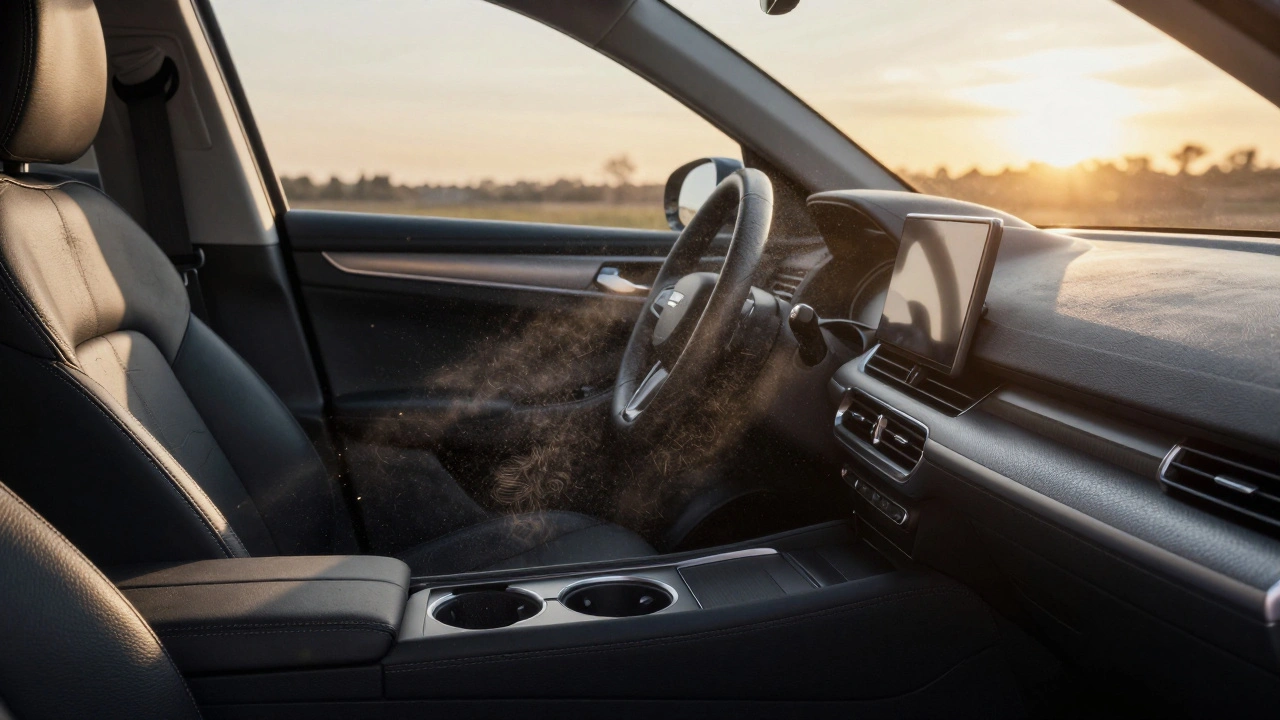
Ever open your car door and immediately regret it? That stale, sour, or smoky smell doesn’t just stick around-it comes back stronger every time the sun hits the dashboard or the AC kicks on. Most people reach for an air freshener. But that’s like putting a Band-Aid on a broken bone. True odor elimination isn’t about covering up smells-it’s about destroying them at the source.
Why Car Odors Won’t Go Away
Car interiors are breeding grounds for odor-causing microbes. Heat, moisture, and trapped organic matter create the perfect environment for bacteria and mold to grow. These aren’t just floating particles in the air-they’re embedded deep into your seats, carpets, headliners, and even inside the HVAC ducts. When you heat up the cabin, those microbes wake up and start releasing volatile organic compounds (VOCs). That’s why the smell returns after a long drive or a hot day parked in the sun. Common culprits include:- Smoke residue from cigarettes or vaping-particles cling to fabric and seep into foam padding
- Pet urine, dander, and hair-especially in the cracks between seats and under floor mats
- Mildew from spilled drinks, wet shoes, or leaking sunroofs
- Food crumbs and sticky spills that rot over time
- Old sweat and body oils soaked into upholstery
Simple cleaning won’t fix this. Vacuuming removes surface dirt, but it doesn’t touch what’s underneath. Wiping down surfaces with disinfectant wipes? That’s like spraying perfume on a trash can. You need to attack the root cause.
The Difference Between Masking and Neutralizing
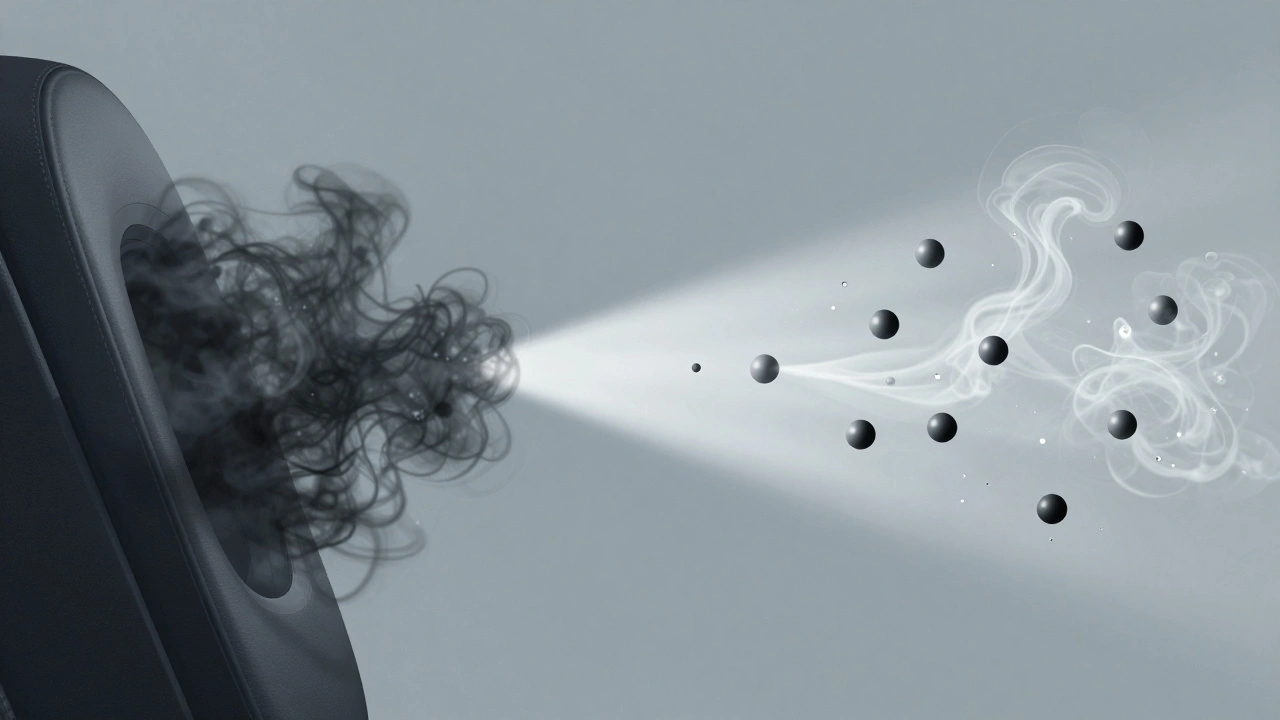
Air fresheners, scented sprays, and gel beads don’t remove odor-they disguise it. They add a stronger scent on top, which fades within hours. Once that fake fragrance wears off, the real smell comes roaring back. Worse, some sprays contain alcohol or synthetic chemicals that can dry out leather or irritate sensitive skin. True odor neutralization works differently. Instead of covering up the smell, it breaks down the molecules that create it. Think of it like this: if a stain is caused by red wine, wiping it with water won’t erase it. You need bleach or an oxidizing agent to change the chemical structure of the stain. The same logic applies to odors.Effective odor neutralizers use oxidation to destroy the odor molecules themselves. They don’t just absorb them-they break them apart into harmless compounds like carbon dioxide and water vapor. This is why professional detailers don’t rely on pine-scented sprays. They use industrial-grade oxidizers like chlorine dioxide, ozone, and hydroxyl radicals.
Professional-Grade Solutions
For stubborn odors-especially from smoke, pets, or flood damage-consumer products often fall short. That’s where professional methods come in.Chlorine Dioxide (ClO₂) Gas
This is the gold standard for odor neutralization in vehicles. Products like Auto Shocker is a chlorine dioxide-based odor elimination system that releases a non-toxic gas that penetrates every corner of the vehicle. The gas seeps into upholstery, carpets, headliners, and even the ventilation system. It doesn’t just mask-it oxidizes the odor molecules, especially sulfur and nitrogen compounds from smoke and urine, changing their structure so they can’t be smelled anymore.Unlike ozone, ClO₂ doesn’t corrode rubber or electronics. It’s safe for leather, plastics, and electronics. The treatment usually takes 2-4 hours. Afterward, the car smells clean, not chemically treated. No residue. No lingering scent. Just pure neutrality.
Ozone (O₃) Treatment
Ozone is another powerful oxidizer used by professionals. It’s especially effective for mold, mildew, and smoke odors. An ozone machine floods the car with O₃ gas, which reacts with odor molecules and kills bacteria, viruses, and mold spores on contact. It’s often used overnight for severe cases.While ozone is highly effective, it can degrade rubber seals and vinyl over time if misused. That’s why it’s best left to trained technicians who control exposure time and ventilation. After treatment, the car must be aired out thoroughly-ozone itself has a sharp smell, but it breaks down into oxygen within hours.
Hydroxyl Generators
These are newer, safer alternatives to ozone. Hydroxyl radicals are naturally occurring in the atmosphere and are used in hospital-grade air purification. In car detailing, hydroxyl generators produce these radicals in a controlled environment, breaking down VOCs without damaging materials. They’re ideal for homes with children or pets, as they leave no chemical residue and are safe to breathe during treatment.Steam Cleaning
For odors tied to dirt and grime, steam cleaning is a powerful combo. High-temperature steam (over 200°F) kills bacteria and mold while lifting embedded dirt from fabric and carpet. It’s chemical-free and eco-friendly. Many professional shops, like Steam Team Auto Spa is a detailing service that combines steam cleaning with ozone treatment for deep odor removal, use this method as part of a full restoration.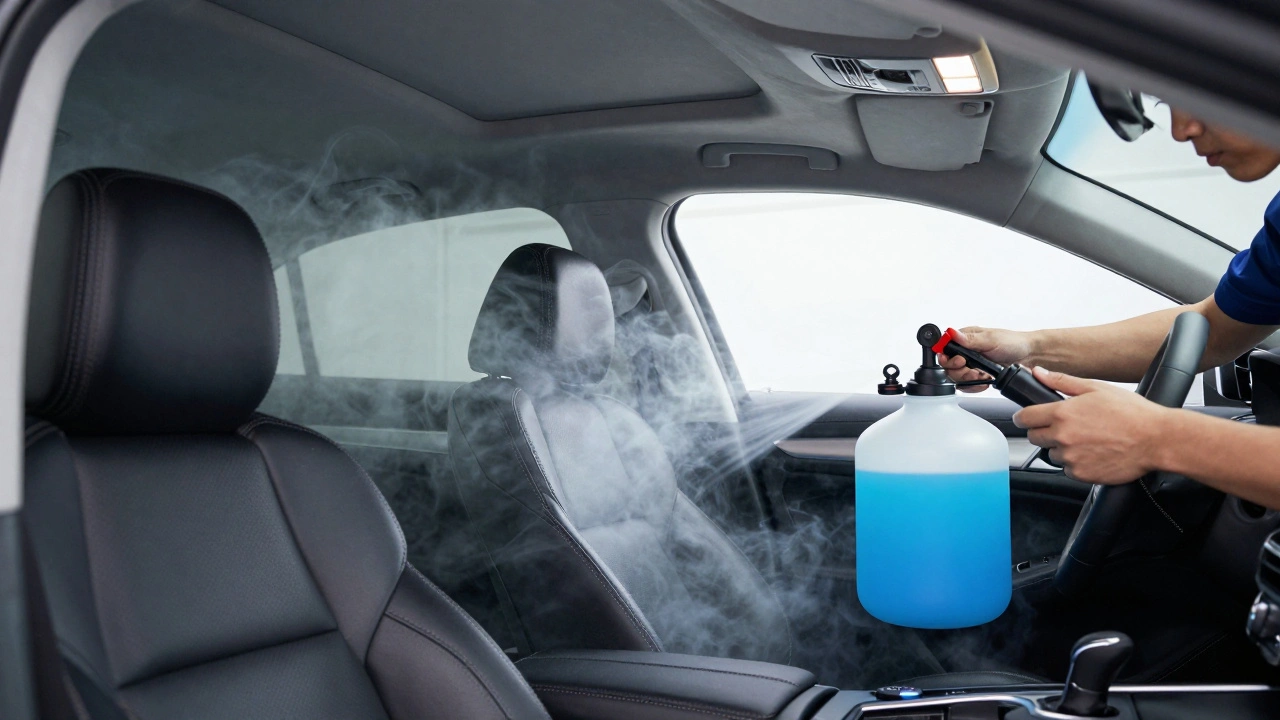
DIY Methods That Actually Work
If your odor isn’t extreme, you can tackle it yourself. But don’t waste time on gimmicks. Stick to proven methods:Baking Soda
Sprinkle a generous amount of baking soda across carpets, seats, and floor mats. Use a brush to work it into crevices. Leave it overnight. Then vacuum thoroughly. Baking soda absorbs odor molecules, especially from food and mildew. It’s cheap, safe, and non-toxic. Repeat weekly for ongoing odor control.White Vinegar
Fill two small bowls with distilled white vinegar and place them in the front and back seats. Close the doors and windows. Let sit overnight. Vinegar neutralizes ammonia-based odors (like pet urine) and kills mold spores. The vinegar smell will fade within a day after airing out the car.Activated Charcoal Bags
Place 3-4 bags of activated charcoal under seats, in the glove box, and behind the console. These bags slowly absorb moisture and odor molecules over weeks. They’re perfect for ongoing maintenance after a deep clean. Unlike air fresheners, they don’t add scent-they just remove stink.Consumer Ozone Generators
Small, portable ozone machines are available for home use. They’re not as powerful as professional units, but they can help with light smoke or pet odors. Use them in a well-ventilated garage, run for 2-4 hours, then air out the car for at least an hour. Never stay inside while it’s running.Special Cases: Pet, Smoke, and Mildew Odors
Pet Odors
Pet urine leaves behind uric acid crystals that keep releasing odor when humidity rises. Vacuuming won’t remove them. You need an oxidizing agent. Chlorine dioxide gas penetrates deep into padding and breaks down the crystals. After treatment, clean the area with a bio-enzymatic cleaner to digest any remaining organic residue. Avoid ammonia-based cleaners-they make pet smells worse.Smoke Odors
Cigarette smoke doesn’t just stick to fabric-it embeds into foam, plastic, and wiring harnesses. That’s why wiping the dashboard won’t help. Only chlorine dioxide or ozone can fully oxidize the tar and nicotine residues. Professionals use ClO₂ because it’s faster, safer, and more thorough than ozone for smoke.Mildew and Musty Smells
If your car smells like a damp basement, there’s likely a hidden leak. Check the sunroof drains, door seals, and AC condensation lines. Once you fix the source, treat the area with a chlorine dioxide-based neutralizer. Let it soak into the carpet and padding. Then dry the area completely with a dehumidifier or fan. Without fixing the moisture source, the smell will return in weeks.What Doesn’t Work (And Why)
- Air fresheners - Only mask odors temporarily. They don’t kill bacteria.
- Essential oil sprays - Can leave oily residue on surfaces. Some oils degrade plastics.
- Febreze-type sprays - Often contain alcohol and synthetic fragrances that irritate sensitive people.
- Just vacuuming - Removes surface debris but leaves embedded microbes untouched.
- Wiping with Lysol - Kills surface germs but doesn’t reach deep into upholstery or HVAC.
How to Prevent Odors from Coming Back
Prevention is easier than removal:- Remove trash daily. Even a single soda can left for a week can ferment and stink.
- Use floor mats-wash them weekly.
- Don’t eat in the car. If you must, clean spills immediately with a damp cloth.
- Check for leaks after rain. A dripping sunroof or clogged drain can create mildew overnight.
- Keep activated charcoal bags in the car year-round. They’re passive, silent odor absorbers.
- Run the AC on recirculate mode occasionally to dry out the evaporator coil. Moisture there breeds mold.
After a professional treatment, maintain the results with monthly baking soda treatments and charcoal bags. That’s all it takes to keep your car smelling fresh without chemicals.
Choosing the Right Solution
| Method | Best For | Effectiveness | Cost | Time Required |
|---|---|---|---|---|
| Chlorine Dioxide (ClO₂) | Smoke, pet urine, severe odors | Extreme | $150-$300 (professional) | 2-4 hours |
| Ozone (O₃) | Mold, mildew, heavy smoke | Very High | $100-$250 (professional) | 6-12 hours |
| Steam Cleaning | Grime + odor combo | High | $80-$180 | 1-3 hours |
| Baking Soda | Light food, mildew odors | Moderate | $5-$10 | Overnight |
| White Vinegar | Pet urine, ammonia smells | Moderate | $3-$8 | Overnight |
| Activated Charcoal Bags | Prevention, ongoing odor control | Low-Moderate | $15-$30 (lasts 6-12 months) | Continuous |
For most people, a combination of professional treatment (ClO₂ or ozone) followed by ongoing maintenance (charcoal bags + baking soda) delivers the best long-term results.
Can I use ozone treatment myself?
Yes, but with caution. Consumer ozone generators are available, but they’re weaker than professional units. Always use them in a well-ventilated garage, never inside the car while you’re inside. Run for 2-4 hours, then open all doors and let the car air out for at least an hour before driving. Avoid using ozone on leather or rubber trim frequently-it can dry them out over time.
Does baking soda damage car interiors?
No. Baking soda is non-abrasive and non-toxic. It won’t harm fabric, leather, or plastic. Just make sure to vacuum thoroughly afterward. Leftover powder can attract moisture if not removed, which could lead to mold growth.
Why does my car smell worse after I clean it?
This usually happens when you clean the surface but leave the source untouched. For example, if you wipe the dashboard but the smell is coming from mold in the AC ducts, the odor gets trapped and intensifies as the cabin heats up. Always treat the root cause-not just the visible areas.
Is chlorine dioxide safe for pets and kids?
Yes. Chlorine dioxide gas breaks down into harmless salts and water after reacting with odor molecules. It’s non-toxic at the levels used in car treatments and leaves no residue. Many pet owners prefer it over ozone because it’s faster and safer for sensitive animals.
How often should I do an odor neutralization treatment?
If you have pets, smoke in the car, or live in a humid climate, a professional ClO₂ or ozone treatment every 6-12 months is recommended. For light use, monthly baking soda treatments and charcoal bags are enough. Prevention beats repetition.