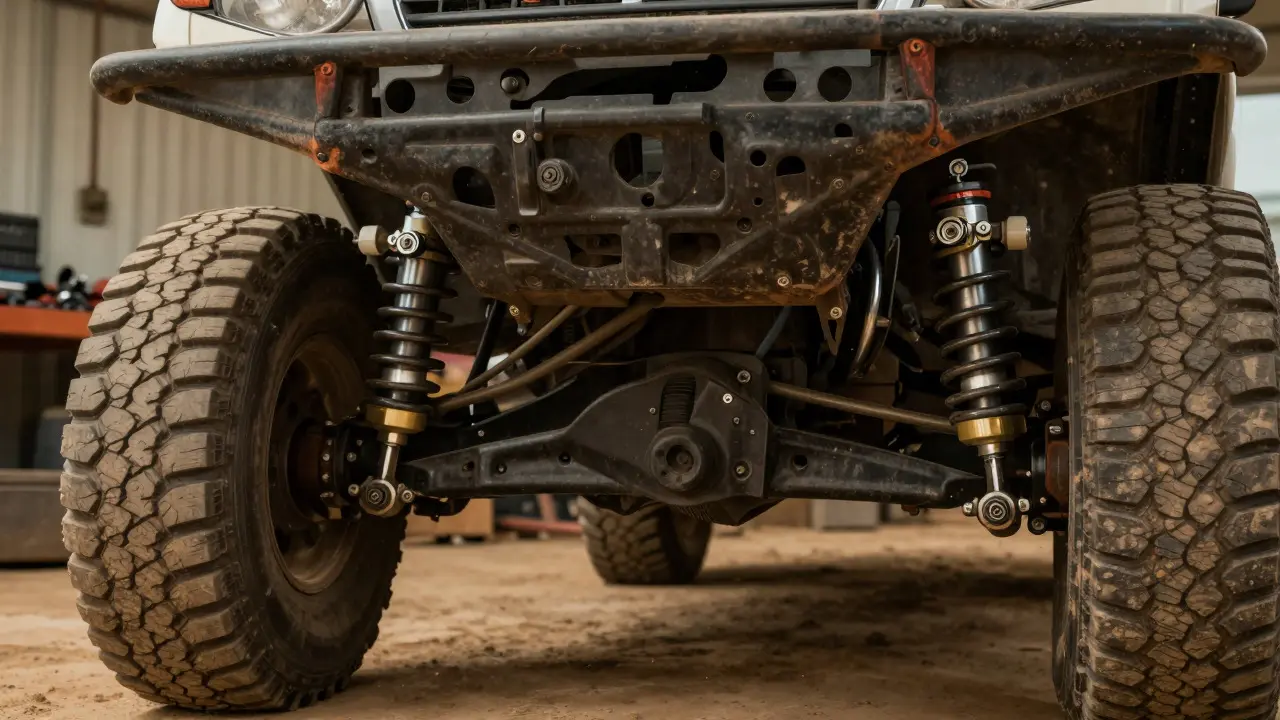
Driving an SUV through the Rub' al Khali (Empty Quarter) or the dunes near Al Qudra isn't just about having a powerful engine. It’s about how your chassis absorbs the hits. Most factory suspensions are tuned for smooth asphalt, which means they bottom out easily on sharp sand crests or fail to keep tires planted in loose ruts. If you want to survive the heat and the terrain without breaking your axles, you need to understand how to tune your off-road suspension is a specialized system of springs, shocks, and dampers designed to handle uneven terrain by controlling body movement and maintaining tire contact with the ground. Unlike standard city setups, it prioritizes travel over stability at high speeds. This guide breaks down exactly what to change, why it matters in the UAE climate, and how to set it up safely.
Why Factory Suspensions Fail in the Dunes
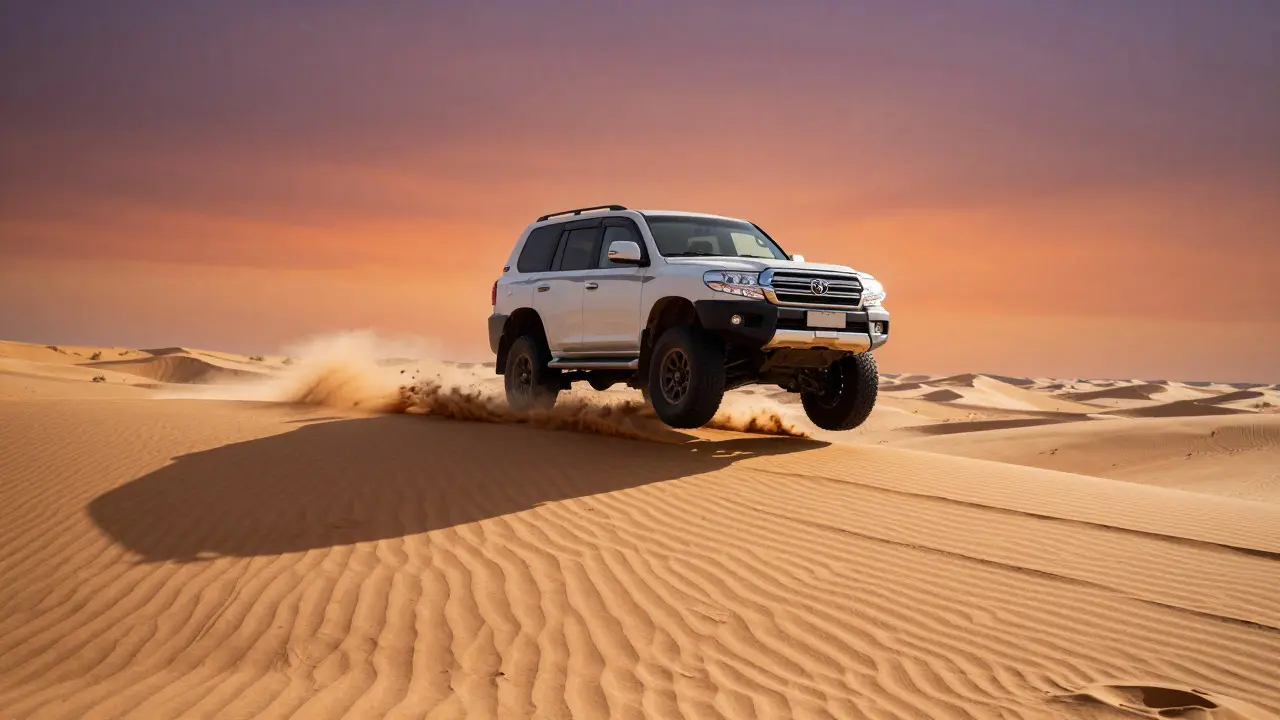
When you drive on paved roads, your suspension works within a narrow range of motion. But in the desert, every bump is a stress test. The primary issue with stock systems is bottoming out. When the spring compresses fully, metal hits metal. In a hard landing from a dune crest, this transmits massive force directly into your subframe and control arms. Over time, this cracks welds and bends brackets. Furthermore, soft factory shocks often lack the damping needed to stop the vehicle from bouncing excessively after a hit. This "porpoising" effect makes steering unpredictable and can cause you to lose traction if the wheels leave the ground.
The second major factor is heat. Dubai summers see ambient temperatures exceeding 45°C (113°F). Standard hydraulic fluids in shock absorbers thin out when hot, reducing their ability to resist compression. This leads to a spongy feel where the car feels like it's floating rather than gripping. For serious desert runs, you need components that maintain consistent performance under thermal stress.
Key Components for a Desert-Ready Build
You don’t need to replace every part to make your SUV capable. Focus on these three areas first:
- Coilover Kits or Lift Kits: A lift kit raises the vehicle to increase approach angle and clear rocks. Coilovers allow you to adjust ride height and damping stiffness. For pure dune running, a moderate 2-inch lift is often sufficient; more than that increases wind resistance and reduces stability on highway stretches between camps.
- Heavy-Duty Shock Absorbers: Look for gas-charged or nitrogen-charged shocks with adjustable valving. Brands like Fox, Bilstein, or KYB offer off-road specific lines. Nitrogen charges help prevent cavitation (bubbles forming in the fluid) during rapid compression cycles, keeping the shock firm even after hours of aggressive driving.
- Sway Bar Disconnects or Replacements: On rough terrain, sway bars limit independent wheel movement. If one wheel hits a rock, the opposite wheel lifts slightly, losing grip. Disconnecting them allows each corner to move freely, maximizing traction. Many modern SUVs have electronic disconnect switches, but mechanical kits are more reliable for remote trips.
Tuning Settings: Stiffness vs. Travel
Getting the balance right is tricky. Too stiff, and your tires skip over small bumps, transferring jolts to the cabin and risking axle damage. Too soft, and the body rolls excessively, potentially scraping the rocker panels or causing the rear end to swing wide in corners. Here is a practical starting point for most mid-size SUVs (like a Land Cruiser, Prado, or Fortuner):
- Compression Setting: Start at 50% open. This allows the shock to absorb initial impacts smoothly. If you find the car bouncing too much after big hits, close the compression by 2 clicks.
- Rebound Setting: Set this to match your compression. Rebound controls how fast the spring returns to its resting position. If the car feels unstable or wobbly at speed, tighten the rebound. If it feels harsh and unresponsive, loosen it.
- Ride Height: Aim for equal front and rear heights. Uneven loading (like carrying heavy gear in the back) requires adjusting the rear coilover to compensate. Use a tape measure from the wheel well to the ground to verify consistency.
Remember, these are starting points. You must test drive in a safe area before heading deep into the desert. Listen to the suspension. If you hear clunks, your preload might be too tight. If you hear hissing, check for leaks in the shocks.
Wheel Alignment and Tire Pressure Management
Suspension setup is useless if your geometry is off. After installing new parts, get a professional alignment. Specifically, focus on camber and toe. Negative camber helps with cornering grip but wears inner tire edges faster. In the desert, you want neutral camber to maximize tread life. Toe settings should be minimal to reduce drag and tire scrub.
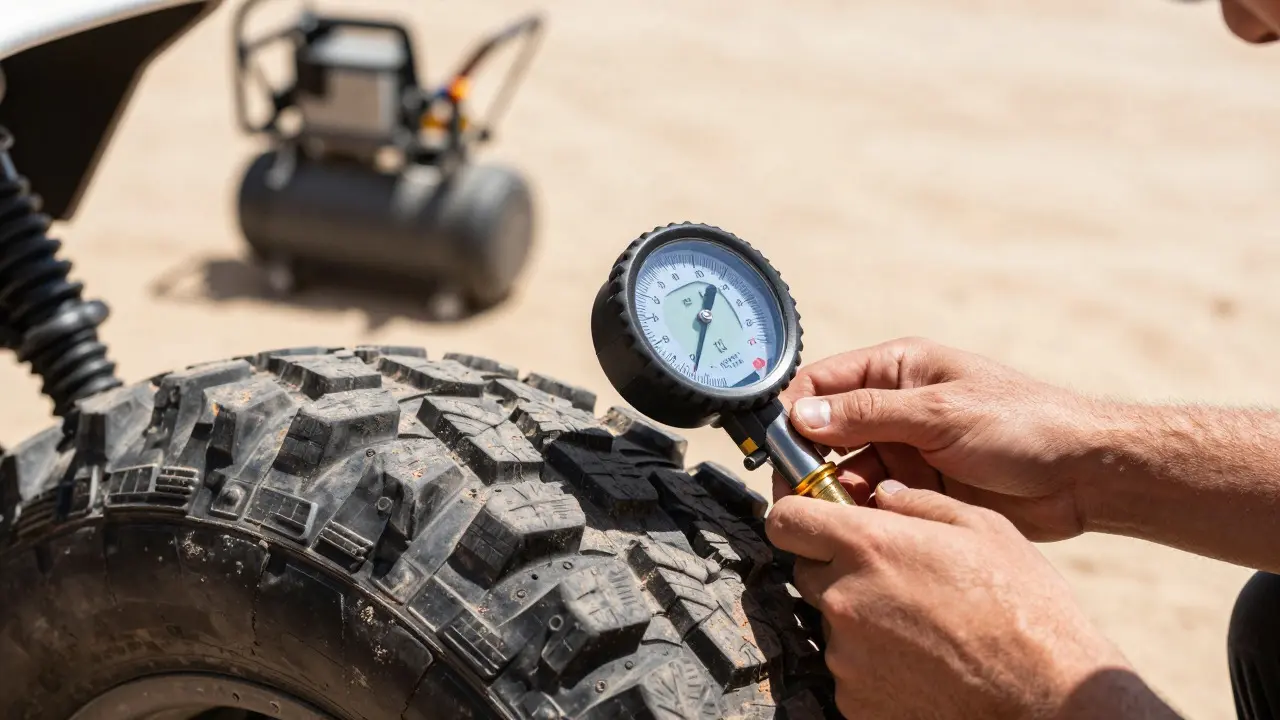
Tire pressure is just as critical. Lowering pressure improves grip in soft sand but risks overheating on hard pavement. Keep a portable air compressor and gauge in your vehicle. A common rule of thumb: drop to 20-22 PSI for soft dunes, and return to 32-35 PSI for highway driving. Always check pressures when tires are cold, as heat from driving can raise internal pressure by 5-8 PSI, giving false readings.
| Component | Stock/OEM Setup | Desert-Optimized Setup | Benefit in Sand/Dunes |
|---|---|---|---|
| Shock Absorbers | Standard hydraulic, fixed damping | Nitrogen-charged, adjustable valving | Prevents fade in heat, maintains firmness |
| Spring Rate | Soft, comfort-focused | Moderate rate, higher load capacity | Reduces bottoming out on sharp crests |
| Sway Bars | Fixed metal links | Disconnectable or removed | Allows independent wheel articulation |
| Ride Height | Low profile for aerodynamics | Lifted 2-4 inches | Clears rocks and prevents skid plate contact |
Maintenance Checks Before Every Trip
Even a perfectly tuned suspension will fail if neglected. Before leaving your garage in Dubai, perform this quick checklist:
- Visual Inspection: Check for oil leaks around shock seals. Any wetness means the shock is failing and needs replacement immediately.
- Mounting Hardware: Tighten all bolts on control arms, bushings, and sway bar links. Vibration loosens these over time.
- Coolant Levels: Ensure your radiator is full. Desert dust clogs radiators quickly, leading to overheating which can warp brake rotors and affect drivetrain cooling.
- Battery Health: Heat kills batteries. Test your battery voltage. A weak battery struggles to start engines in extreme heat, especially after long idling periods at campsites.
If you plan to drive in the deep desert where rescue services take hours to arrive, consider adding a secondary battery or a lithium jump pack. These devices hold charge better in high temperatures than standard lead-acid units.
Common Mistakes to Avoid
Many enthusiasts make the same errors that lead to breakdowns. First, don't mix brands randomly. Using a high-performance spring with a cheap shock creates an imbalance that stresses the entire chassis. Match the spring rate to the shock's damping capacity. Second, avoid over-lifting. More than 4 inches significantly alters your center of gravity, making rollovers more likely in sharp turns. Stick to what your vehicle's geometry supports. Finally, ignore the weather forecast. Sudden sandstorms can reduce visibility to zero and scour paintwork. Always check local conditions via apps like WMO or local UAE meteorological alerts before setting out.
Frequently Asked Questions
Do I need a lift kit for desert driving in Dubai?
Not necessarily. A 2-inch lift provides better clearance for rocks and steep inclines, but many drivers succeed with stock height if they have good line choice. However, a lift does improve approach angles, which is helpful for navigating large dune bases.
What is the best tire pressure for soft sand?
For soft, deep sand, aim for 20-22 PSI. This increases the tire's footprint, allowing it to float on top of the sand rather than digging in. Always return to normal pressures (32-35 PSI) once you reach harder terrain or highways to prevent overheating.
How often should I service my off-road suspension?
Inspect visually every month. Perform a full service (checking mounts, lubricating joints, and testing dampers) every 6 months or 10,000 km, whichever comes first. Heavy desert use may require more frequent checks due to increased dust and heat exposure.
Can I drive on the highway with disconnected sway bars?
Yes, but with caution. Without sway bars, the vehicle will roll more in corners. Reduce your speed on curves and avoid sudden lane changes. Many modern SUVs have electronic disconnects that automatically re-engage above certain speeds, which is safer for mixed driving.
Does heat affect shock absorber performance?
Yes. High temperatures thin the hydraulic fluid inside shocks, reducing damping efficiency. This causes a softer, bouncier ride. Nitrogen-charged shocks mitigate this issue because the gas charge remains stable regardless of temperature fluctuations.