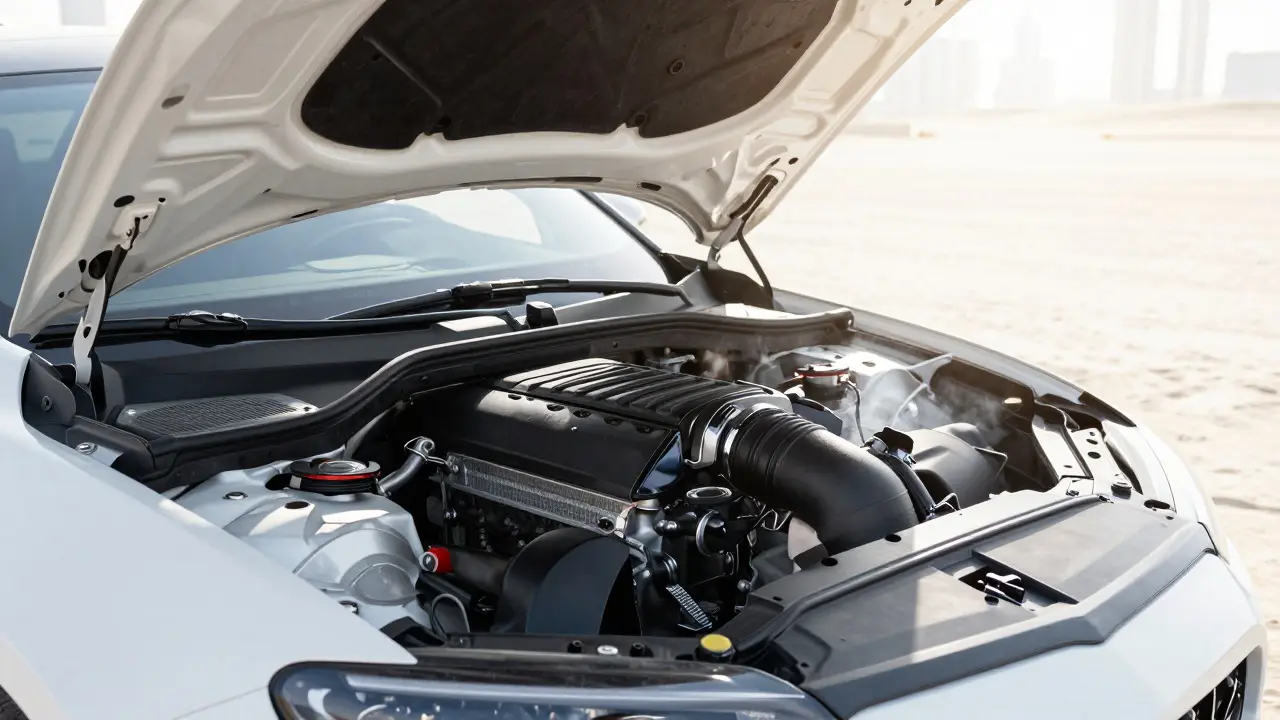
It is 45°C outside in Dubai right now. You rev your car, and instead of a roar, you hear a dull thud. Your horsepower numbers on the dyno are lower than expected. The culprit? Heat soak. In the Middle East, this isn't just a theoretical concern; it is the single biggest enemy of forced-induction engines running aftermarket intakes. Choosing between an open and a closed system here isn't about aesthetics or sound-it’s about survival for your engine's power output.
Heat soak is the process where ambient heat from the engine bay transfers to the intake air charge, reducing its density and oxygen content. When air gets hotter, it expands. Less dense air means less oxygen per cubic inch. For a turbocharged engine, that translates directly to less boost pressure or higher exhaust gas temperatures (EGT) to make the same power. In a mild climate like Portland, Oregon, you might get away with an open intake. In Dubai, that same setup can cost you 10-15% of your peak power during a summer drive.
The Physics of Hot Air in the Engine Bay
To understand why location matters, you have to look at how heat moves. An open air intake is a system that draws air directly from the front bumper or side scoops without a sealed housing. It relies on the ram effect of moving forward to push cool air into the filter. However, under low-speed conditions-like sitting in traffic on Sheikh Zayed Road or idling at a red light-the ram effect disappears. The engine bay becomes a furnace. Radiators, intercoolers, and the engine block itself radiate intense heat. Without a barrier, that hot air rises and gets sucked right into your throttle body.
A closed air intake is a sealed system that routes air through a tube from a specific point, usually behind the front bumper, to the engine. While it still draws from the front, the tubing acts as a conduit. If that tube is routed poorly, it can still pick up heat from the radiator support. But if it’s designed correctly, it isolates the incoming air from the hottest parts of the bay. In Dubai’s extreme summer, where ambient temperatures regularly exceed 40°C (104°F), the delta between "cool" outside air and "hot" engine bay air can be 20-30°C. That difference is massive for internal combustion efficiency.
Why Open Intakes Struggle in the Gulf
Many enthusiasts love the sound of an open intake. It sounds aggressive. It looks clean. But functionally, it is a gamble in high-heat environments. Let’s break down the failure points:
- Low-Speed Idling: This is where open intakes fail hardest. At 0 km/h, there is no airflow to flush out hot air. The intake cone sits directly above the engine’s heat signature. After ten minutes of idling in the sun, your intake air temperature (IAT) can spike by 15-20°C compared to ambient.
- Traffic Congestion: Dubai traffic is notorious. Sitting in stop-and-go traffic for an hour keeps the engine bay at maximum thermal load. An open intake will pull in this superheated air consistently, causing the ECU to retard ignition timing to prevent knock. Retarded timing equals lost power and increased fuel consumption.
- Dust and Sand: While not strictly "heat soak," the open design exposes the filter to more particulate matter. In dusty conditions, a clogged filter restricts airflow, which increases backpressure and further heats up the air charge as it tries to pass through the restriction.
Contrast this with a well-designed closed system. Even if it’s not perfectly sealed, the length of the tubing allows the air to cool slightly before reaching the mass airflow sensor (MAF). More importantly, it prevents the direct convection of heat from the engine block to the intake tract.
Closed Intakes: The Safer Bet for Power
If your goal is consistent power delivery in Dubai, a closed intake is generally the superior choice. But "closed" doesn’t automatically mean "good." You need to look at the routing.
High-quality closed intakes, such as those from brands like Kenne or K&N, often feature heat shields and insulated tubes. These components act as thermal barriers. Some advanced systems even use active cooling fans to force cool air into the intake box when the car is stationary. This is crucial for drag racing or track days in the desert, where you spend significant time at idle or low speed.
Here is a quick comparison of how these systems perform in typical Dubai driving scenarios:
| Scenario | Open Intake IAT Impact | Closed Intake IAT Impact | Power Loss Estimate |
|---|---|---|---|
| Highway Cruising (120+ km/h) | Minimal (Ram effect dominates) | Minimal | <2% |
| City Traffic (Stop & Go) | High (+15-20°C over ambient) | Moderate (+5-10°C over ambient) | 8-15% (Open) / 3-5% (Closed) |
| Idling in Sun | Very High (+25°C+ over ambient) | Moderate-High (+10-15°C over ambient) | 10-20% (Open) / 5-8% (Closed) |
| Track Day (Long Laps) | Variable (Depends on sector speed) | Consistent Lower Temps | Inconsistent (Open) / Stable (Closed) |
Note that even a closed intake suffers from heat soak in extreme conditions. The key advantage is consistency. Your engine management system knows what to expect. With an open intake, the IAT fluctuates wildly, forcing the ECU to constantly adjust fuel maps and timing, leading to unpredictable power delivery.
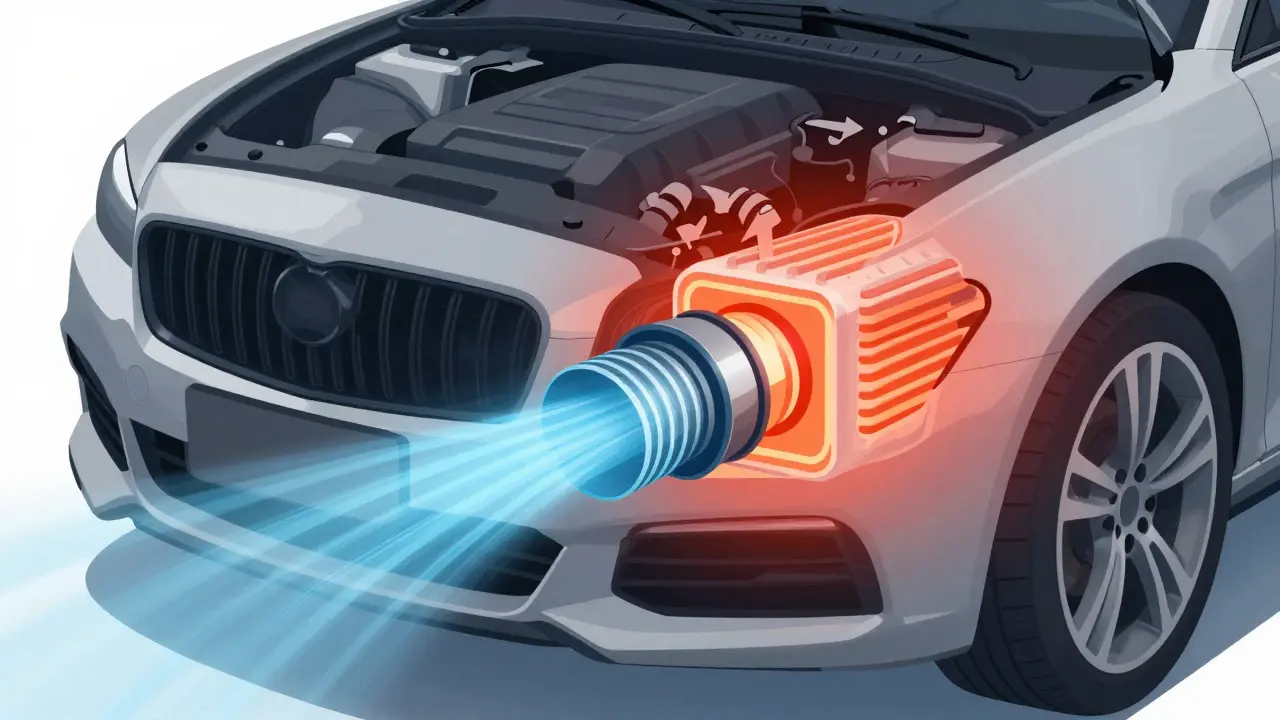
Intercooler Interaction: The Hidden Factor
You can’t talk about heat soak without mentioning the intercooler, which is a heat exchanger that cools the compressed air from the turbocharger before it enters the engine. Many drivers focus solely on the intake filter but ignore the intercooler piping. If your intercooler outlet pipe runs close to the exhaust manifold or the radiator, it picks up radiant heat. This is called "secondary heat soak."
In Dubai, a standard front-mount intercooler (FMIC) works well because it has access to fresh air. However, if you have a top-mount intercooler (TMIC) located deep in the engine bay, it is surrounded by hot surfaces. An open intake exacerbates this problem because the hot air circulating in the bay also warms up the intercooler pipes. A closed intake, by isolating the primary air path, helps keep the immediate vicinity of the MAF sensor cooler, but you still need to insulate your intercooler lines with wrap or aluminum tape to maximize gains.
Practical Tips for Dubai Drivers
If you live in the UAE, here are some actionable steps to mitigate heat soak regardless of your intake type:
- Install a Heat Shield: If you have an open intake, install a metal or ceramic-coated heat shield between the intake cone and the engine block/radiator. This blocks radiant heat. It’s cheap insurance.
- Use Insulated Tubing: For closed intakes, ensure the silicone couplers and PVC tubing are wrapped in heat-resistant insulation. This prevents the air inside the tube from heating up as it travels from the bumper to the engine.
- Park in Shade: Obvious, but critical. Parking under a tree or in a garage reduces the initial thermal load on the engine bay. Starting from a cooler baseline gives you a buffer before heat soak sets in.
- Monitor IAT Sensors: Don’t guess. Install a wideband O2 sensor and a dedicated IAT gauge or read the data via a Bluetooth OBD2 scanner. Track your IAT in real-time. If you see spikes during traffic, your intake strategy needs adjustment.
- Consider Active Cooling: For serious track use, look into electric fans mounted near the intake box. They force cool air into the system when ram air isn’t available. Brands like Flex-a-lite offer compact fan solutions that fit most engine bays.

Common Myths About Intakes in Hot Climates
There are plenty of myths floating around online forums. Let’s bust a few.
Myth 1: "Bigger filters always mean more power." Not necessarily. A larger filter area reduces velocity, which can actually increase static pressure drop if the housing isn’t sized correctly. In hot climates, airflow restriction leads to hotter air. Focus on flow rate and heat isolation, not just physical size.
Myth 2: "Closed intakes are always quieter." They are generally quieter, but not always. A poorly tuned closed system can resonate and create drone at certain RPMs. An open intake might sound louder, but if it’s picking up 60°C air, the extra noise isn’t worth the power loss.
Myth 3: "You don’t need to worry about heat soak if you’re not boosting." Wrong. Naturally aspirated engines lose power too. While the percentage loss is smaller than in turbocharged cars, every bit of oxygen counts. In a naturally aspirated V8, a 20°C rise in IAT can result in a noticeable drop in mid-range torque, making the car feel sluggish in city driving.
Choosing the Right Setup for Your Car
Your choice depends on how you drive. If you mostly cruise highways at 120-140 km/h, the difference between open and closed is minimal. The ram effect does the work. But if you do 70% of your driving in the city, or if you participate in track events, lean towards a closed system with good heat shielding.
For hybrid owners or EVs with range-extender engines, heat management is even more critical. These vehicles often have complex thermal zones. An open intake might interfere with the cooling loops for the battery or motor, creating unintended heat transfer paths. Stick to OEM-spec or carefully engineered aftermarket closed intakes for these platforms.
Ultimately, in Dubai, heat soak is a tax on your horsepower. Paying that tax in the form of reduced power, higher fuel bills, and potential long-term engine stress is avoidable. Spend the money on proper insulation and heat shielding. Your engine will thank you, and your wallet will appreciate the fuel savings.
Does an open intake cause more heat soak than a closed one?
Yes, typically. Open intakes draw air directly from the engine bay environment, which is significantly hotter than the outside air, especially at low speeds. Closed intakes route air through a tube, providing some separation from the hottest components, though they are not immune to heat soak if poorly routed.
How much power do I lose from heat soak in Dubai?
In extreme conditions, you can lose anywhere from 5% to 20% of your peak power. Turbocharged engines are more sensitive to this because higher boost pressures generate more heat. A 20°C increase in intake air temperature can reduce power by roughly 1-2% per degree Celsius in some setups, compounding quickly.
Is it worth installing a heat shield for my open intake?
Absolutely. A simple metal heat shield can reduce radiant heat transfer by 30-50%. It is one of the cheapest modifications you can make to improve performance in a hot climate. Look for shields made from aluminum or stainless steel with a reflective coating.
Do closed intakes restrict airflow compared to open ones?
Slightly, yes. The longer path and bends in the tubing create minor turbulence and friction. However, this restriction is usually negligible compared to the power gains from cooler air. In high-heat environments, the benefit of cooler air far outweighs the slight airflow reduction.
Can I combine an open intake with an intercooler upgrade?
Yes, but be cautious. Upgrading your intercooler (e.g., to a larger core) helps cool the compressed air, but if your intake air is already superheated due to an open setup, you are fighting two battles. It is better to address the intake heat first, then consider intercooler upgrades for maximum efficiency.