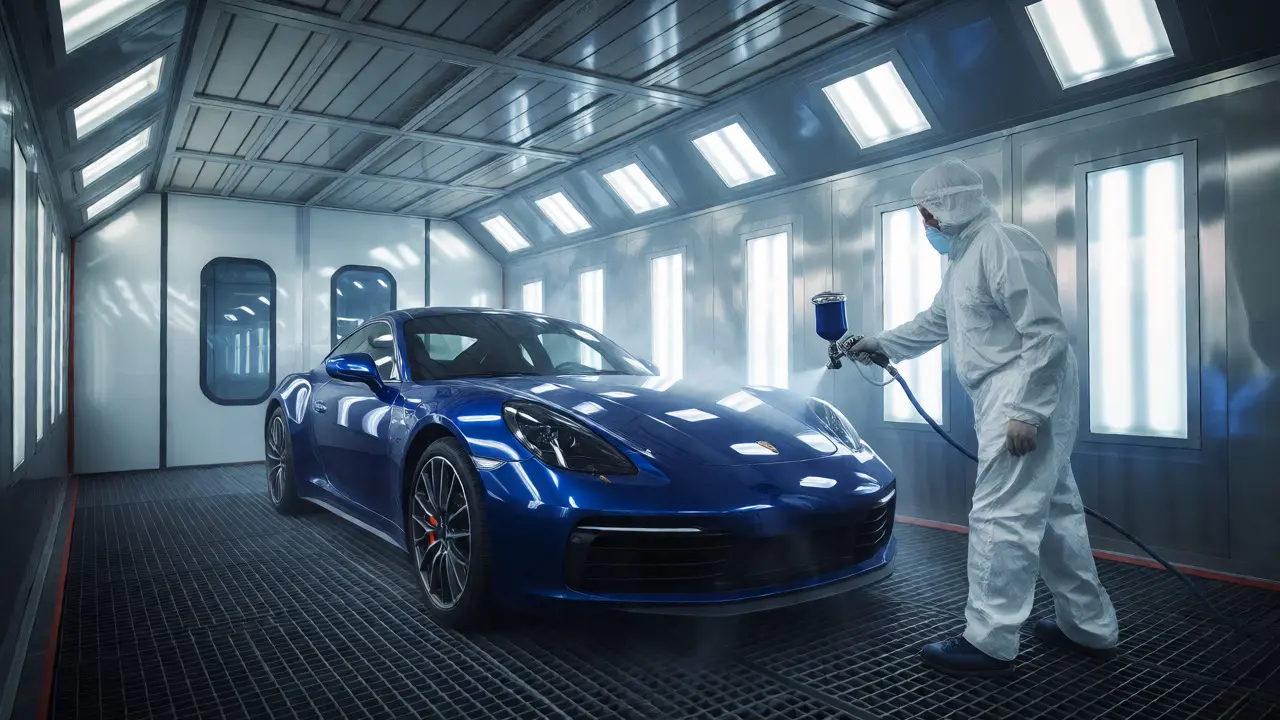
You’ve probably seen it before. A freshly painted fender looks like a mirror until you catch the light at an angle, and suddenly there are tiny specks embedded in the clear coat. Or maybe you tried to DIY a bumper job in your driveway, only to have leaves or bugs ruin the finish while the paint was still wet. It’s frustrating, expensive, and often avoidable if you understand how paint booth technology controls the environment during application. This isn’t just about having a fancy room with lights; it’s about physics, airflow, and filtration working together to create a sterile zone where paint can cure without interference.
The core problem with open-air painting is simple: air is dirty. Even in a clean garage, microscopic particles of dust, pollen, and skin cells float around. When paint is sprayed, it’s essentially a liquid mist that dries by solvent evaporation. If any solid particle hits that wet surface, it gets trapped. Once the paint cures, that particle is permanently part of the finish. You can try to sand it out, but you risk cutting through the color layer. Professional shops use specialized equipment not because they want to show off, but because controlling the air is the only way to guarantee a factory-quality finish on a repair panel.
How Airflow Creates a Sterile Painting Zone
The magic of a modern spray booth isn't the walls; it's the movement of air. Most professional booths use a downdraft system. Imagine the ceiling as a giant fan pushing air straight down toward the floor. The vehicle sits on a grid or platform, and the air flows vertically past the car, carrying any loose particles away from the wet paint and pulling them down into filters beneath the floor.
This vertical flow does two critical things. First, it prevents horizontal turbulence. If air moved side-to-side, it would swirl dust back onto the panel being sprayed. Downdraft ensures that once a particle passes the car, it’s gone. Second, it maintains positive pressure inside the booth. This means the air pressure inside is slightly higher than outside. So, if there’s a small gap in the door seal, clean air pushes out rather than dirty air sucking in. This barrier keeps contaminants out even when technicians walk in and out quickly.
Some older or smaller shops use cross-draft systems, where air moves from one side to the other. While cheaper to install, they’re less effective for high-end finishes because the air has to travel horizontally across the wet paint, picking up debris along the way. For anything beyond basic touch-ups, downdraft is the standard. In Portland, where humidity fluctuates wildly between seasons, this controlled airflow also helps manage the drying rate, preventing issues like blushing (a white haze caused by moisture condensing in the paint).
The Filtration System: Capturing Contaminants Before They Hit the Paint
Airflow is useless if the air itself is full of junk. That’s where the air filtration system acts as the booth's lungs. There are typically three stages of filtration in a high-quality booth, each serving a specific purpose.
- Pre-filters: These are usually coarse pads located at the intake vents. They catch large debris like lint, hair, and big dust bunnies. Think of them as the first line of defense. If these get clogged, airflow drops, and the booth stops working efficiently.
- Main Filters: Located behind the pre-filters, these are denser media designed to capture medium-sized particles. They protect the final stage and ensure the air entering the main chamber is already relatively clean.
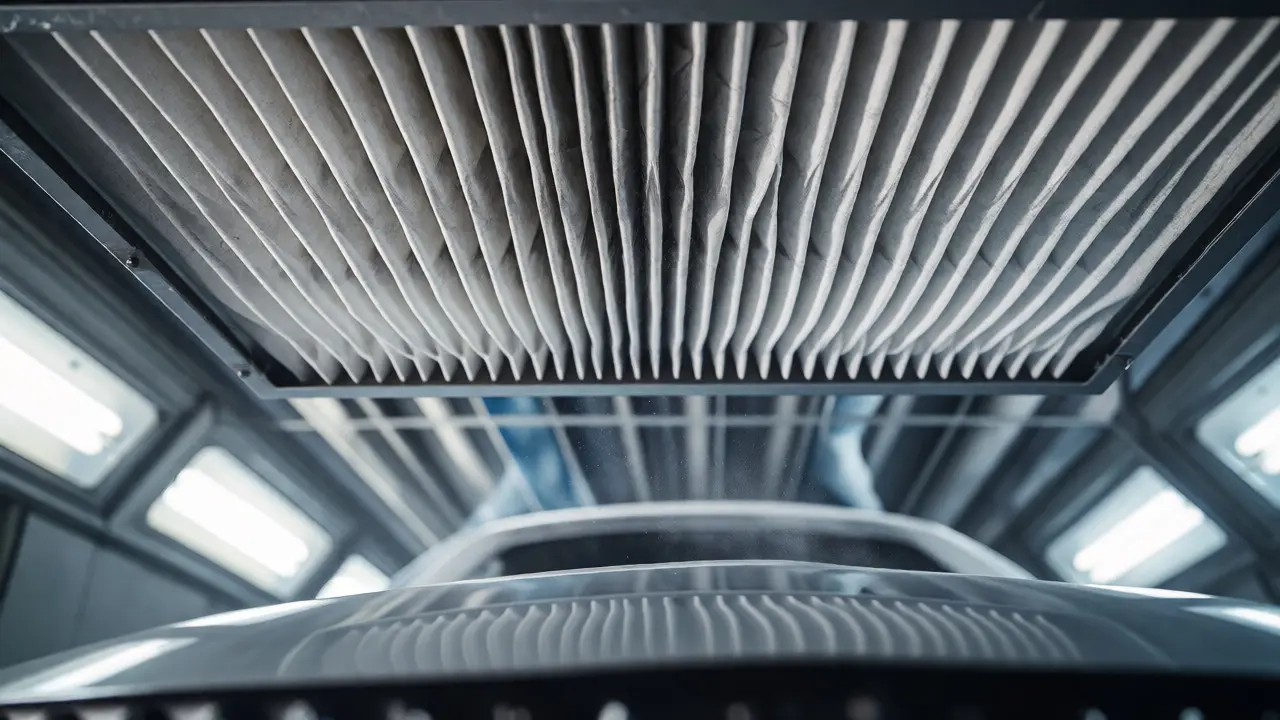
- Final Filters (Ceiling Plenums): This is the most critical component. These dense, pleated filters cover the entire ceiling. As air is forced through them, they trap particles as small as 1-5 microns. Since humans shed skin cells and clothing fibers constantly, this level of filtration is necessary to keep the "clean room" status intact.
Maintenance here is non-negotiable. Many shop owners skip filter changes to save money, but a clogged filter reduces airflow velocity. If the air moves too slowly, it doesn’t sweep particles away fast enough. Instead, they settle on the wet paint. A good rule of thumb is to check pressure gauges daily. If the pressure drop across the filters exceeds the manufacturer’s limit, swap them out. It’s cheaper than repainting a hood.
Temperature and Humidity Control for Perfect Curing
Dust isn’t the only enemy. Temperature and humidity dictate how paint behaves. Modern automotive paints, especially waterborne bases and clear coats, are sensitive to environmental conditions. If it’s too cold, the solvents evaporate too slowly, leading to sagging or runs. If it’s too hot, the surface skins over before the underlying layers dry, trapping solvents and causing bubbles later.
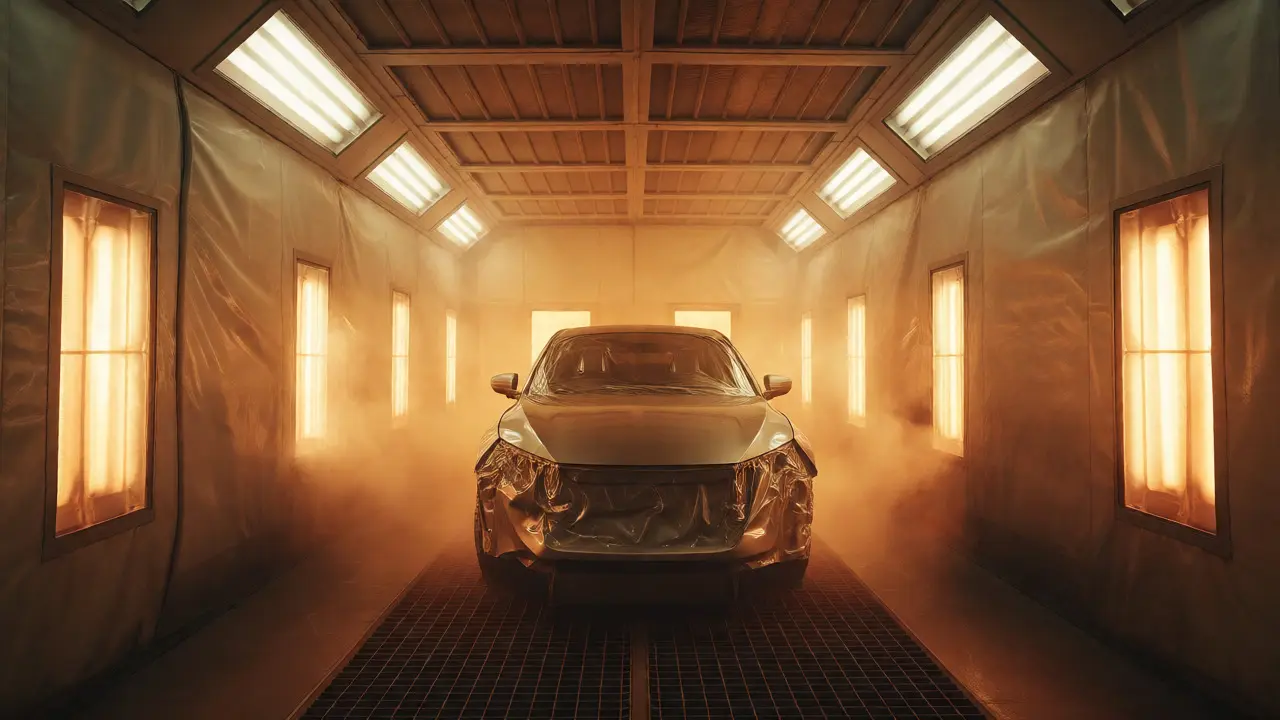
Booths come equipped with heating units and sometimes dehumidifiers. During winter months in places like Oregon, ambient temperatures can drop below 50°F (10°C). Most paint manufacturers specify an ideal application range between 65°F and 75°F (18°C-24°C). The booth’s heaters bring the air up to this range before spraying begins. Some advanced systems even monitor relative humidity. High humidity slows down solvent evaporation, which can cause "fish eyes" or poor adhesion. By heating the air, the booth lowers its relative capacity for moisture, effectively drying the air without needing separate dehumidification hardware in many cases.
After spraying, the booth switches to a bake cycle. Here, the temperature is raised to accelerate curing. This isn’t just about speed; it’s about chemical reaction. Two-component urethane clear coats need heat to fully cross-link their polymers. Without proper baking, the finish remains soft and vulnerable to scratches for weeks. With a controlled bake, the car is ready to drive in hours, not days.
Lighting and Visibility: Seeing What You Spray
You can’t fix what you can’t see. Poor lighting leads to missed spots, uneven coverage, and visible defects. Old-school booths used incandescent bulbs that generated excessive heat and cast a yellowish glow, making it hard to judge true color match. Today, LED panels are the norm. They provide bright, cool, daylight-balanced illumination (around 5000K-6500K color temperature).
Why does this matter? Color perception changes under different lights. A mismatched panel might look fine under warm tungsten light but glaringly obvious under sunlight. Daylight LEDs mimic natural sun, allowing techs to spot orange peel (a textured appearance) or dirt nibs immediately. Some booths also feature dimmable controls. Lowering the light intensity can help highlight surface irregularities by creating shadows in the imperfections, making them easier to identify before the paint dries.
Common Mistakes That Ruin Dust-Free Results
Even with the best technology, human error happens. Here are the most frequent pitfalls I’ve seen in shops that claim to be "dust-free" but aren’t:
- Skipping the Tack Cloth: After masking, you must wipe the panel with a tack cloth-a sticky, cheesecloth-like material. This picks up residual dust from sanding or handling. Skipping this step guarantees contamination.
- Poor Masking Techniques: Tape edges lift if not pressed down firmly. Dust gets under the tape, and when you remove it, the edge is ragged and contaminated.
- Overlooking Technician Hygiene: People generate dust. Wearing cotton shirts sheds fibers. Synthetic, anti-static coveralls reduce shedding significantly. Also, walking across the booth floor kicks up dust from the grid. Techs should move deliberately and avoid dragging feet.
- Inadequate Cleaning Between Jobs: Sweeping the floor isn’t enough. Vacuuming with a HEPA-filter vacuum is essential to remove fine particulates that brooms scatter into the air.
| Factor | Open Air / Garage | Professional Downdraft Booth |
|---|---|---|
| Airflow Direction | Random / Turbulent | Controlled Vertical (Downdraft) |
| Filtration Level | None or Minimal | Multi-stage (Pre, Main, Final) |
| Particle Size Caught | >100 microns | <5 microns |
| Temperature Control | Ambient (Variable) | Precise (±2°F stability) |
| Curing Time | Days (Air Dry) | Hours (Forced Bake) |
| Risk of Contamination | High | Very Low |
Is a Paint Booth Worth the Investment?
If you’re running a body shop, the answer is almost always yes. The cost of a quality booth ranges from $15,000 for basic models to over $100,000 for automated, climate-controlled systems. But consider the ROI. A single redo due to dust contamination costs labor, materials, and lost time. Multiply that by ten jobs a month, and the booth pays for itself quickly.
For independent painters or mobile detailers, owning a booth might not make sense financially. However, partnering with a local shop that rents out booth time can give you access to this technology without the capital expenditure. You bring the prep work, they provide the sterile environment. It’s a smart hybrid model that keeps quality high and overhead low.
Ultimately, dust-free car paint application relies on managing invisible variables. It’s not magic; it’s engineering. By controlling airflow, filtering air, regulating temperature, and ensuring proper lighting, you remove the guesswork. The result is a finish that looks like it came straight from the factory, regardless of whether it’s a classic restoration or a daily driver repair.
How long does it take to paint a car in a booth?
The actual spraying process takes about 4-6 hours for a full respray, depending on the number of colors and complexity. However, the total time includes prep, masking, and baking. Expect the car to be in the booth for 12-24 hours total to allow for proper curing cycles.
Can I paint in my garage without a booth?
You can, but results will vary. To minimize dust, wet down the floor, use plastic sheeting to enclose the area, and wait for calm weather. However, without filtered downdraft air, you’ll likely encounter some contamination. It’s suitable for primers or base coats that will be sanded later, but risky for final clear coats.
What causes "orange peel" in car paint?
Orange peel is a textured surface resembling citrus skin. It’s often caused by improper spray technique, incorrect viscosity of the paint, or air pressure issues. While not strictly a dust issue, it’s related to the application environment. Proper booth temperature and humidity control help maintain consistent paint viscosity, reducing the likelihood of orange peel.
How often should paint booth filters be changed?
It depends on usage and local air quality. Check pressure gauges weekly. Typically, pre-filters need replacement every 1-3 months, while final filters last 6-12 months. Always follow the manufacturer’s guidelines based on your specific booth model and volume of work.
Does humidity really affect car paint?
Yes, significantly. High humidity slows solvent evaporation, which can lead to blushing (white haze) or poor gloss. Low humidity speeds up drying, potentially causing dry spray or rough texture. Modern booths adjust temperature to control relative humidity, ensuring optimal conditions for paint flow and leveling.