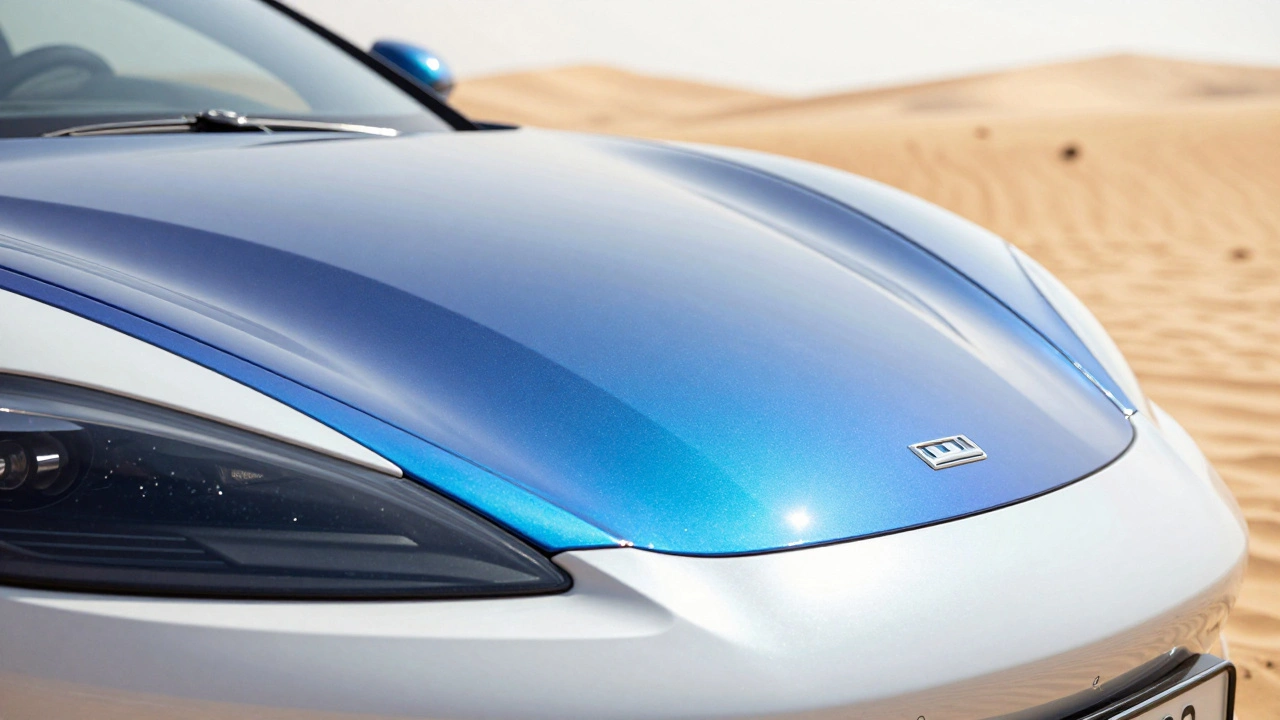
Have you ever walked past a car in the shade and thought it was white, only to see it turn deep blue when the sun hit it? That isn't magic. It’s pearlescent paint, a sophisticated automotive finishing technology that uses specialized ceramic particles to create color-shifting, multi-tonal effects on vehicle surfaces. Unlike traditional solid colors or even standard metallic finishes, this type of paint doesn’t just sparkle; it refracts light to produce rich, deep hues that change dramatically depending on your viewing angle and the lighting conditions around you.
If you are considering a custom paint job or trying to understand why your new luxury vehicle has such a unique depth of color, understanding how pearlescent paint works is essential. This guide breaks down the science behind the shimmer, the application process, the costs involved, and whether this premium finish is right for your ride.
The Science Behind the Shimmer: Ceramic Particles vs. Metal Flakes
To really get why pearlescent paint looks so different from other finishes, we need to look at what’s actually inside the can. Most people assume all shiny paints are the same, but the difference lies in the pigments used.
Standard metallic paint incorporates aluminum powder into the base coat. These metal flakes reflect light directly back to your eye, creating a simple sparkle effect. Think of it like looking at a mirror-it bounces light straight back.
Pearlescent paint, however, replaces those metal flakes with microscopic ceramic particles, commonly known as "mica." These crystals perform a dual optical function. They don’t just reflect light; they also refract it. As light passes through the mica particles, it slows down and splits into multiple component colors. This is similar to how a prism splits white light into a rainbow.
At the heart of many high-end pearlescent systems are interference pigments. These special particles selectively reflect certain wavelengths of light while allowing others to pass through. When you look at the car, the specific wavelengths reaching your eyes depend on the angle of incidence and reflection. This selective reflection creates the stunning color-shifting visual effects observed on pearlescent-finished vehicles, producing dynamic transitions rather than static sparkle.
How Pearlescent Paint Is Applied: A Multi-Step Process
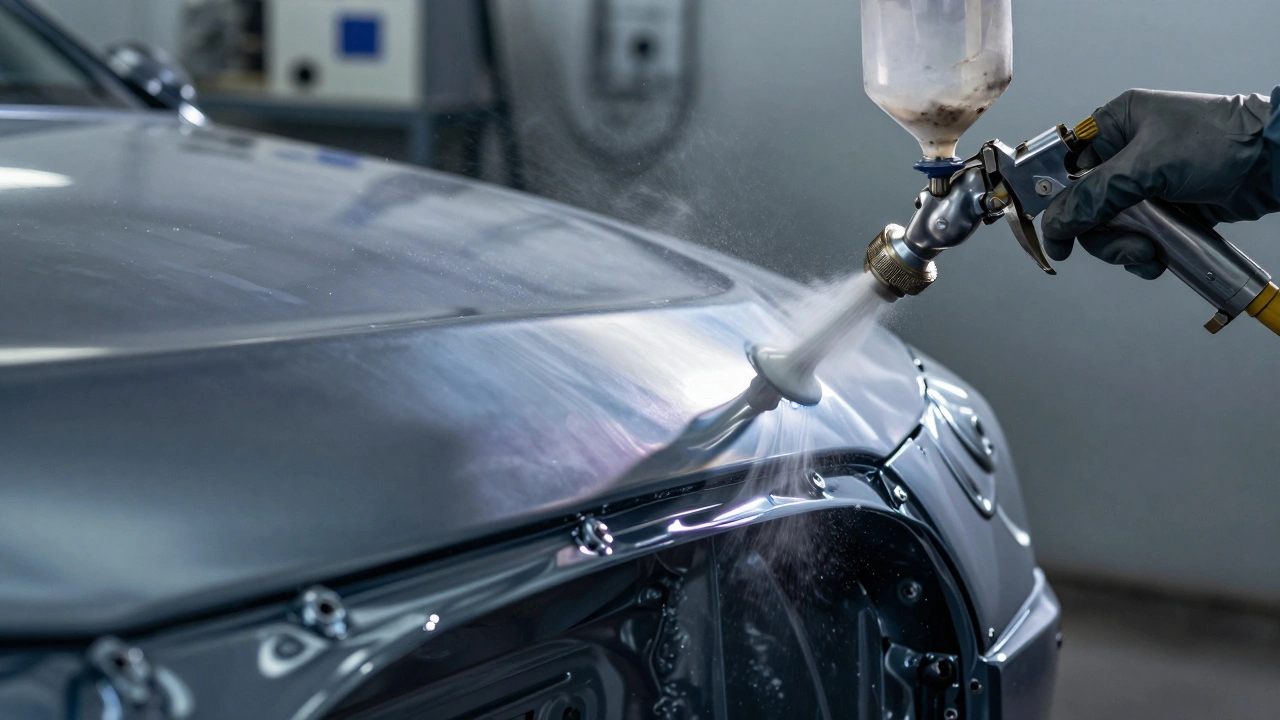
You can’t just grab a spray can of pearlescent paint and expect professional results. The application process is complex and requires precision to ensure the optical effects work correctly across the entire vehicle. Here is how professionals typically apply this finish:
- Surface Preparation: The vehicle body is thoroughly cleaned, sanded, and primed. Any imperfections here will be magnified by the clear coat later, so this step is critical.
- Base Coat Application: A solid color base coat is applied first. This serves as the foundational layer and determines the underlying tone of the final finish.
- Pearlescent Layer: The specialized layer containing the ceramic particles or interference pigments is sprayed carefully over the base. This is where the magic happens. Technicians must manage pigment concentration meticulously-too little, and the effect is weak; too much, and the finish looks muddy or uneven.
- Clear Coat: Multiple layers of clear coat are applied. This protects the delicate pearl layer from UV damage and scratches while enhancing gloss properties. The thickness of these coats affects how light interacts with the surface.
- Curing and Polishing: The paint is allowed to cure completely before final polishing. This removes any minor orange peel texture and ensures a smooth, glass-like surface that maximizes light refraction.
This layered structure is essential. Without proper layering and thickness control, the color-shifting effects won’t appear uniformly, leading to patchy or inconsistent results.
Visual Effects: More Than Just Sparkle
The primary advantage of choosing pearlescent paint is aesthetic enhancement. In direct sunlight, the curves of the vehicle body yield subtle transitions in color. You might see hints of green in a red finish, or purple tones in a black car, simply by walking around it.
This angle-dependent color variation is the defining characteristic that distinguishes pearlescent finishes from both metallic and standard lacquered options. Enthusiasts often describe this as having a "magical aura," shifting shades with mesmerizing fluidity based on the viewing angle. It adds a level of depth and visual interest that standard monotone finishes cannot achieve.
Beyond beauty, there’s a practical benefit: blemish concealment. Like metallic paint, pearlescent finishes scatter light effectively. Small dents, dings, or minor surface imperfections are often less visible because the light-scattering properties of the coating disrupt the shadow patterns that usually make damage obvious. From certain angles, minor damage can become nearly imperceptible.
Advanced Options: Chameleon and Hybrid Finishes
The market for pearlescent paint has evolved beyond basic color shifts. Today, you can find advanced formulations that offer even more dramatic effects:
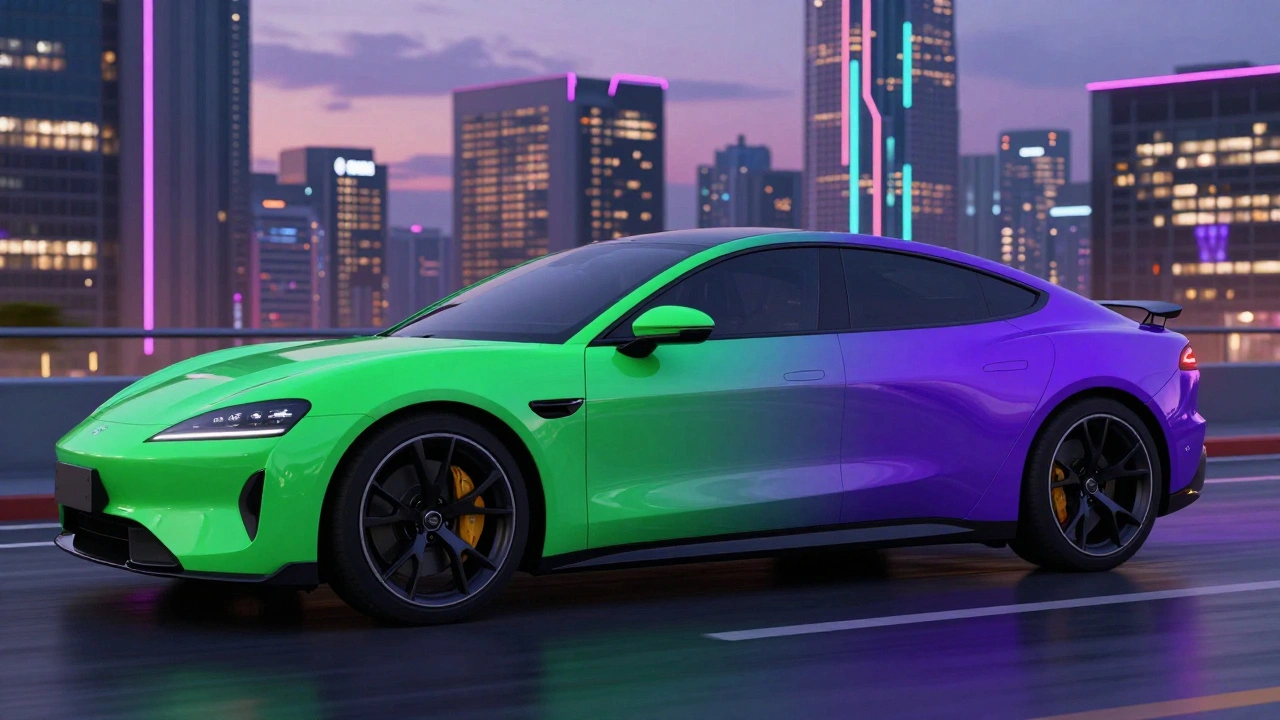
- Chameleon Paints: These use high concentrations of interference pigments to flip between two or more distinct colors. For example, a car might appear bright green in one light and deep purple in another. Brands like DNA Paints offer specific named options such as "Northern Lights" or "Dragon Fire" that cater to custom builders seeking extreme visual impact.
- Hybrid Metallic-Pearl: Some manufacturers combine metallic flakes with pearlescent pigments. This produces a hybrid finish that offers the sparkling intensity of metal with the added depth and color variation of pearl. It’s a popular choice for those who want maximum shine without losing the color-shift complexity.
- Thermochromic Pigments: A newer innovation involves pigments that respond to temperature changes. These finishes can shift color not just with viewing angle, but also as the car heats up in the sun or cools down in the shade, adding a dynamic, interactive element to the vehicle’s appearance.
These advanced options are available through various suppliers, including providers focused on peelable paints, traditional finishes, and specialty effects. Whether you’re using traditional spray equipment or exploring dip coatings, the versatility of modern pearlescent technology allows for creative freedom across different application methods.
| Feature | Solid Color | Metallic Paint | Pearlescent Paint |
|---|---|---|---|
| Pigment Type | Dye-based | Aluminum flakes | Ceramic/Mica particles |
| Light Interaction | Absorbs/Reflects uniformly | Direct reflection (sparkle) | Refraction & selective reflection |
| Color Shift | None | Minimal | Significant, angle-dependent |
| Blemish Hiding | Poor | Good | Excellent |
| Cost Level | Low | Medium | High |
| Repair Difficulty | Easy | Moderate | Difficult |
The Cost Factor: Why Pearlescent Paint Is Premium
Let’s address the elephant in the room: cost. Pearlescent auto paint tends to cost significantly more than metallic paint, making such magnificent finishes difficult to achieve on limited budgets. The expense comes from two main sources: material costs and labor complexity.
The ceramic particles and interference pigments themselves are expensive to manufacture. Additionally, the multi-step application process requires more time and skill. A professional body shop needs to ensure consistent coverage across the entire vehicle. Because the effect is light-dependent, inconsistent application thickness results in visible variation in color-shifting effects, which is unacceptable for a high-quality finish.
Moreover, the cost extends beyond initial application. If you get into a fender bender, repairing pearlescent paint is challenging. Unlike standard solid colors where matching is relatively straightforward, achieving consistent color-shifting effects when repainting sections requires careful pigment concentration management and specialized application expertise. Many owners find that touch-ups or partial repaints are difficult to match perfectly, sometimes requiring full panel or even full-body repaints to maintain uniformity.
Who Should Choose Pearlescent Paint?
So, is pearlescent paint worth the investment? It depends on your goals and budget. This finish is ideal for:
- Custom Builders: If you’re building a show car or a daily driver meant to turn heads, the unique visual impact of color-shifting finishes is hard to beat.
- Luxury Vehicle Owners: Many high-end manufacturers use pearlescent finishes to convey exclusivity and sophistication. Restoring or maintaining this look preserves the vehicle’s intended aesthetic value.
- Enthusiasts Seeking Longevity: While expensive upfront, the durability of a properly applied pearlescent finish (protected by thick clear coats) can exceed that of some standard paints, especially if maintained well.
However, if you’re on a tight budget, plan to sell the car quickly for profit, or live in an area with frequent rock chips and harsh weather, the repair difficulties and higher costs might outweigh the aesthetic benefits. In those cases, a high-quality metallic finish might offer a better balance of style and practicality.
Finding the Right Service Provider
Not all body shops are equipped to handle pearlescent paint correctly. Because the technical challenges require specific expertise, you should look for providers with experience in multi-stage coatings. Ask potential shops about their process for managing pigment concentration and ensuring uniform layer thickness.
For DIY enthusiasts, companies like PaintWithPearl.com have operated since 2005, providing custom paint pigments including chameleon pearls and holographic flakes. They offer thousands of color options and free U.S. shipping on orders exceeding $80. However, even with retail products, success depends heavily on your ability to replicate professional spraying techniques. Mistakes in application can lead to wasted materials and poor results, so consider the learning curve before attempting a full vehicle wrap or paint job yourself.
Is pearlescent paint harder to repair than regular paint?
Yes, significantly. Regular solid paint can be mixed and matched easily. Pearlescent paint relies on precise layers of ceramic particles and clear coats. Matching the exact pigment concentration and layer thickness during a repair is difficult, often resulting in visible differences between the repaired section and the rest of the car. Full panel or body repaints are frequently recommended for seamless results.
Does pearlescent paint fade faster than metallic paint?
Not necessarily. The longevity depends largely on the quality of the clear coat and maintenance. Since pearlescent finishes require multiple layers of clear coat for protection, they can be very durable against UV rays and environmental damage. However, if the clear coat fails, the underlying pearl layer is exposed and may degrade faster than a simpler metallic finish.
What is the difference between chameleon paint and standard pearlescent paint?
Standard pearlescent paint adds depth and subtle color shifts to a base color. Chameleon paint uses higher concentrations of interference pigments to create dramatic, complete color flips (e.g., from green to purple) depending on the viewing angle. Chameleon finishes are more extreme, more expensive, and technically challenging to apply evenly.
Can I apply pearlescent paint myself as a DIY project?
You can buy pearlescent pigments and kits online, but achieving a professional result is extremely difficult without proper equipment and experience. The key challenges are managing pigment concentration, ensuring even layer thickness, and applying sufficient clear coat. Uneven application leads to patchy color shifts. For a full vehicle, professional service is highly recommended.
How much does a pearlescent paint job cost compared to standard paint?
A full pearlescent paint job typically costs 20% to 50% more than a standard metallic finish. The exact price varies by vehicle size, condition, and the complexity of the color shift desired. Custom chameleon finishes can cost even more due to the specialized materials and increased labor time required for perfect blending.