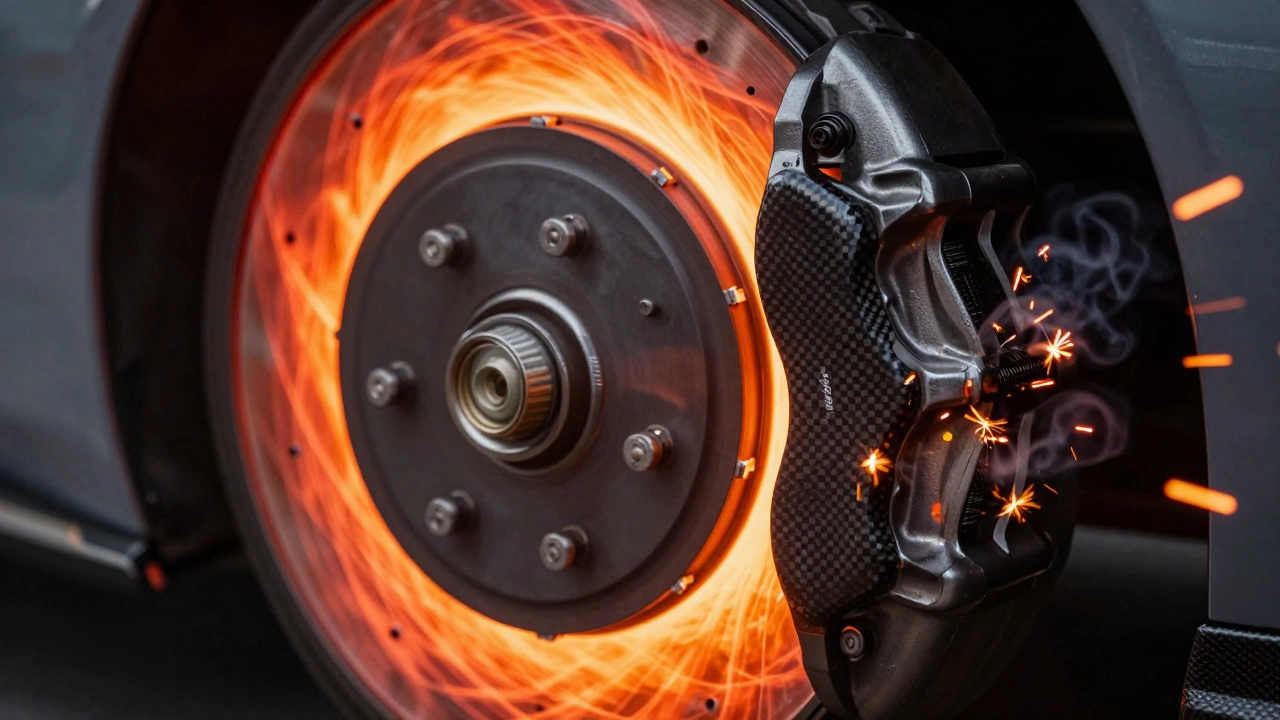
You press the pedal. You expect the car to stop. But when you’re driving a high-performance machine at speed, that expectation comes with a hidden variable: heat. Stock braking systems on modern sports cars are engineered for daily commuting-low noise, low dust, and comfortable cold performance. They are not designed to handle the thermal load of repeated hard stops from highway speeds or the intense deceleration demands of a track day. When those limits are breached, you experience brake fade: a spongy pedal, reduced stopping power, and a dangerous loss of control.
Upgrading your performance brakes isn't just about looking cool behind large alloy wheels; it is about maintaining consistent, predictable friction under extreme stress. Whether you are carving mountain passes or lapping a circuit, the goal is simple: shorter stopping distances, zero fade, and a firm, linear pedal feel. This guide breaks down exactly which components matter, how they interact, and which upgrades offer the best return on investment for your specific driving habits.
The Core Problem: Why Stock Brakes Fail Under Pressure
To understand why an upgrade is necessary, you have to look at what happens inside a stock braking system during aggressive driving. Friction generates heat. In a standard setup, that heat has nowhere to go quickly enough. As temperatures rise, the physical properties of your brake components change.
First, consider the fluid. Factory-installed DOT 3 or DOT 4 brake fluid is formulated for typical urban conditions. It absorbs moisture from the air over time, lowering its boiling point. When you brake hard repeatedly, the fluid near the calipers can boil, turning into vapor. Since gas compresses and liquid does not, your pedal sinks toward the floor, and braking force disappears instantly. This is known as fluid fade.
Next, look at the pads. Stock friction materials are often semi-metallic or ceramic compounds tuned for quiet operation. At high temperatures, these compounds can glaze over or simply lose their coefficient of friction. You push harder on the pedal, but the car doesn’t slow down proportionally. Finally, the rotors themselves can warp or crack if the heat exceeds their structural tolerance, leading to vibration and uneven wear. An upgrade addresses each of these failure points systematically.
Stage 1: The High-ROI Foundation (Pads and Fluid)
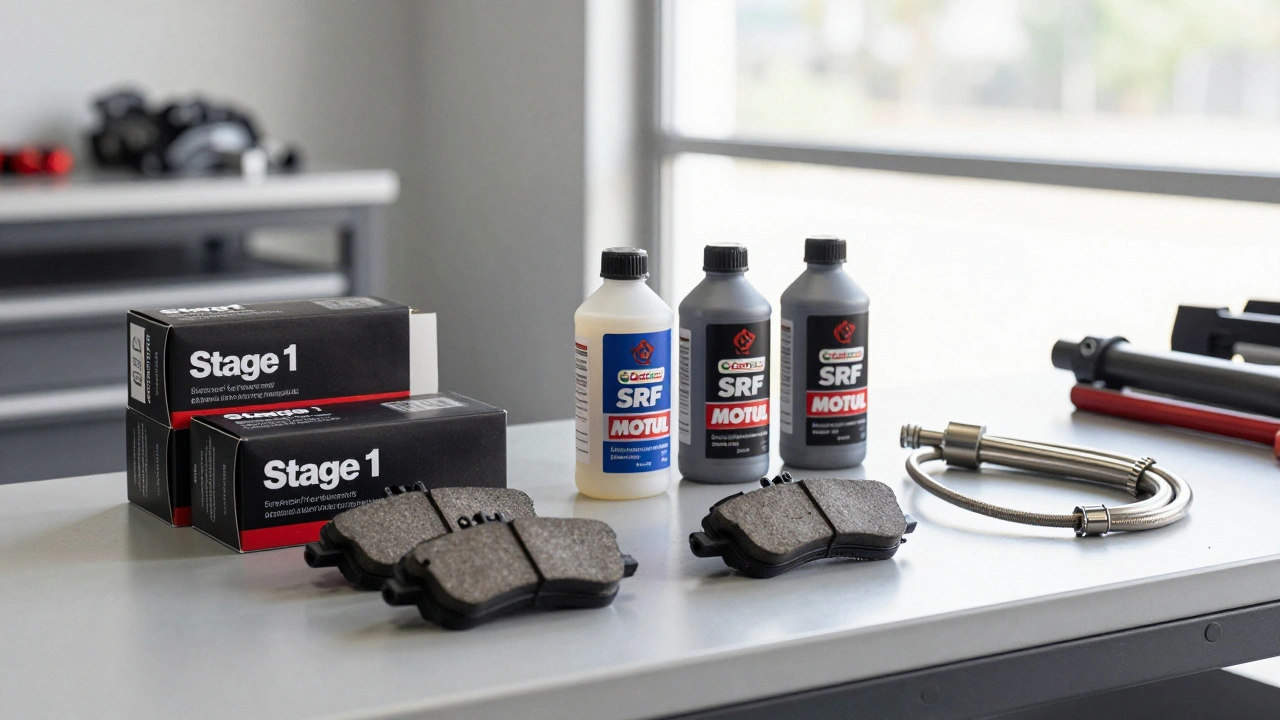
If you are new to performance upgrades, start here. Industry experts and track-day instructors consistently agree that changing your friction material and hydraulic fluid offers the highest performance gain per dollar spent. These two changes address the root causes of fade without requiring major mechanical alterations.
High-Performance Brake Pads
Not all performance pads are created equal. You need to match the compound to your usage scenario:
- Street/Sport Compounds: These provide better bite than OEM pads and handle moderate spirited driving well. They remain effective when cold, meaning you won’t struggle to stop at a red light in winter traffic. Brands like PowerStop offer integrated kits that bundle these pads with drilled or slotted rotors for easy installation.
- Track-Day Compounds: Designed for higher operating temperatures (often 500°F+). They resist fade incredibly well but may squeal or produce little grip until they reach temperature. If you drive mostly on the street, avoid these unless you plan to warm them up before every trip.
- Race Compounds: Reserved for closed-course competition. They require significant heat to work and will smoke and smell during normal street use. Do not install these on a daily driver.
High-Temperature Brake Fluid
Swapping to a racing-grade fluid is non-negotiable for any serious performance application. Look for fluids with a high dry and wet boiling point. Popular choices include Castrol SRF, Motul RBF 600, or ATE SL.6. These synthetic glycol-based fluids resist moisture absorption and maintain viscosity under extreme heat. When upgrading fluid, always perform a complete flush and bleed of the system to remove old, contaminated fluid. Even a small amount of old fluid can lower the overall boiling point of the new mixture.
Stage 2: Hydraulic Precision and Cooling
Once your friction and fluid are sorted, focus on the delivery system. How effectively does pressure travel from your foot to the caliper?
Stainless Steel Braided Lines
Factory rubber hoses expand slightly under high pressure. This expansion wastes energy that should be clamping the rotor, resulting in a softer pedal feel. Replacing them with stainless steel braided lines eliminates this compression. The result is a firmer, more immediate pedal response. You get better modulation, allowing you to brake closer to the threshold of tire lockup without panic. This is a relatively inexpensive upgrade that significantly improves driver confidence.
Brake Cooling Ducts
Heat management is critical. Many sports cars suffer from inadequate airflow to the front brakes, which bear roughly 70% of the braking load. Installing aftermarket cooling ducts or deflectors directs ambient air directly onto the rotors. This active cooling helps dissipate heat between stops, extending the life of your pads and preventing rotor overheating. For canyon drivers or track enthusiasts, this is often the difference between consistent lap times and fading brakes by the end of a session.
Stage 3: Rotors and Big Brake Kits (BBKs)
This stage involves larger hardware changes. While visually striking, these upgrades come with higher costs and complexity. Evaluate them carefully based on your actual needs.
Drilled vs. Slotted vs. Ventilated Rotors
Ventilated rotors (with internal vanes) are the baseline for most sports cars because they pump air through the disc to cool it. Beyond that, manufacturers offer surface modifications:
- Slotted Rotors: Grooves help scrape away gas and debris buildup between the pad and rotor, improving initial bite and reducing glazing. They are generally safer for track use as they do not create stress risers.
- Drilled Rotors: Holes aid in gas evacuation and water shedding (good for rain). However, the holes act as stress concentrators. Under extreme heat and heavy loads, cracks can initiate at these points. For frequent track use, solid or slotted rotors are often preferred over drilled ones for longevity.
Big Brake Kits (BBKs)
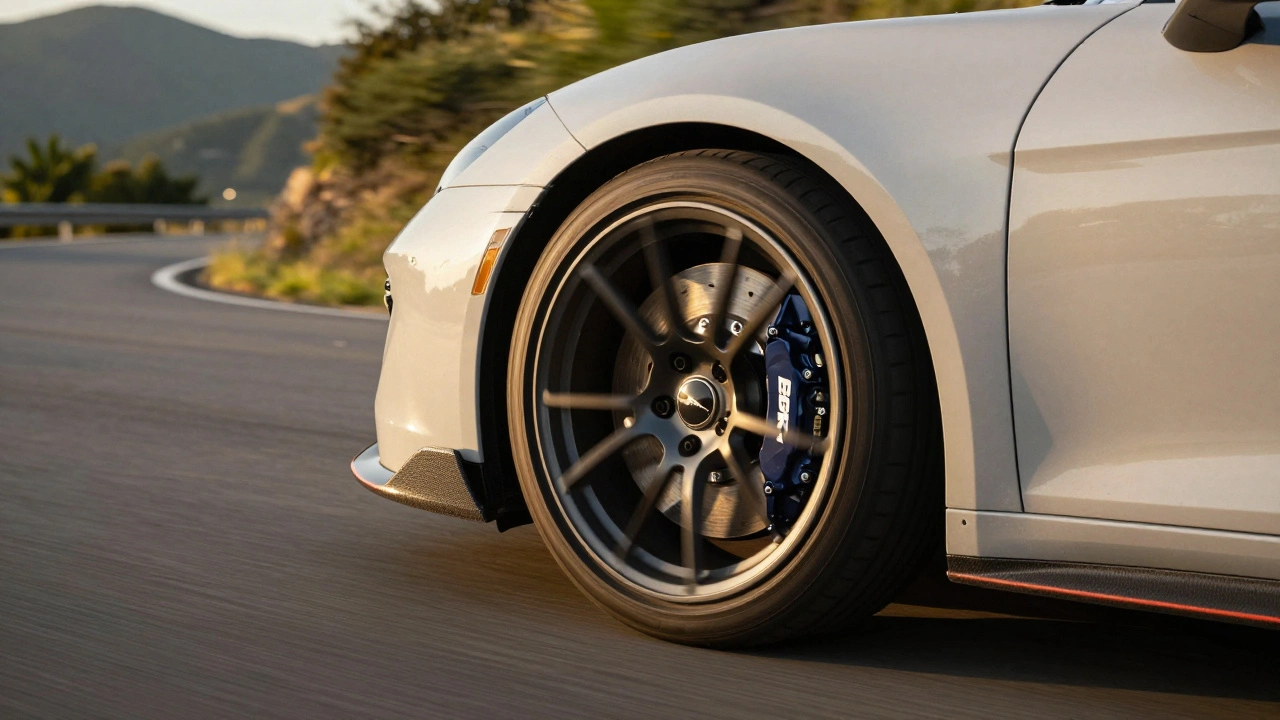
A BBK replaces your entire front (and sometimes rear) braking assembly with larger diameter rotors and multi-piston fixed calipers. The physics are straightforward: a larger rotor increases the lever arm, generating more torque with less clamping force. Multi-piston calipers distribute pressure evenly across the pad, reducing hot spots.
Are BBKs worth it? For a daily driver that never sees a track, likely not. The stopping distance in a single emergency stop is limited by tire grip, not brake torque. However, for track days, time attacks, or heavy vehicles, BBKs provide massive heat capacity. They allow you to sustain high-speed stops lap after lap without fade. Just remember: larger calipers require larger wheels (often 19 inches or more) to clear the hardware.
| Upgrade Type | Best For | Cost Estimate | Key Benefit | Drawback |
|---|---|---|---|---|
| Pads & Fluid | Spirited Street / Entry Track | $150 - $400 | Eliminates fluid/pad fade | Increased dust/noise |
| Braided Lines | All Performance Drivers | $200 - $500 | Firmer pedal feel | Installation complexity |
| Slotted/Drilled Rotors | Street / Occasional Track | $300 - $800 | Better bite, aesthetics | Cracking risk (drilled) |
| Big Brake Kit (BBK) | Heavy Track Use / Racing | $2,000 - $5,000+ | Massive heat capacity | Expensive, requires big wheels |
Maintenance: Keeping Your System Safe
An upgraded system is only as good as its maintenance. Performance brakes demand more attention than stock setups.
Bedding-In New Pads
New pads must be bedded properly to transfer a layer of friction material onto the rotor. Failure to do so results in noise, vibration, and poor performance. The process typically involves 5-10 moderate stops from 30 mph to 10 mph, followed by 5-10 harder stops from 60 mph to 10 mph. Crucially, you must let the brakes cool completely without riding them afterward. Riding the brakes transfers material unevenly, causing warping.
Fluid Flushes
Even high-quality racing fluid degrades. For track users, flush your fluid after every event. For street drivers with performance fluid, check the boiling point annually or flush every 2 years. Moisture is the enemy.
Inspection Intervals
Check your pads, rotors, and lines every 12,000 miles or after any track day. Look for:
- Pad thickness below 3mm.
- Deep scoring or cracks on rotors.
- Leaks or bulges in brake lines.
- Sticky caliper slides (lubricate with high-temp silicone grease, never on the friction surface).
Decision Tree: What Should You Buy?
Don't spend money on components you don't need. Ask yourself these questions:
- Do I drive on the track? If yes, prioritize high-temp fluid and track-rated pads immediately. Consider a BBK if you run full sessions regularly.
- Do I drive twisty mountain roads? Focus on ventilated/slotted rotors, sport pads, and cooling ducts. Heat buildup is slower but sustained.
- Is this a daily commuter? Stick to quality street/sport pads and a fluid flush. Avoid race compounds and expensive BBKs unless you value aesthetics over cost-efficiency.
- Have I upgraded my tires? Brakes cannot outperform tires. If you still have worn-out all-seasons, no brake upgrade will shorten your stopping distance. Upgrade tires first.
Will bigger brakes stop my car faster in an emergency?
Generally, no. In a single emergency stop, stopping distance is determined by tire grip and ABS calibration, not brake size. Stock brakes can generate enough torque to lock the wheels or trigger ABS. Bigger brakes excel at repeated high-speed stops where heat management is critical, preventing fade over multiple events.
What is the best brake fluid for track use?
Look for fluids with a dry boiling point above 550°F (290°C). Top recommendations include Castrol SRF, Motul RBF 600, and ATE SL.6. Ensure the fluid is compatible with your vehicle’s seals and ABS system. Always bleed the system thoroughly after installation to remove air bubbles.
Should I drill or slot my rotors?
For track use, slotted rotors are generally safer as they reduce the risk of cracking caused by stress risers in drilled holes. Drilled rotors look great and help with water evacuation in rain, but they are more prone to failure under extreme thermal cycling. For street use, either works, but plain ventilated rotors are often sufficient and more durable.
How often should I change my brake fluid?
For street-driven performance cars, every 2 years is a safe rule. For track-use vehicles, you should flush and replace the fluid after every track day or event. Moisture absorption lowers the boiling point, increasing the risk of vapor lock and brake fade.
Can I install a Big Brake Kit myself?
It depends on the kit and your skill level. Some bolt-on kits are DIY-friendly, requiring basic tools and jack stands. However, many BBKs require precise alignment, bleeding procedures, and potentially wheel spacer adjustments. If you are unsure, professional installation is recommended to ensure safety and proper function.