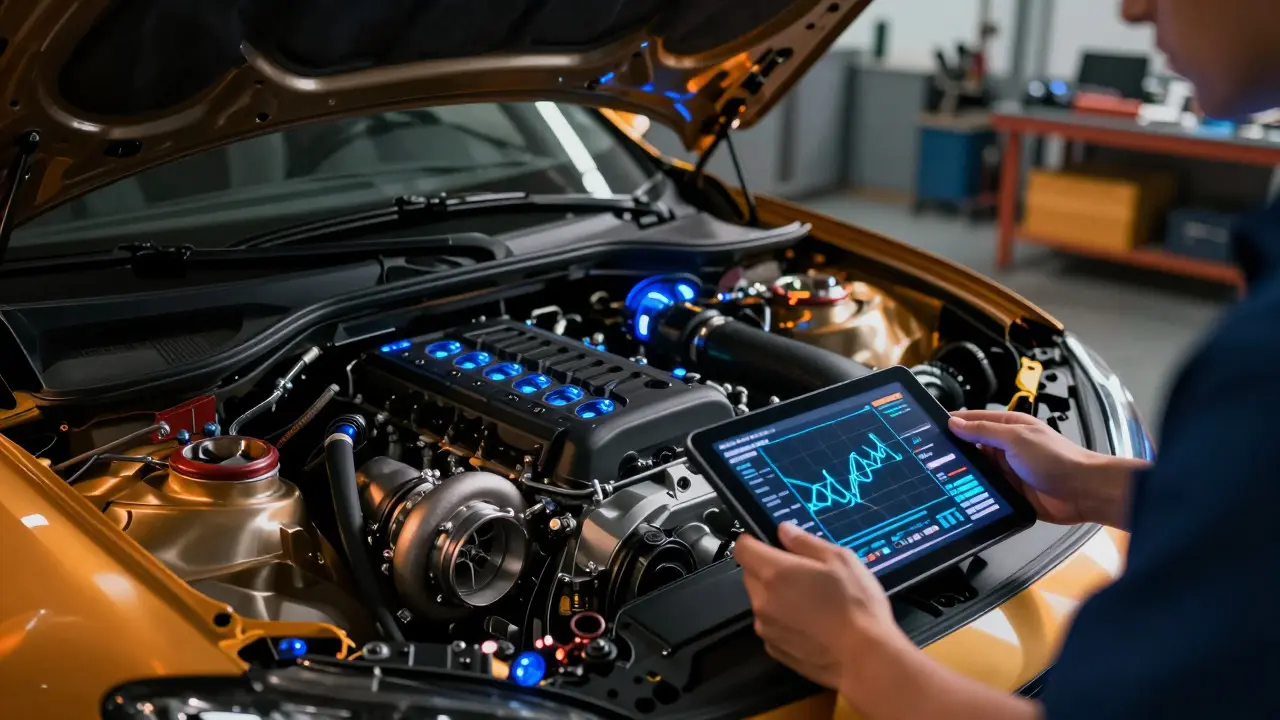
There is a persistent myth that installing a performance tune on your vehicle instantly voids the manufacturer’s warranty. For decades, this belief kept many enthusiasts from upgrading their cars, fearing that a single modified part would leave them stranded with full repair bills if anything else broke. But the legal reality has been different for quite some time. If you are considering an ECU remap or adding a turbocharger, understanding the specific protections offered by federal law is the first step toward making a smart decision.
The core issue isn't whether you can modify your car; it is how you prove what caused a failure when you do. This guide breaks down the mechanics of warranty claims in the post-tuning era, helping you navigate the process without losing sleep over potential mechanical failures.
The Legal Reality: The Magnuson-Moss Warranty Act
To understand your rights, we have to look at the Magnuson-Moss Warranty Act, which is a United States federal law that protects consumers against unfair warranty practices. Enacted in 1975, this legislation changed the landscape for automotive owners. Before this act, manufacturers could use "blanket clauses" to deny any claim if they found *any* non-OEM part in the car. Today, that approach is illegal.
Under current regulations, the burden of proof shifts entirely to the dealer or manufacturer. If you bring in a car with a blown transmission and it happens to have a tuned ECU, the dealership cannot simply point at the tuner and say, "That caused it." They must demonstrate that the modification was the direct cause of the specific failure. If they cannot prove causation, the warranty remains valid for that component.
This distinction is critical. A warranty is not a guarantee that your car will never break; it is a contract covering defects in materials and workmanship. Your job as an owner is to maintain the vehicle according to the manufacturer’s schedule. Your right as a consumer is to have modifications recognized as separate from unrelated mechanical failures.
How Dealers Determine Causation
So, how does a technician actually determine if a tune caused a problem? It rarely comes down to a simple visual inspection. In most modern cases, the diagnostic process involves reading data logs from the Engine Control Unit (ECU) and comparing them against factory specifications.
- Data Logging: Modern ECUs record parameters like boost pressure, air-fuel ratio, and ignition timing. If a failure occurred under extreme conditions that exceed factory limits, the data may show the tune pushed the engine beyond its design tolerance.
- Physical Inspection: Technicians look for signs of detonation, oil sludge, or overheating. While these can be symptoms of a bad tune, they can also result from poor maintenance, such as using incorrect oil viscosity or ignoring coolant leaks.
- Timeline Analysis: Did the failure happen immediately after the tune, or years later? A failure occurring six months after a software update is harder to link directly to the modification than one happening the next day.
If the dealer suspects the tune is the culprit, they might send the car to the manufacturer’s engineering department. This process can take weeks or even months. During this time, you are usually entitled to a loaner vehicle, provided you keep all documentation of your visits.
Common Misconceptions About Tuned Cars
Despite the legal clarity, several myths persist in the enthusiast community. Let's clear up the most common ones to help you plan your modifications wisely.
Myth 1: Any modification voids the entire warranty. This is false. Only the specific component affected by the modification is at risk. If you install a cold air intake and your power windows stop working, the intake is irrelevant to the electrical system. The window motor warranty should remain intact unless the intake somehow shorted out the wiring harness, which is highly unlikely.
Myth 2: You need to hide your mods. While honesty is always the best policy, you don't necessarily need to announce every bolt-on part during a routine oil change. However, hiding major changes like a turbo upgrade or a supercharger is risky. If a catastrophic engine failure occurs and the tech finds hidden hardware, it looks suspicious. Transparency builds trust and makes the causal argument harder for the dealer to make.
Myth 3: Extended warranties cover everything. Beware of third-party extended warranties. Unlike factory warranties governed by the Magnuson-Moss Act, these contracts often include fine print stating that any non-OEM part voids coverage. Always read the terms before purchasing an extended plan if you plan to modify your vehicle.
Best Practices for Protecting Your Investment
Even with strong legal backing, you want to minimize friction when dealing with dealerships. Here are practical steps to ensure your warranty experience remains smooth while enjoying your performance upgrades.
- Keep Detailed Maintenance Records: Use the manufacturer’s recommended fluids and parts for scheduled services. If you skip an oil change or use cheap aftermarket filters, the dealer has an easier time arguing negligence contributed to a failure. Keep receipts for every service.
- Document Your Modifications: Keep records of who installed your tune, when it was done, and what hardware was added. A reputable tuner will provide a write-up detailing the changes made to the ECU map.
- Revert to Stock for Major Repairs: If you suspect a serious issue that might be covered by warranty, consider flashing back to stock settings temporarily. This removes the variable of the tune from the equation and forces the dealer to look elsewhere for the cause.
- Know Your Rights: If a dealer denies a claim, ask for the specific evidence linking the mod to the failure. Often, once they realize you know the law, the negotiation becomes more reasonable.
Comparison: Factory vs. Aftermarket Warranty Coverage
Understanding the difference between factory protection and aftermarket guarantees helps clarify where your risks lie. The table below highlights key distinctions that affect your decision-making process.
| Feature | Factory Warranty | Aftermarket/Extended Warranty |
|---|---|---|
| Governing Law | Magnuson-Moss Warranty Act | Contract Terms (Varies) |
| Burden of Proof | Manufacturer must prove mod caused failure | Owner often must prove mod did NOT cause failure |
| Mod Policy | Component-specific exclusion | Frequent blanket voidance clauses |
| Claim Process | Dealer/Mfr Engineering Review | Third-Party Adjuster Approval |
| Typical Duration | 3-5 Years / 36k-60k Miles | Variable (Often 5-7 Years) |
Notice the shift in burden of proof. With a factory warranty, you start with the advantage. With a third-party plan, you often start with a disadvantage. This is why many tuners recommend relying on the factory warranty for the first few years and then transitioning to a comprehensive aftermarket plan only after the high-risk period has passed.

Navigating the Claim Process
If you do end up with a denied claim, don't panic. The initial denial is often just a starting point for negotiation. Here is a typical workflow for resolving disputes:
First, request a written explanation of the denial. Ask specifically which component failed and what evidence links it to your modification. Vague answers are red flags. Second, consult your tuner. Many professional shops have experience with warranty disputes and can provide technical testimony or data logs that support your case. Third, consider filing a complaint with the Better Business Bureau or your state’s Attorney General’s office. These bodies track patterns of unfair warranty practices and can sometimes intervene quickly.
In rare cases, small claims court is an option. Because the amounts involved in individual car repairs are usually within small claims limits, you can represent yourself without hiring expensive litigation attorneys. Judges are generally sympathetic to consumers who have followed maintenance schedules and were unaware of complex internal failures.
When to Consider Reverting to Stock
There are scenarios where keeping your tune active is more trouble than it's worth. If you are selling the car soon, a stock configuration often fetches a higher price from general buyers who fear the complexity of modified vehicles. Similarly, if you are planning to lease the car back or return it to a fleet program, strict condition guidelines may penalize you for any deviations from factory specs.
However, if you plan to keep the car long-term, the benefits of performance usually outweigh the minor administrative hassle of managing warranty claims. The key is mindset: treat the warranty as a safety net, not a guarantee of perfection. Maintain your car diligently, document your mods, and you will find that the vast majority of owners never face a significant dispute.
Does a dyno tune void my engine warranty?
Not automatically. Under the Magnuson-Moss Warranty Act, the dealer must prove that the dyno tune directly caused the engine failure. If the failure is due to normal wear or a manufacturing defect, the warranty should still apply. However, if the tune pushes the engine into redline territory frequently, the dealer may argue accelerated wear.
Should I tell the mechanic about my turbo upgrade during an oil change?
It is generally advisable to be transparent, especially if the upgrade affects oil consumption or heat levels. Hiding major hardware can look deceptive if a related failure occurs later. Mentioning the upgrade shows you are aware of the additional stresses on the engine, which builds credibility.
What if the dealer refuses to let me drive the car home after a denied claim?
You have the right to retrieve your vehicle. If they claim it is unsafe, ask for a written assessment from a certified mechanic. If no immediate safety hazard exists, they cannot hold your car hostage indefinitely. Keep copies of all repair orders and communication logs.
Do hybrid cars have different warranty rules for tuning?
Yes, hybrids add complexity because the battery management system interacts with the engine. Tuning the gas engine in a hybrid requires caution, as improper calibration can stress the electric motor or battery cooling systems. The same Magnuson-Moss protections apply, but proving causation is technically more difficult due to the dual-powertrain setup.
Is it better to buy a pre-owned car with a tune already installed?
It depends on the remaining warranty. If the car is out of warranty, a pre-installed tune is a plus. If it is still under warranty, verify the tune's history and ensure the previous owner maintained the car properly. Ask for records of the installation and any subsequent repairs to assess risk.