That high-pitched whine when you turn the wheel? It’s not just annoying-it’s a warning. And if you ignore it, you could end up with a steering system that’s stiff, unreliable, or worse, completely dead. The noise isn’t random. It’s your car trying to tell you something specific: either your power steering fluid is low, or the pump itself is failing. Knowing the difference could save you hundreds-or even a whole new steering rack.
What Causes Power Steering Whine?
Power steering systems work by using hydraulic pressure to make turning the wheel easier. The pump pushes fluid through lines to the steering gear, and when you turn, that fluid helps move the wheels. When something interrupts that flow, the pump starts to scream. That scream? It’s cavitation. Air bubbles form in the fluid, then collapse violently. Each collapse makes a high-pitched whine. And that sound? It’s your pump working harder than it should.Low Fluid: The Most Common Culprit
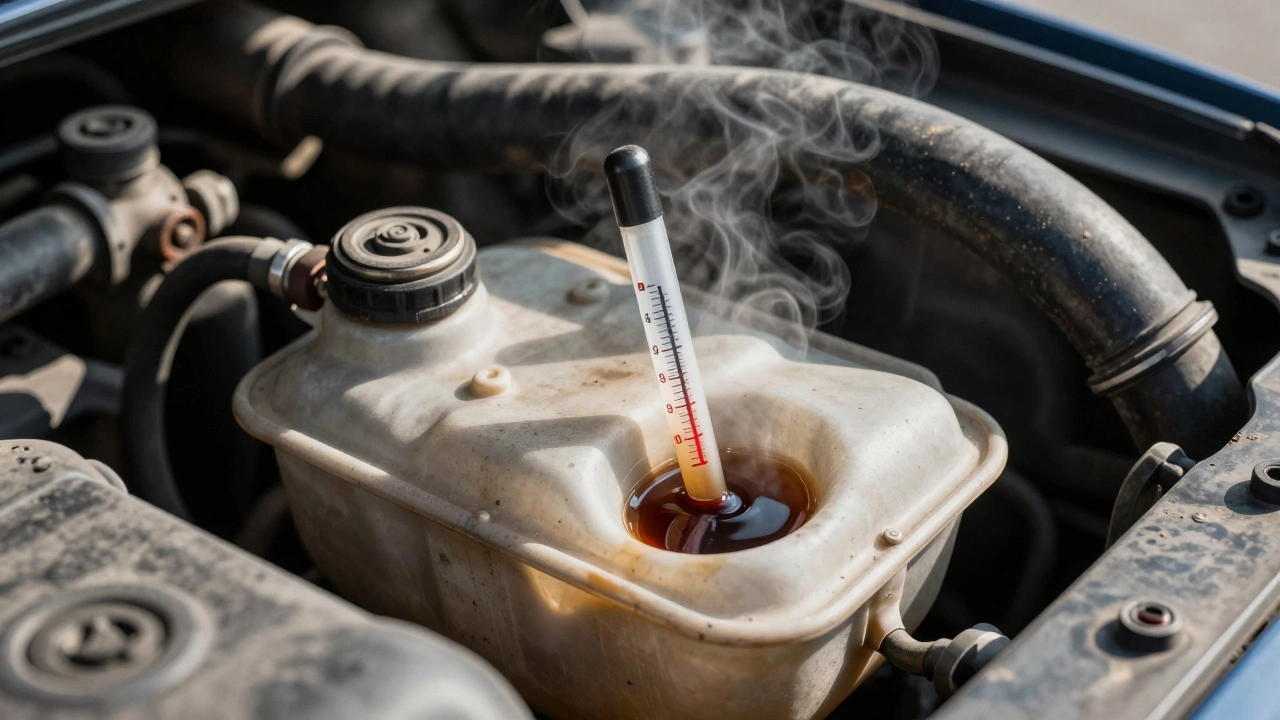
Most of the time, the whine is because the fluid level is too low. Not because you’ve had a massive leak. More often, it’s slow seepage. Seals dry out. Hoses age. Even a tiny drip over months can drop your fluid below the minimum line. And when the pump doesn’t have enough fluid, it starts sucking air. That’s when the whining starts. Check your reservoir. It’s usually near the firewall on the driver’s side, with a cap labeled "Power Steering Fluid." Pull the dipstick or look at the side markings. If it’s below the cold fill line, you’re low. But don’t just top it off. Look at the color. Fresh fluid is usually red or clear. If it’s dark brown or black, it’s dirty. Contaminated fluid doesn’t lubricate well. It grinds the pump from the inside. And here’s the thing: topping off dirty fluid doesn’t fix the problem. It just delays the inevitable. If the fluid is dark, it’s time for a flush. A flush removes all the gunk, replaces it with fresh fluid, and gives the pump a clean slate. Most mechanics do this with a machine that pulls out old fluid and replaces it without air getting in. Doing it yourself? Risky. You might trap air and make the noise worse.Is It Air in the System?
Sometimes, the whine isn’t from low fluid-it’s from air that got in. Maybe you topped off the fluid and didn’t bleed the system. Maybe a hose was loose during a repair. Air doesn’t compress like fluid. When the pump tries to push air, it creates bubbles that collapse and make noise. Here’s how to check: With the engine running and the car parked, turn the steering wheel all the way left, then all the way right, three or four times. Then shut off the engine. Wait a minute. Look in the reservoir. If you see bubbles or foam on top? That’s air. You need to bleed the system. Some cars have a bleed valve. Others need a professional to run the pump while the reservoir is open and fluid is added slowly. Don’t skip this step. Air in the system can damage the pump over time.Pump Failure: When the Whine Won’t Go Away
If you’ve checked the fluid, topped it off, bled the air, and the whine is still there? The pump is likely failing. A worn pump doesn’t just make noise. It makes noise that doesn’t change when you add fluid. And it’s not just the sound. There are other signs:- Steering gets stiff-especially at low speeds, like when parking. If you feel resistance even with the engine running, the pump isn’t generating enough pressure.
- Whining gets louder when turning-not just at startup. A pump with worn bearings or internal scoring will scream every time you turn the wheel.
- Burning smell-if you notice a hot, oily smell near the engine, the pump is overheating. That’s from running dry or from metal grinding against metal inside.
- Fluid leaks around the pump-check the pump housing. If you see oil seeping out, the seals are gone. That’s a dead pump.
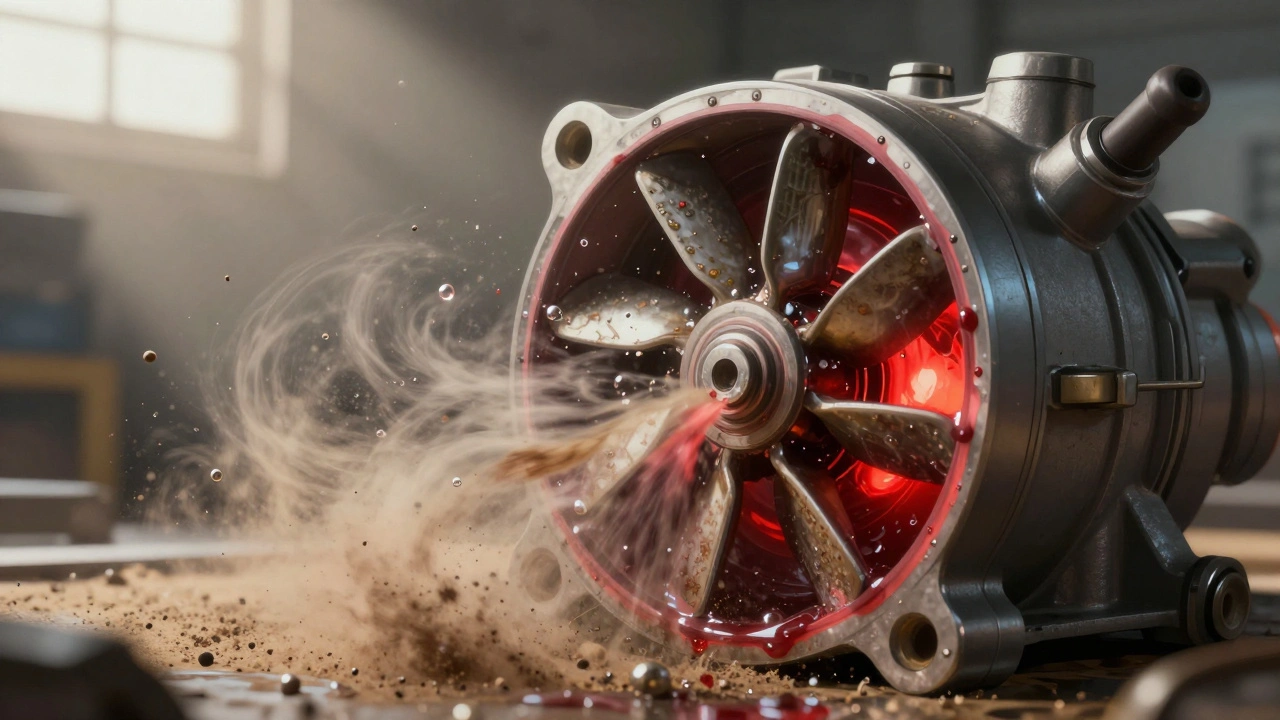
Here’s the hard truth: once the pump starts to fail internally, topping off fluid won’t help. The bearings are worn. The vanes are scored. The pressure plates are damaged. You can’t fix that with a bottle of fluid. You need a new pump.
Belt Issues: The Fake-Out Culprit
Sometimes, the whine isn’t from the pump at all-it’s from the belt. A loose, glazed, or cracked serpentine belt can slip on the pump pulley. That creates a high-pitched squeal, especially on cold mornings or when you turn the wheel hard. Look at the belt. Is it cracked? Shiny? Fraying? Does it look like it’s dancing on the pulley? If so, replace it. Belts cost $20-$50. A new pump? $300-$800. So always check the belt first. But here’s the catch: if the belt is fine and the whine continues, the pump is the problem. Belt noise usually goes away after a few seconds. Pump noise sticks around.When to Act-And When to Wait
You can drive with a whining power steering system-for a while. But you shouldn’t. Here’s why:- Low fluid: Fix it within a week. Keep checking the level every few days. If it drops again, you’ve got a leak. That needs repair.
- Dirty fluid: Get a flush within two weeks. Dirty fluid eats pump internals like sandpaper.
- Stiff steering: Don’t drive more than a few miles. This isn’t just inconvenient-it’s dangerous. You could lose steering assist suddenly.
- Burning smell or leaks: Stop driving. Get it towed. Continuing could melt hoses, ruin the rack, or even start a fire.
Most people wait too long. They think, “It’s just a noise.” But power steering pumps don’t fail slowly. They fail fast. One day it’s whiny. The next, it’s dead. And when it dies? You’re steering with your arms alone. At 60 mph. On a curve. That’s not a gamble you want to take.
Prevention: The Easiest Fix
The best way to avoid this whole mess? Check your power steering fluid every 6 months. Do it in spring and fall. No need for tools. Just open the reservoir, check the level, check the color. If it’s low, top it off with the correct fluid (check your owner’s manual-some cars use ATF, others use special power steering fluid). If it’s dark, get a flush. Also, inspect the belt every time you change your oil. Look for cracks, glazing, or looseness. Replace it if it’s over 60,000 miles or shows signs of wear. And don’t forget: power steering fluid doesn’t last forever. It breaks down. It picks up metal shavings. It gets hot. It degrades. Even if you don’t leak, it still needs replacing every 50,000-80,000 miles. Most shops don’t mention it. But it’s just as important as oil changes.
What Happens If You Ignore It?
Ignoring a whining power steering system doesn’t just lead to a bigger repair bill. It leads to cascading failure:- Low fluid → pump overheats → seals melt → fluid leaks → pump dies
- Dirty fluid → metal particles circulate → wear grooves in pump → pressure drops → steering stiffens
- Worn pump → belt slips → belt overheats → belt breaks → engine accessories fail
- Complete pump failure → no steering assist → you lose control on turns
One mechanic in Portland told me about a Ford F-150 that came in with a whine. Owner said, “It’s been doing that for a year.” The pump was completely destroyed. The rack was scored. The hoses were melted. Total repair cost: $2,100. A simple fluid check and top-off six months earlier would’ve cost $15.
| Symptom | Low Fluid | Pump Failure |
|---|---|---|
| Whining noise | Occurs when turning, especially at low speeds | Constant, gets louder with RPMs |
| Fluid level | Below minimum mark | At or above max mark |
| Fluid color | Dark, dirty, or burnt smell | May be clean, but leaks from pump |
| Steering feel | Slightly heavier, but still assist | Very stiff, especially at low speeds |
| Leakage | Under car or near reservoir | Oil seeping from pump housing |
| Response to fluid top-off | Noise disappears immediately | No change-noise remains |
Frequently Asked Questions
Can I just keep driving if my power steering whines?
You can, but you shouldn’t. Driving with a whining system puts extra strain on the pump. If it’s low fluid, you risk overheating the pump. If it’s pump failure, you’re already damaging it. Eventually, the steering could become dangerously stiff or fail completely. Don’t wait for it to break-fix it before it does.
Is it safe to mix different types of power steering fluid?
No. Some cars use automatic transmission fluid (ATF), others use special power steering fluid. Mixing them can cause seal swelling, reduced lubrication, or even pump damage. Always use the fluid type listed in your owner’s manual. If you’re unsure, check the reservoir cap-it often says what to use.
Why does my power steering whine only when it’s cold?
Cold weather thickens the fluid, making it harder for the pump to move it. If the fluid is already low or dirty, the pump struggles even more. The noise usually fades as the fluid warms up. But if it’s loud every cold morning, it’s a sign the system is under stress. Check fluid level and condition before winter hits.
Can a bad power steering pump damage other parts?
Yes. A failing pump can send metal shavings into the steering lines and rack. Those particles can scratch internal components, leading to leaks or loss of pressure. They can also clog the fluid cooler. In severe cases, the entire steering system needs replacement. That’s why replacing the pump early-before it completely fails-is cheaper than waiting.
How much does it cost to replace a power steering pump?
Parts alone range from $150 to $500, depending on the car. Labor adds another $100-$300. Some vehicles have pumps that are hard to access, which increases labor time. If you’re doing it yourself, make sure you bleed the system properly. Air in the lines can cause immediate noise and damage the new pump.
Next Steps
- If your fluid is low and clean: Top it off, drive for a day, and see if the noise returns. If it does, check for leaks.
- If your fluid is dirty: Schedule a flush. Don’t just add new fluid on top.
- If the noise persists after fluid is full and air is bled: Get the pump inspected. A mechanic can test pressure output.
- If steering is stiff or you smell burning: Don’t drive. Call a tow truck.
Power steering whine isn’t a mystery. It’s a signal. And like any signal, the sooner you respond, the less it costs you.