
Imagine this: you’re cruising down Interstate 5 here in Portland, rain slicking the asphalt, when a sudden blowout sends your steering wheel vibrating violently. You pull over, heart pounding, and open the trunk. What’s waiting for you? A heavy, dusty donut spare that requires a jack, or nothing at all because you opted for run-flat tires? This isn’t just a hypothetical scenario; it’s the daily reality for thousands of drivers deciding between two distinct philosophies of tire safety. Choosing between a traditional spare and run-flat technology isn’t merely about preference-it’s about understanding how each system interacts with your vehicle’s suspension, your wallet, and your ability to get home safely.
The Core Difference: Independence vs. Dependence
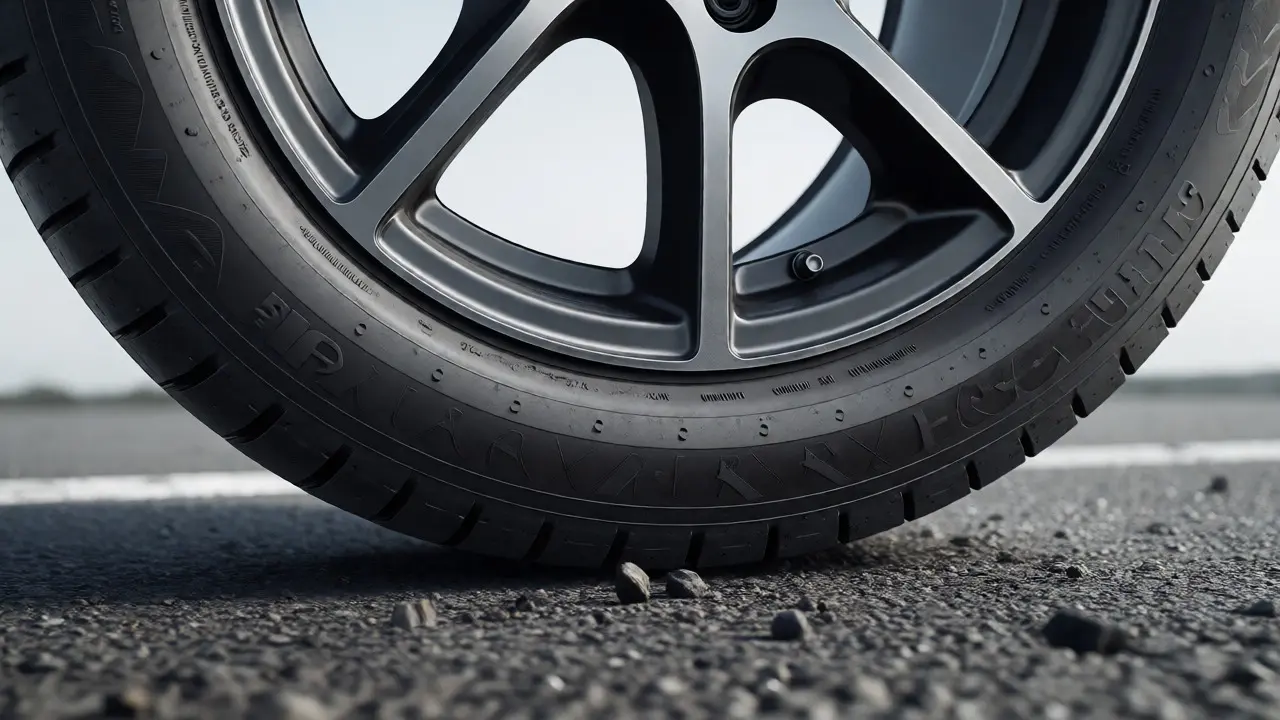
At its simplest level, the debate centers on redundancy versus integration. A Spare Tire is an independent backup unit stored separately from the active wheels. It relies on mechanical tools-a jack and a lug wrench-to swap out a failed tire. In contrast, Run-Flat Tires (RFTs) are engineered with reinforced sidewalls that allow the tire to support the vehicle’s weight even after losing air pressure. There is no separate object to store; the safety mechanism is built into the rubber itself.
This structural difference dictates everything else. If you have a spare, you carry extra weight but gain the flexibility to drive on any standard tire. If you choose RFTs, you save space and weight but become dependent on specific, often more expensive, rubber compounds. One approach isolates the failure; the other integrates the solution.
How Run-Flat Tires Actually Work
Most people assume run-flats can drive indefinitely without air. That’s a myth. Standard self-supporting run-flat tires allow you to travel approximately 50 miles at speeds up to 50 mph (80 km/h) after a puncture. This "limp mode" capability is achieved through stiffened sidewall construction. When the air escapes, these rigid walls prevent the rim from crushing the remaining rubber against the road, maintaining enough shape to keep the car stable.
However, this engineering comes with trade-offs. The stiff sidewalls transmit more road noise and vibration into the cabin. Drivers often report a harsher ride compared to conventional tires. Furthermore, not all cars are compatible. RFTs require a Tire Pressure Monitoring System (TPMS). Without sensors to alert you to the drop in pressure, you might drive on a flat tire unaware, destroying the sidewall before you even realize there’s a problem.
The Traditional Spare: Full-Size vs. Donut
If you opt out of run-flats, you likely have a spare. But not all spares are created equal. There are two main types, and knowing which one you have changes your emergency plan entirely.
| Feature | Full-Size Spare | Donut (Temporary) |
|---|---|---|
| Speed Limit | None (matches regular tires) | Max 50 mph (80 km/h) |
| Distance | Unlimited | Approx. 70 miles |
| Weight | Heavy (30-40 lbs) | Light (10-15 lbs) |
| Cost | High (same as regular tire) | Low ($50-$100) |
| Handling | Identical to other wheels | Different diameter affects ABS/Traction |
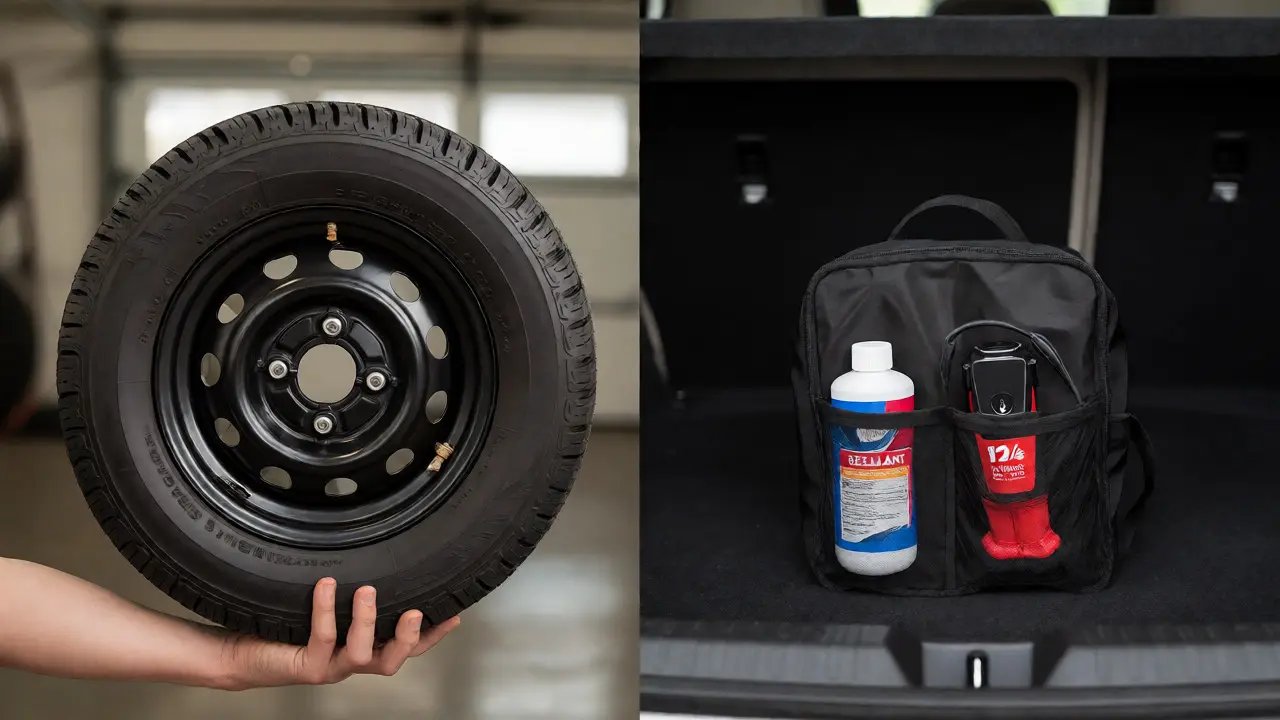
A full-size spare offers peace of mind. If you blow a front tire, you simply swap it with the identical rear tire, then move the spare to the back. You lose zero performance characteristics. A donut, however, is smaller in diameter. Installing it alters the rotational speed of that wheel relative to the others, which can confuse anti-lock braking systems (ABS) and traction control modules. It’s strictly a temporary fix to get you to a shop, not a long-term solution.
Cost Analysis: Upfront vs. Long-Term
Let’s talk numbers, because this is where most drivers make their decision. Run-flat tires typically cost 20% to 30% more than comparable standard tires. For a sedan, that might mean paying $150 per tire instead of $110. Over four tires, you’re looking at an extra $160 upfront. Additionally, RFTs wear out faster due to their stiffer construction, potentially reducing their lifespan by 10-15%.
Conversely, a spare tire setup has a low initial cost if included with the car. However, many modern vehicles omit the spare entirely to save weight and fuel efficiency, offering only a sealant kit. If you buy a used car with a missing spare, purchasing a new one plus a jack can cost $150-$200. But here’s the kicker: repairing a punctured standard tire costs $20-$40. Repairing or replacing a damaged run-flat is often impossible; sidewall damage usually means total replacement, costing $150+ per incident.
Ride Quality and Performance Impact
If you value driving dynamics, this section matters. Run-flat tires are heavier. Rotational mass-the weight of the wheel and tire assembly-directly impacts acceleration, braking, and fuel economy. Heavier wheels require more energy to spin up and slow down. In stop-and-go traffic in downtown Portland, you might notice a slight dip in fuel efficiency, perhaps 1-2 MPG.
More noticeably, the ride feels different. The lack of sidewall flex means every pothole and expansion joint hits the suspension harder. Luxury car manufacturers love RFTs because they preserve the sleek look of the wheel well and free up trunk space, but enthusiasts often dislike the compromised comfort. With a standard tire and a lightweight alloy spare, you maintain the original suspension tuning designed by the engineers.
When to Choose Which Option
So, which path should you take? It depends on your driving habits and risk tolerance.
- Choose Run-Flats if: You hate changing tires. You live in an area with poor lighting or unsafe shoulders where stopping to change a tire feels risky. You prioritize trunk space for cargo (like strollers or golf clubs) over mechanical simplicity. You drive mostly in urban environments where distances to repair shops are short.
- Choose a Spare Tire if: You do long-distance highway driving. You want the cheapest possible tire replacements. You prefer a smoother, quieter ride. You are comfortable using a jack and lug wrench. You want the option to rotate all five tires evenly to extend overall life.
Consider a hybrid approach: Some drivers keep a compact donut spare in their trunk while running high-quality standard tires. This gives them the best of both worlds-comfortable daily driving with a basic emergency fallback that doesn’t require specialized, expensive rubber.
The Modern Third Option: Sealant Kits
It’s worth mentioning the third contender that’s quietly taking over new cars: the tire sealant and compressor kit. Found in many BMWs, Audis, and Teslas, this small bag contains a bottle of gooey sealant and a 12V air compressor. If you get a nail puncture, you attach the compressor, inject the sealant, and inflate the tire. The sealant plugs the hole temporarily.
This option saves the most weight and space. No heavy tire, no bulky jack. But it has limitations. It only works on tread punctures, not sidewall blows. Once you use the sealant, the tire must be cleaned thoroughly or replaced, as the residue can unbalance the wheel and clog TPMS sensors. Many tire shops charge extra to remove old sealant before mounting a new tire. It’s convenient for minor emergencies but fails completely in catastrophic failures.
Maintenance Tips for Either Choice
Whichever route you choose, neglect is the enemy. If you have a spare, check its pressure every time you check your other tires. A flat spare is useless. Spares often sit unused for years, slowly leaking air until they’re too soft to hold the car’s weight. Mark the date you last checked it on a sticker inside the trunk lid.
For run-flats, monitor your TPMS light religiously. Since the tire looks fine visually even when flat, the sensor is your only warning. If the light comes on, stop immediately and inspect. Continuing to drive past the recommended 50-mile limit will shred the internal structure, turning a $20 patch job into a $200 replacement.
Can I replace just one run-flat tire?
Technically yes, but it's not recommended. Run-flat tires have very specific handling characteristics. Mixing a new RFT with older, worn ones can cause uneven wear and affect stability. If you must replace one, ensure it matches the brand, model, and load rating exactly. Ideally, replace in pairs (axle sets) to maintain balanced grip and suspension response.
Are run-flat tires safe in winter conditions?
Yes, provided they are winter-rated or all-season tires with the M+S (Mud and Snow) symbol. However, the stiff sidewalls can reduce traction slightly on ice compared to softer winter tires. Ensure your TPMS sensors are functioning correctly, as cold weather triggers pressure warnings frequently, and you need to distinguish between a real leak and temperature-induced pressure drops.
How much does it cost to switch from run-flats to standard tires?
You'll pay less for the standard tires themselves (saving ~$40-$60 per tire). However, you must purchase a spare tire and jack if your car didn't come with one, costing roughly $150-$250 total. You may also need to recalibrate your TPMS if switching to a non-RFT compatible sensor setup, though most modern sensors work with both. The break-even point is usually within 2-3 years of tire replacements.
What happens if I drive on a run-flat tire too far?
The reinforced sidewall will overheat and delaminate. The rubber separates from the steel belts, causing the tire to disintegrate. This can damage the wheel rim and potentially throw debris onto the undercarriage. Once this structural damage occurs, the tire cannot be repaired and must be scrapped, regardless of how little mileage was added since the puncture.
Do insurance companies cover run-flat tire replacements differently?
Generally, no. Insurance covers tire damage based on the cause (accident, vandalism, road hazard), not the type. However, because RFTs are more expensive to replace, your out-of-pocket deductible might feel higher, or you might hit your annual coverage cap faster if you suffer multiple incidents. Always check your policy for road hazard protection limits.