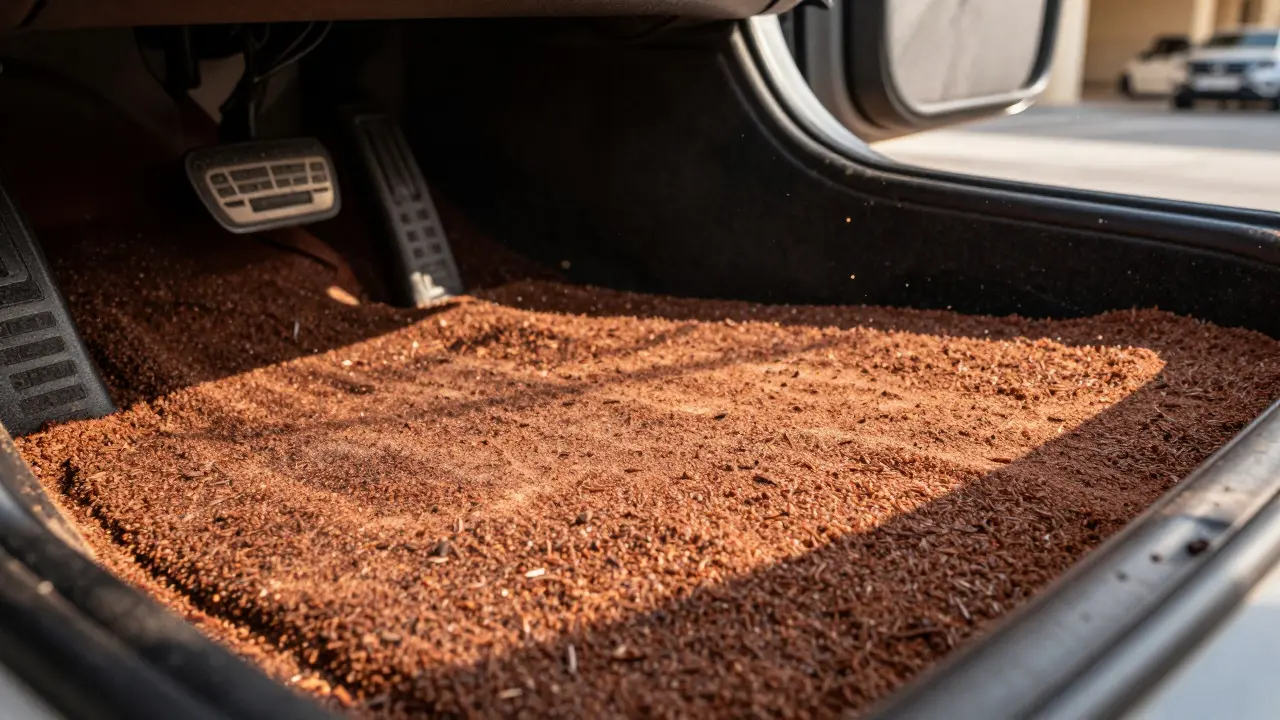
Driving through Dubai feels like a luxury until you look down at your floor mats. There is a layer of fine, reddish-brown powder that seems impossible to shake off. This isn't just dirt; it is the specific challenge facing every vehicle owner in the United Arab Emirates. Standard vacuuming often fails because the particles are microscopic and cling to fabric fibers with static electricity. If you have tried to clean your car's interior in Dubai and found sand remaining in the crevices, you aren't doing it wrong. You are fighting against the environment.
Sand Removal Detailing is a specialized automotive cleaning process designed to extract fine particulate matter from vehicle interiors using high-suction extraction and specialized agitation tools. Unlike basic vacuuming, which only removes surface debris, this technique targets deep-seated dust that causes premature wear on carpets and upholstery. For residents in areas like Al Quoz or near the desert edges, this service is not a luxury but a necessity for maintaining resale value and comfort.
Why Standard Vacuuming Fails in the UAE Climate
The climate in Dubai creates a unique problem for vehicle owners. Temperatures often exceed 40°C, causing dust to dry out and become lighter. When you drive, air conditioning systems pull in outside air. Without proper filtration, this air carries fine silica particles into the cabin. These particles are so small they pass through standard HEPA filters if they aren't maintained regularly. Once inside, they settle into the weave of your carpet and seats.
Most home vacuums lack the suction power to lift these dried particles from deep within synthetic fabrics. They merely push the dust around, creating a false sense of cleanliness. Over time, this accumulated grit acts like sandpaper on your upholstery, leading to thinning fabric and frayed edges. It also settles into the HVAC vents, where it can mix with moisture from the AC system, creating a musty smell that is hard to eliminate. This is why professional detailing focuses on extraction rather than just suction.
The Science of Fine Dust Extraction
Effective Fine Dust Cleanup relies on two main principles: agitation and high-volume airflow. Agitation involves using rotary brushes or steam to loosen the particles trapped in the fabric fibers. Once loosened, a powerful wet-dry vacuum extracts the mixture of water and dirt. The key here is the difference between dry vacuuming and wet extraction. Dry vacuuming leaves behind static charges that attract more dust immediately after cleaning. Wet extraction rinses the fibers, removing the static charge and carrying the suspended particles out of the car.
In professional settings, technicians use truck-mounted equipment that provides consistent, high-pressure airflow. This ensures that even the tightest crevices, such as under the dashboard or behind the center console, are cleaned thoroughly. The process usually starts with a pre-vacuum to remove loose debris, followed by shampooing or foaming to break down stains and bind the dust. After allowing the solution to dwell for a few minutes, the extraction phase begins. This step is critical because it determines how much residue remains in the fabric.
Step-by-Step Process for Professional Sand Removal
If you are hiring a detailer or attempting a DIY approach with professional-grade tools, the sequence of operations matters greatly. Skipping steps leads to incomplete results. Here is the standard workflow used by top-tier Interior Detailing UAE providers:
- Pre-Inspection and Protection: Identify sensitive areas like leather seats or electronic components. Cover these areas to prevent water damage or electrical shorts.
- Loose Debris Removal: Use a handheld vacuum with a soft brush attachment to remove large particles, pebbles, and hair. This prevents clogging the extraction nozzle later.
- Agitation and Pre-Treatment: Apply a pH-neutral cleaner suitable for your fabric type. Use a rotary brush machine to work the cleaner into the fibers. This loosens the embedded sand and breaks down organic stains.
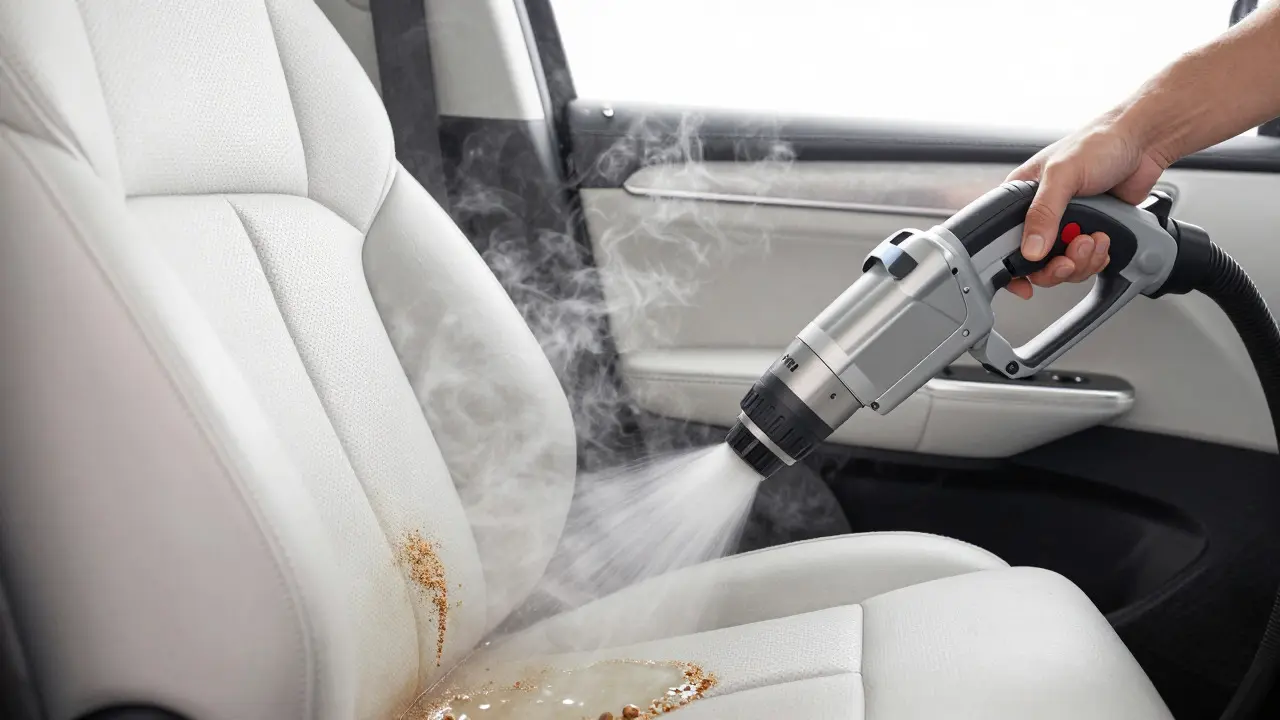
- Wet Extraction: Use a hot-water extraction tool (steam cleaner) to inject cleaning solution and simultaneously suck it out along with the dirt. Multiple passes may be required for heavily soiled areas.
- Drying Phase: This is often overlooked. Use fans or open windows to dry the interior completely. Moisture left in the carpet can lead to mold growth, especially in humid coastal areas like Jumeirah.
- Final Vacuuming and Polish: Once dry, perform a final dry vacuum to remove any remaining residue. Condition leather seats and polish trim pieces to restore shine.
DIY vs. Professional Service: What Should You Choose?
Many car owners wonder if they can handle this themselves. With the right equipment, a thorough job is possible, but it requires significant effort and investment in tools. A quality wet-dry vacuum costs several hundred dollars, and adding a rotary brush kit increases the price further. However, the convenience of professional service often outweighs the cost for busy professionals in Dubai.
| Factor | DIY Approach | Professional Service |
|---|---|---|
| Cost | $150-$300 (equipment + products) | $200-$400 per session |
| Time Required | 4-6 hours | 2-3 hours |
| Equipment Quality | Consumer-grade (lower suction) | Truck-mounted (industrial suction) |
| Risk of Damage | Moderate (water damage potential) | Low (trained technicians) |
| Longevity of Results | 1-2 weeks | 3-4 weeks |
For most people, the professional route offers better value because of the equipment efficiency. Truck-mounted systems use the engine's power to create suction, meaning the tank empties faster and the pressure remains constant. At home, you are limited by household power outlets and consumer motor strength. Additionally, professionals bring their own water supply, saving you the hassle of filling and emptying heavy tanks.
Maintaining Your Car Between Cleanings
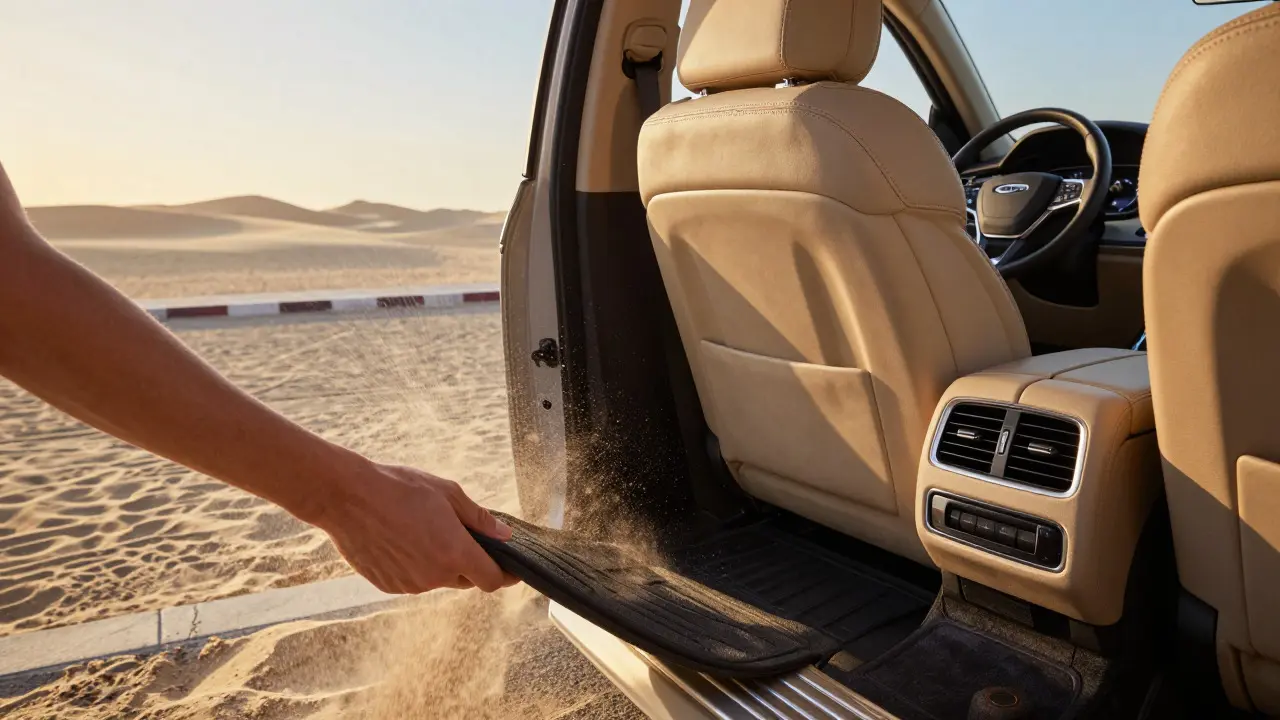
Once you have achieved a pristine interior, keeping it that way requires simple habits. First, invest in high-quality floor mats. Rubber mats are easier to clean than carpeted ones and prevent sand from reaching the factory carpet. Shake them out weekly in the driveway before bringing them back inside your garage. Second, manage your air conditioning settings. When driving in dusty conditions, keep the recirculation mode active to minimize outside air intake. Change your cabin air filter every six months, or sooner if you drive frequently on unpaved roads.
Also, consider using a door mat scraper at your home entrance. While this doesn't directly help the car, it reduces the amount of tracked-in dust in your house, which indirectly keeps your family's shoes cleaner when they enter the vehicle. Finally, avoid eating in the car during sandstorms. Crumbs mixed with sand create a gritty paste that is extremely difficult to remove from seat stitching.
Common Mistakes to Avoid
Even experienced detailers make errors when dealing with heavy sand loads. One common mistake is using too much water. Excessive moisture takes days to dry and can warp plastic components or cause rust on metal brackets. Always follow the manufacturer's recommendations for water-to-cleaner ratios. Another error is neglecting the headliner. Dust accumulates on the ceiling fabric, and when you shake the car or move quickly, it falls onto the freshly cleaned seats. Clean the headliner last, using a dry microfiber cloth to wipe away loose dust before any wet cleaning.
Ignoring the HVAC vents is another frequent oversight. Use a long, narrow nozzle to blow out dust from the vents before starting the detailed clean. If you don't, the vacuum will suck up dust from the vents while you are cleaning nearby areas, re-contaminating your work. Lastly, don't skip the drying phase. In Dubai's heat, interiors dry quickly, but in shaded garages or during cooler evenings, moisture lingers. Ensure the car is parked in direct sunlight for at least an hour after cleaning to speed up evaporation.
FAQ
How often should I get sand removal detailing in Dubai?
For vehicles driven daily in urban areas, every 3 to 4 months is ideal. If you frequently drive in desert areas or during sandstorm seasons, aim for monthly treatments. Regular maintenance prevents deep embedding of particles.
Can I use a regular shop vacuum for this task?
A shop vacuum can remove loose debris but lacks the wet-extraction capability needed for deep cleaning. For true sand removal, you need a wet-dry vacuum with a HEPA filter to capture fine particles without blowing them back into the air.
Does sand damage leather seats?
Yes, fine sand acts as an abrasive. When you sit on a leather seat with sand grains, they scratch the surface finish over time. This leads to fading and cracking. Regular vacuuming of leather seats is essential to preserve their integrity.
What is the best cleaner for removing sand from carpets?
Use a pH-neutral carpet shampoo specifically designed for automotive interiors. Avoid harsh alkaline cleaners as they can degrade synthetic fibers. Enzyme-based cleaners are also effective for breaking down organic matter mixed with sand.
Is steam cleaning better than hot water extraction?
Both are effective, but hot water extraction is generally superior for sand removal because it combines cleaning and removal in one step. Steam cleaning is excellent for sanitizing and killing bacteria but requires a separate vacuuming step to remove the dissolved dirt.