
Your luxury car is supposed to glide over bumps like it’s floating on a cloud. But one morning, you pull out of the driveway and notice the rear end sitting lower than usual. Or maybe that annoying "Check Suspension" light has popped up on your dashboard, making your heart sink. If you drive a Mercedes-Benz, Jaguar, or similar premium vehicle, you’re dealing with a self-leveling suspension system. It’s a marvel of engineering that keeps your ride smooth regardless of how much cargo-or passengers-you’re carrying. But when it breaks, it doesn’t just affect comfort; it can ruin your handling and damage other expensive parts.
Diagnosing these advanced systems isn’t as simple as checking tire pressure. You’re looking at a mix of hydraulic pumps, air compressors, electronic sensors, and control modules working together in real-time. Getting it wrong means buying unnecessary parts or driving a dangerous vehicle. This guide cuts through the noise to help you identify exactly what’s going wrong with your self-leveling suspension, so you can fix it right the first time.
How Self-Leveling Suspension Actually Works
Before you can diagnose a problem, you need to know what you’re looking for. A self-leveling suspension (SLS) system is designed to automatically maintain your vehicle’s optimal ride height. Whether you’re hauling groceries or towing a trailer, the system adjusts the rear (and sometimes front) of the car to keep it level. This ensures consistent handling, braking performance, and headlight alignment.
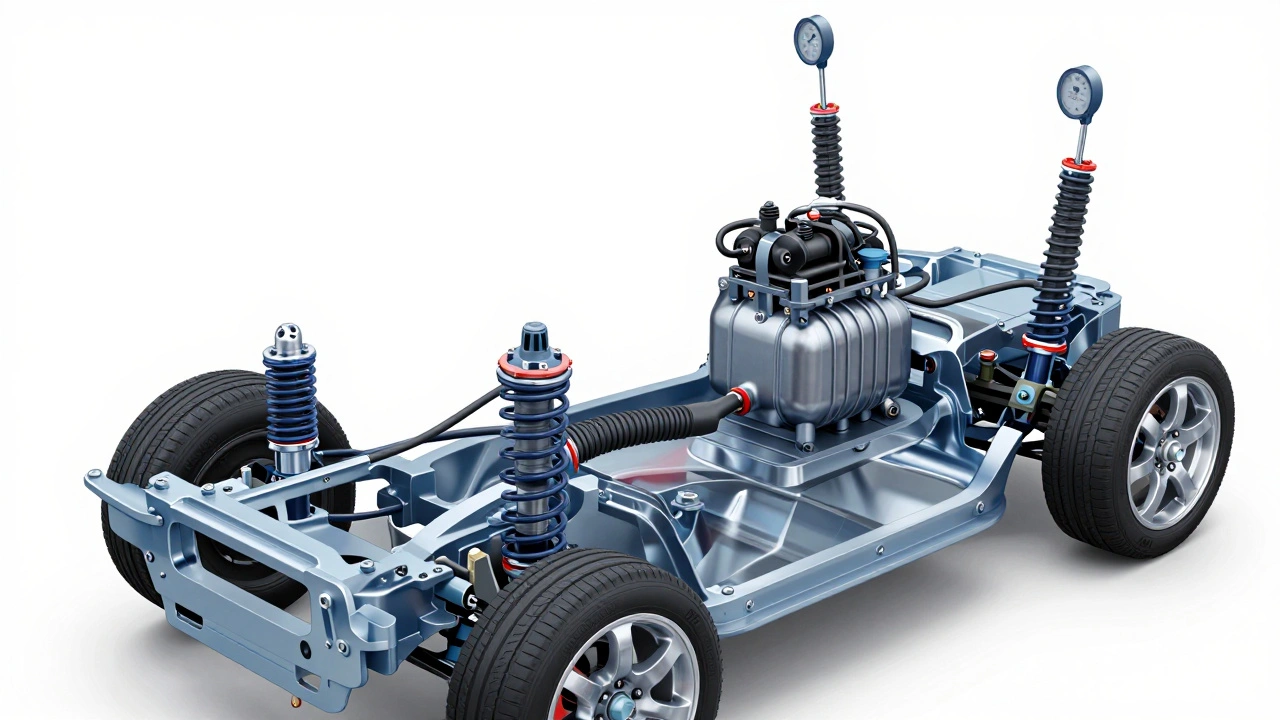
In older luxury models, this was often purely hydraulic. A pump would push fluid into accumulators to lift the chassis. Today, most modern luxury cars use pneumatic systems-essentially big air springs controlled by an electronic brain. Here are the key players in this system:
- The Air Compressor: This is the muscle. It sucks in outside air and pressurizes it to fill the air springs. If this fails, the system can’t build the pressure needed to lift the car.
- Air Springs (Struts): These replace traditional coil springs. They hold the air pressure that supports the vehicle’s weight. Over time, the rubber can crack or leak.
- Height Sensors: Think of these as the eyes. They measure the distance between the wheel hub and the chassis frame. They tell the computer if the car is too low or too high.
- Suspension Control Module: This is the brain. It receives data from the sensors and commands the compressor and valves to adjust the height accordingly.
- Air Lines and Valves: These connect everything, directing airflow to specific corners of the car.
When any one of these components fails, the whole chain reaction stops. Understanding which part does what helps you narrow down the culprit quickly.
Early Warning Signs: What to Look For
You don’t always need a scan tool to spot trouble. Your senses are powerful diagnostic tools. Start by observing how your car looks and feels during normal operation. Pay attention to these common symptoms that signal a failing self-leveling system.
Uneven Ride Height The most obvious sign is visual. Park your car on a flat surface and step back. Does it look level? Or does one corner sag significantly lower than the others? A slight difference might be due to uneven weight distribution, but if the car sits crooked even when empty, you likely have a leak or a sensor issue. On some Jaguar models, for instance, a failing rear spring will cause the trunk lid to sit noticeably closer to the ground.
Noisy Operation Listen closely when the car starts up or after you’ve been driving over rough roads. The air compressor should hum quietly for a few seconds as it equalizes pressure. If you hear loud hissing, clicking, or grinding noises, something is wrong. Hissing usually indicates an air leak in a spring or line. Clicking or grinding often points to a failing compressor motor or internal valve mechanism. Don’t ignore these sounds-they’re the system screaming for help.
Rough Ride Quality If your luxury car suddenly feels like a truck, your suspension isn’t doing its job. A degraded air spring loses its ability to absorb shocks, leading to a harsh, bouncy ride. You’ll feel every pothole and bump directly through the seat. This isn’t just uncomfortable; it means the suspension is no longer protecting your chassis from stress.
Dashboard Warning Lights Modern cars talk to you via the instrument cluster. A "Check Suspension," "Air Suspension Fault," or similar warning light is a direct message from the control module. While this confirms there’s an error code stored in the system, it doesn’t tell you *which* part failed. You’ll need further diagnosis to pinpoint the exact component.
Step-by-Step Diagnostic Process
Once you’ve noticed symptoms, it’s time to get systematic. Don’t just start replacing parts blindly. Follow this logical flow to isolate the fault accurately.
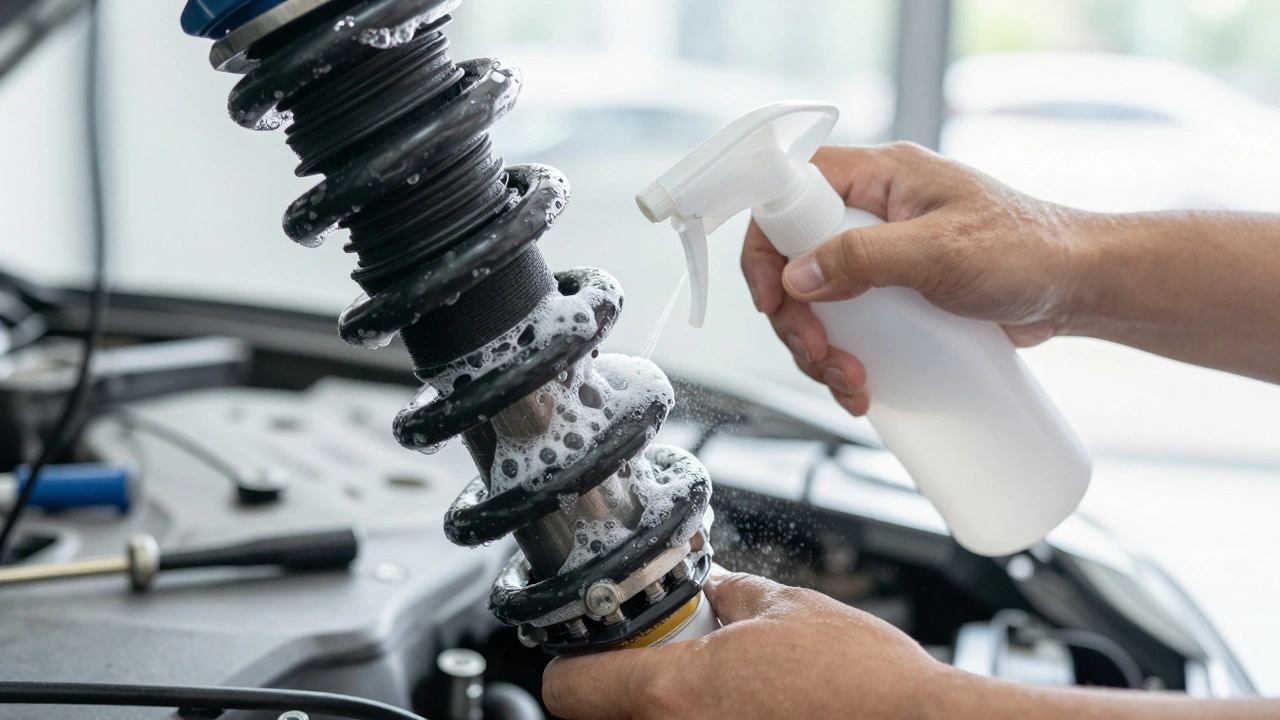
- Visual Inspection for Leaks: Jack up the car safely and inspect the air springs and lines. Look for cracks, bulges, or wet spots (if using hydraulic fluid). Apply soapy water to suspected leak points-if bubbles form, you’ve found your leak. This is the cheapest and fastest test.
- Measure Ground Clearance: Use a tape measure to check the distance from the ground to a fixed point on the chassis (like the bottom of the door sill) at all four corners. Compare these measurements to your vehicle’s service manual specifications. Consistent sagging in one area points to a mechanical failure in that corner.
- Check Fluid Levels: For hydraulic systems, check the reservoir. Low fluid levels indicate a leak somewhere in the pump, lines, or struts. Top it off temporarily to see if the system stabilizes, but remember this is just a bandage, not a cure.
- Test the Compressor: With the engine running, listen for the compressor cycling on. If it runs continuously without stopping, the system is trying desperately to hold pressure but failing-likely due to a major leak. If it never turns on, check fuses and relays first before assuming the motor is dead.
- Scan for Error Codes: Use an OBD-II scanner capable of reading chassis codes. Generic scanners often miss suspension-specific faults. Look for codes related to "height sensor circuit," "compressor overload," or "pressure mismatch." These codes guide you directly to the faulty component.
This process eliminates guesswork. By combining physical inspection with electronic data, you build a clear picture of the failure mode.
Common Failure Points Explained
Not all failures are created equal. Some components wear out naturally, while others fail due to external factors. Knowing the typical lifespan and failure modes of each part helps you plan repairs effectively.
| Component | Symptoms | Typical Cause | Repair Complexity |
|---|---|---|---|
| Air Spring | Sagging corner, hissing noise | Rubber degradation, road debris puncture | Moderate |
| Air Compressor | Loud noise, continuous running, no lift | Motor burnout, valve failure, moisture damage | High |
| Height Sensor | Car sits too high/low, erratic adjustments | Corrosion, linkage breakage, electrical fault | Low |
| Control Module | Random behavior, complete system shutdown | Software glitch, water intrusion, wiring short | Very High |
| Air Lines | Slow leveling, intermittent leaks | Cracking from heat/vibration, rodent damage | Moderate |
Air Springs are consumable items. Like brake pads, they wear out. The constant flexing causes micro-tears in the rubber bladder. Once a tear opens up, air escapes rapidly. Replacing them is straightforward but requires special tools to compress the strut safely.
Compressors are the workhorses. They run frequently, especially in colder climates where cold air contracts. Moisture buildup inside the compressor tank is a silent killer-it freezes valves and corrodes internals. Many manufacturers recommend draining the condensate trap regularly, but most owners forget this maintenance task.
Height Sensors seem simple but are prone to environmental damage. Salt spray from winter roads can corrode the linkages. If the sensor gets stuck, it sends false data to the computer. The computer might think the car is level when it’s actually sagging, leading to incorrect adjustments.
Safety Risks of Ignoring the Problem
It’s tempting to drive with a sagging suspension if the warning light isn’t flashing urgently. But ignoring self-leveling suspension issues carries serious risks beyond just a bumpy ride.
First, handling becomes unpredictable. When the rear sags, the center of gravity shifts. This can cause understeer, making the car harder to turn, especially in emergency maneuvers. Braking distances increase because the weight distribution changes, reducing tire grip.
Second, secondary damage occurs. A low-riding car scrapes its undercarriage on speed bumps and driveways. This can damage exhaust systems, oil pans, and transmission mounts. More critically, driving with a failed air spring puts excessive strain on the remaining good springs and the compressor. The compressor works overtime to compensate, eventually burning out. Replacing a compressor is far more expensive than fixing a small leak early.
Finally, legal compliance may be compromised. In many regions, vehicles must meet minimum ground clearance standards for safety inspections. A severely sagging car might fail these checks, leaving you stranded until repairs are made.
If you suspect SLS failure, do not continue long-distance travel. Have the vehicle towed to a specialist if possible. The cost of a tow is negligible compared to the potential cost of destroying multiple suspension components.
Repair Strategies: DIY vs. Professional Help
Can you fix this yourself? It depends on the component and your skill level. Simple tasks like replacing a height sensor or swapping an air spring are within reach for experienced DIYers. However, diagnosing complex electrical faults or replacing a built-in compressor module often requires specialized equipment and software calibration.
Professional shops offer advantages like:
• Access to manufacturer-specific diagnostic software
• Specialized tools for compressing air struts safely
• Warranty on parts and labor
• Ability to perform system calibrations after repair
If you choose DIY, invest in quality OEM or high-tier aftermarket parts. Cheap air springs often fail prematurely, costing you double in labor. Always replace components in pairs (left and right) to ensure balanced performance. And never skip the final calibration step-your computer needs to learn the new baseline heights.
Preventive Maintenance Tips
Extending the life of your self-leveling suspension comes down to proactive care. Here’s how to keep it running smoothly:
- Drain Condensate: Locate the drain valve on the air dryer/compressor assembly. Open it every few months to let trapped moisture escape. This prevents ice formation in winter and corrosion year-round.
- Inspect Regularly: Every time you change your oil, visually check the air springs for cracks or dirt buildup. Clean them with mild soap and water to remove abrasive grit.
- Avoid Overloading: While the system handles extra weight, constantly maxing out your payload accelerates wear. Distribute weight evenly across the vehicle.
- Watch for Small Leaks: Address hissing sounds immediately. A small leak today becomes a total system failure tomorrow.
- Update Software: Dealerships occasionally release updates for suspension control modules. These can improve reliability and fix known bugs.
Treating your suspension as a precision instrument rather than just a set of springs pays off in longevity and resale value.
Is it safe to drive with a broken self-leveling suspension?
No, it is not advisable. Driving with a failed system compromises handling, braking, and stability. It also risks damaging other expensive components like the compressor, axles, and undercarriage. If the car is sagging significantly, have it towed to a repair shop.
How much does it cost to repair self-leveling suspension?
Costs vary widely depending on the component. Replacing a single air spring might cost $300-$800 including labor. A new air compressor can range from $1,500 to $3,000+. Diagnosis fees typically add another $100-$200. Always get a detailed quote before authorizing repairs.
Can I reset the suspension warning light myself?
You can clear the code with an OBD-II scanner, but the light will return if the underlying issue isn’t fixed. Resetting the light without repairing the fault masks the problem and could lead to further damage. Only reset after confirming the repair is successful.
Why does my car make a hissing noise when parked?
Hissing usually indicates an air leak in the system. It could be a cracked air spring, a loose fitting, or a damaged air line. The system is trying to maintain pressure but losing air. Inspect the springs and lines for visible damage or apply soapy water to find the source.
Do self-leveling suspensions last forever?
No, they are wear items. Air springs typically last 7-10 years or 100,000-150,000 miles, depending on driving conditions and climate. Compressors may last longer but are susceptible to moisture damage. Regular maintenance can extend their lifespan, but eventual replacement is inevitable.