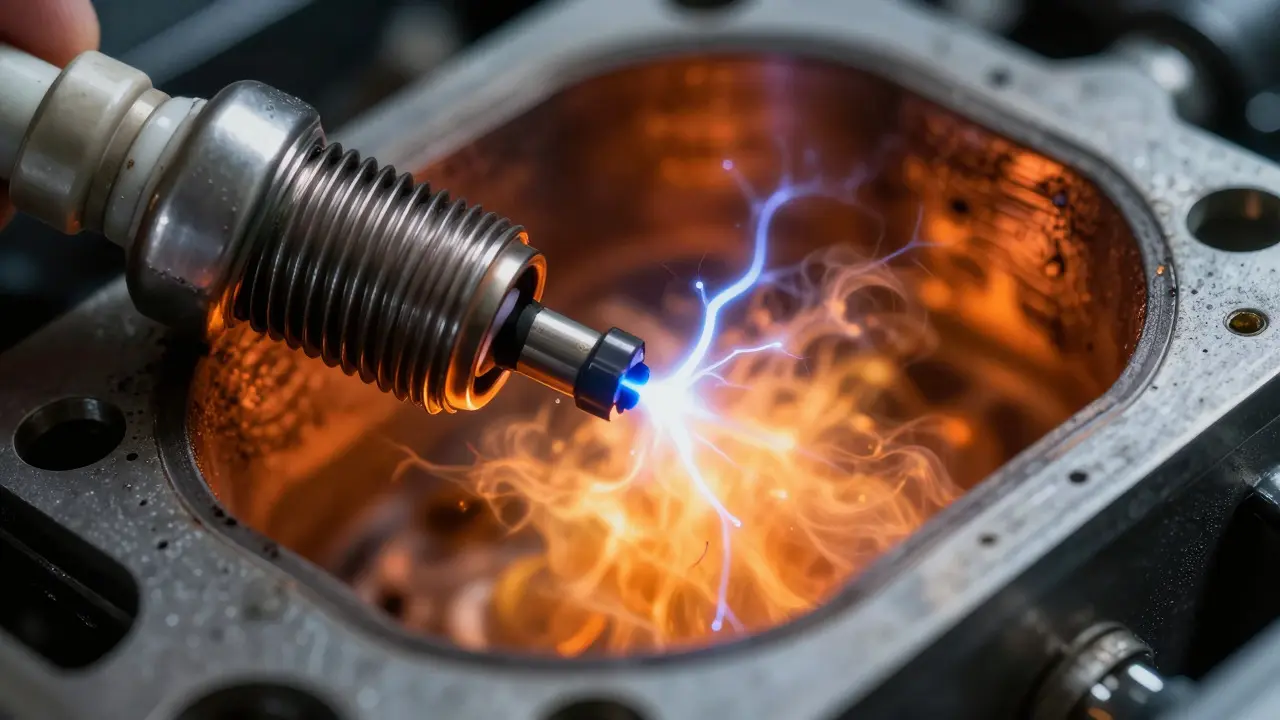
Your car runs on a precise rhythm of explosions. Each cylinder fires in sequence, pushing the pistons down and turning the crankshaft. At the center of this choreography is the spark plug, a critical ignition component that generates the electrical arc necessary to ignite the air-fuel mixture in the combustion chamber. While often overlooked until they fail, these small ceramic-and-metal parts dictate your engine's efficiency, power, and longevity. When they wear out, you don't just lose performance; you risk damaging more expensive components like the catalytic converter or oxygen sensors.
Knowing when to replace them isn't about guessing-it’s about understanding the specific chemistry and physics at play inside your engine. Whether you drive a modern direct-injection turbocharged unit or an older carbureted classic, the logic remains similar: heat, voltage, and erosion take their toll. Here is what actually happens inside the plug, how to spot the failure before it strands you, and why timing matters more than you think.
The Anatomy of Failure: What Actually Happens Inside
To understand why replacement is necessary, you have to look at what the spark plug does every single cycle. It has to withstand temperatures exceeding 1,000 degrees Fahrenheit while delivering a high-voltage jump across a tiny gap. This environment is brutal. The electrode tip erodes over time due to the constant arcing. As the metal wears away, the gap widens. A wider gap requires higher voltage from the ignition coil to bridge the distance. If the coil can’t supply enough voltage, the spark becomes weak or fails entirely, leading to misfires.
Beyond erosion, there are two other primary killers: fouling and overheating. Fouling occurs when carbon deposits build up on the insulator or electrodes, usually caused by incomplete combustion. This acts as an insulator, preventing the spark from jumping. Overheating, conversely, happens when the plug runs hotter than its designed range, often due to aggressive driving or a lean fuel mixture. This can cause pre-ignition, where the fuel ignites before the spark arrives, potentially cracking the piston crown or blowing head gaskets.
Decoding the Gap: Why Precision Matters
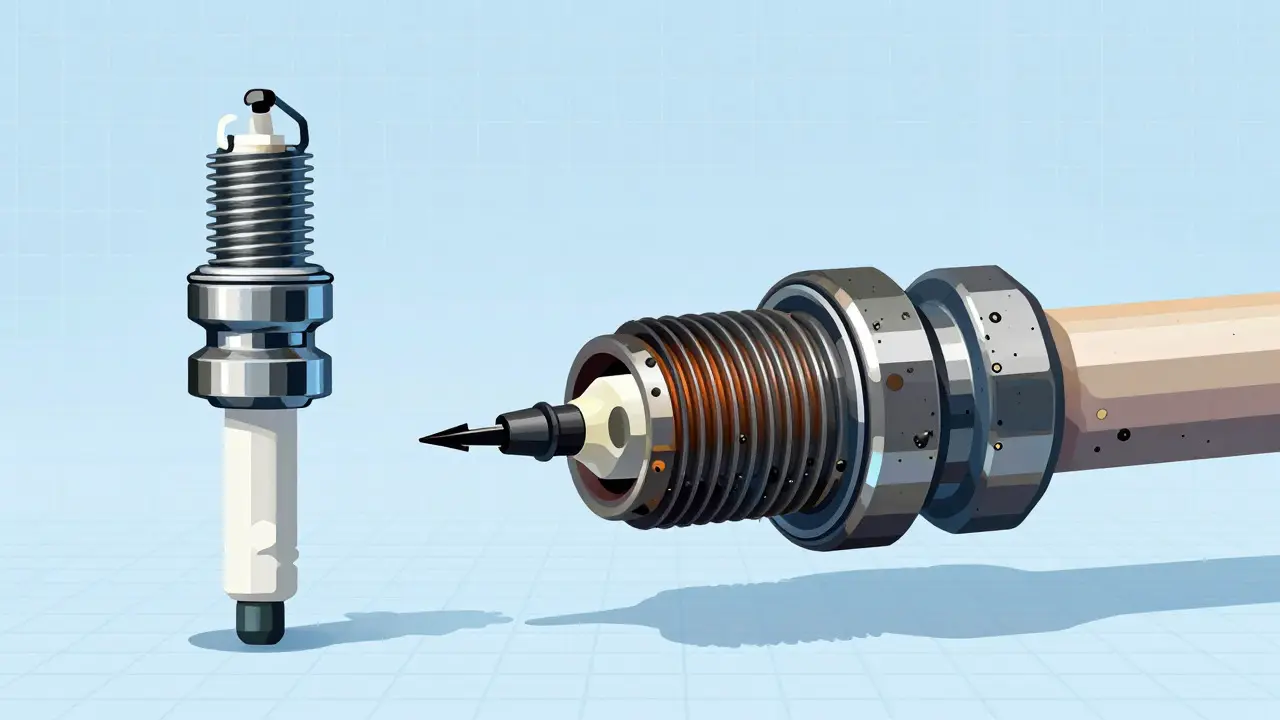
The "gap" refers to the distance between the center electrode and the ground electrode. It is measured in millimeters (mm) or thousandths of an inch. For most modern gasoline engines, this gap falls between 0.8 mm and 1.2 mm (approximately 0.031 to 0.047 inches). But here is the catch: the ideal gap varies significantly based on your engine’s design and ignition system strength.
Older distributor-based systems typically required smaller gaps because the ignition coils were less powerful. Modern electronic ignition systems, particularly those with individual coil-on-plug designs, can handle larger gaps because they generate much higher voltages. If you install a plug with a gap that is too wide for your system, you’ll experience hesitation under load. If it’s too narrow, you might see reduced power output because the flame front starts too close to the center of the chamber, affecting combustion dynamics.
| Engine Type | Typical Gap Range (mm) | Typical Gap Range (inches) | Ignition System Context |
|---|---|---|---|
| Modern Gasoline (Coil-on-Plug) | 1.0 - 1.2 | 0.039 - 0.047 | High voltage capability |
| Older Gasoline (Distributor) | 0.6 - 0.8 | 0.024 - 0.031 | Limited voltage output |
| Diesel Glow Plugs (for reference) | N/A (No gap) | N/A | Heat source, not ignition |
| Turbocharged High-Performance | 0.8 - 1.0 | 0.031 - 0.039 | Requires consistent strong spark |
When to Replace: The Real Mileage Markers
Your owner’s manual provides a baseline, but real-world conditions shift these numbers. Generally, standard copper-core plugs last between 30,000 and 50,000 miles. Platinum-tipped plugs extend this life to 60,000 miles, while iridium-tipped plugs can often reach 100,000 miles or more. However, mileage is just one factor. Driving style matters immensely. Stop-and-go city traffic in Portland’s rain-soaked winters creates different thermal cycles than highway cruising. Frequent short trips prevent the engine from reaching optimal operating temperature, which can accelerate oil sludge formation and carbon buildup on the plugs.
Don’t wait for the check engine light. By the time the computer logs a P0300 (random/multiple cylinder misfire) code, you’ve likely already lost efficiency and may have unburned fuel entering the exhaust system. That unburned fuel can coat the catalytic converter, turning a $200 plug job into a $1,500+ emissions fix. Proactive replacement is cheaper insurance.
Symptoms You Can Feel and Hear
Your car will tell you when the sparks are failing, but the signals are subtle at first. The earliest sign is usually a slight hesitation during acceleration, especially when merging onto the highway. The engine feels like it’s "bogging down" for a split second. As the condition worsens, you’ll notice rough idling. Park the car and watch the RPM gauge; if it bounces between 600 and 800 RPM instead of sitting steady at 750, a cylinder is misfiring.
Fuel economy is another clear indicator. A worn plug causes incomplete combustion, meaning you’re paying for gas that never turned into motion. Many drivers report a drop of 5-10% in MPG before noticing any mechanical issues. Finally, listen for pinging or knocking sounds under load. This is pre-ignition, a dangerous state where the air-fuel mixture explodes prematurely. If you hear this, pull over immediately. Continued driving can warp valves or crack pistons.

DIY vs. Professional: The Torque Trap
Replacing spark plugs seems straightforward, but there is one major pitfall: torque. Most people either overtighten or undertighten the plugs. Undertightening allows the plug to vibrate loose, potentially letting exhaust gases leak past the threads. Overtightening can strip the aluminum threads in the engine block, a nightmare repair that involves tapping new threads or replacing the head. Always use a torque wrench set to the manufacturer’s specification, typically around 15-20 ft-lbs for most passenger cars. Apply a thin layer of anti-seize compound only if specified by the manufacturer; otherwise, it can interfere with proper seating and heat transfer.
If you are doing this yourself, remember the thread pitch. Most US-made vehicles use M12x1.25 threads, while many European and Asian models use M14x1.25. Using the wrong socket or extension can cross-thread the plug, ruining both the plug and the hole. Check your service manual for the exact thread size before you start.
Choosing the Right Plug: Material and Heat Range
Not all plugs are created equal. The material of the center electrode determines durability and conductivity. Copper is the standard, affordable option but wears fastest. Platinum offers better resistance to erosion and maintains a finer point longer. Iridium is the premium choice, featuring an extremely fine wire tip that produces a stronger, more consistent spark and lasts twice as long as platinum. For most daily drivers, iridium is worth the extra cost given the extended service interval.
Equally important is the heat range. This number indicates how quickly the plug dissipates heat. A "colder" plug (higher number) handles high-compression or turbocharged engines better by keeping the tip cooler to prevent pre-ignition. A "hotter" plug (lower number) is used in low-compression engines to keep the tip hot enough to burn off carbon deposits. Sticking to the OEM heat range is safest. Deviating without tuning can lead to detonation or fouling.
Can I reuse old spark plugs after cleaning them?
Generally, no. While you can clean visible carbon deposits, the internal erosion of the electrode gap cannot be repaired. Once the metal wears down, the gap changes permanently. Reusing plugs risks inconsistent firing and potential engine damage. Only consider reusing if they were removed for inspection and show no signs of wear or fouling.
How do I know if my car uses iridium or platinum plugs?
Check your owner’s manual or the part number of the original equipment manufacturer (OEM) plug. The part number usually contains a code indicating the material. Alternatively, look at the center electrode of a removed plug. Iridium tips are very thin and sharp, while platinum tips are slightly thicker and flatter. Copper cores are visibly softer and wear faster.
Does driving style affect spark plug life?
Yes. Aggressive driving with frequent high-RPM operation generates more heat and stress on the electrodes, shortening their life. Conversely, excessive short trips where the engine never reaches full operating temperature can lead to oil and carbon accumulation, causing fouling. Balanced driving habits extend plug life.
What happens if I ignore a bad spark plug?
Ignoring a bad plug leads to persistent misfires, which send unburned fuel into the exhaust system. This damages the catalytic converter and oxygen sensors. Over time, the imbalance in combustion can also cause uneven cylinder wear and increased vibration, stressing engine mounts and other components.
Should I replace all plugs at once or just the bad one?
Always replace all plugs at once. Even if only one shows obvious signs of failure, the others are likely at a similar stage of wear. Replacing only one creates an imbalance in combustion across cylinders, leading to rough running and further stress on the remaining plugs. Bulk replacement ensures uniform performance.