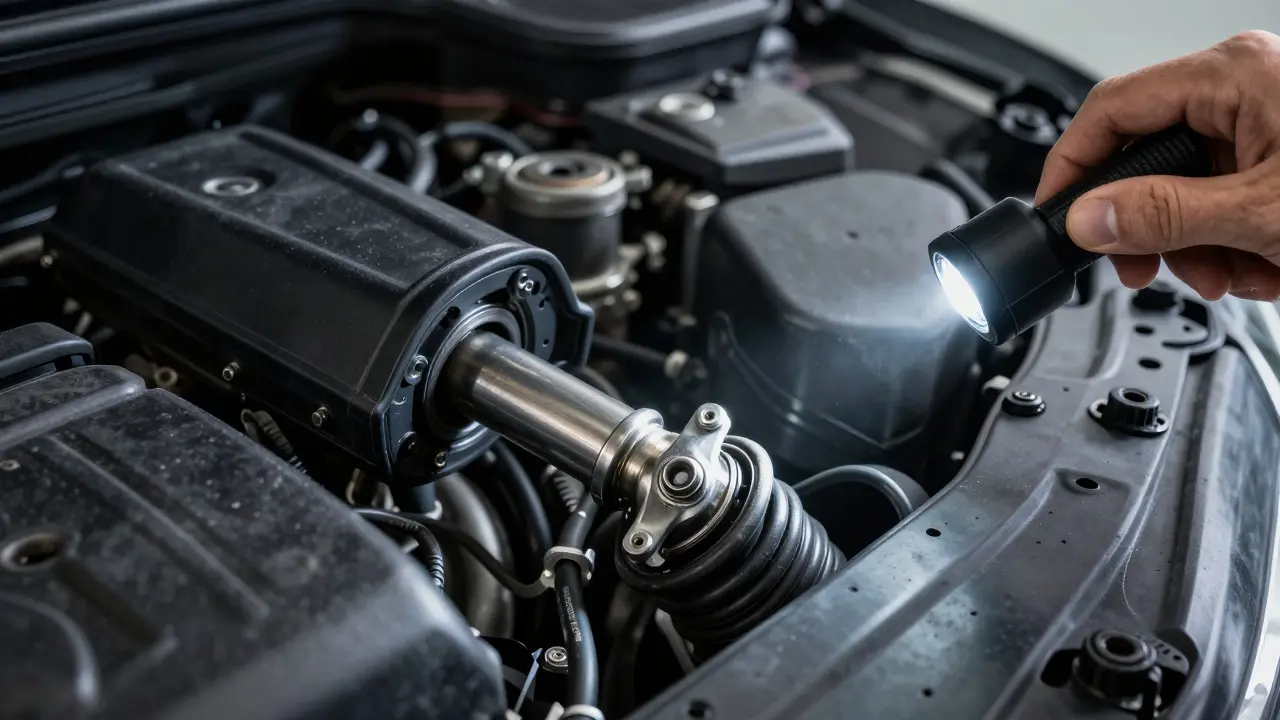
There is a specific kind of anxiety that comes from hearing a sound in your car you don't recognize. Is it the tires? The suspension? Or something deeper inside the dashboard? If you are hearing a clunk, rattle, or hum when turning the wheel, the culprit is often hidden within the steering column itself. It’s not always a catastrophic failure, but ignoring it can lead to expensive repairs down the line. Understanding what lives inside that black plastic shroud helps you diagnose the issue before it becomes a safety hazard.
The steering column is the mechanical link between your hands on the wheel and the tires on the road. It consists of a series of shafts, bearings, and joints that transmit torque while allowing for slight movement due to engine vibration and road impacts. When these components wear out, they create distinct noises. By learning to identify these sounds, you can pinpoint whether the problem lies in the bearings, the universal joints, or the clock spring assembly.
How the Steering Column Works
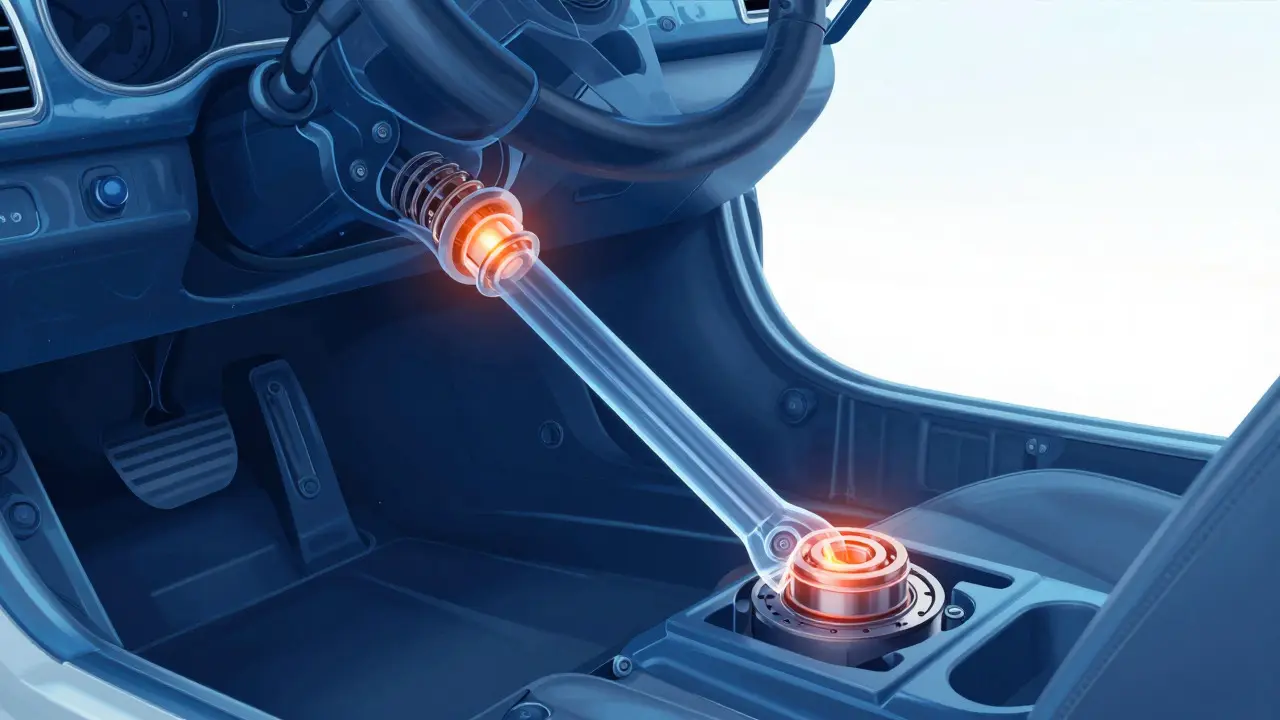
To understand the noise, you have to understand the mechanics. A typical modern vehicle uses a two-piece or three-piece steering column. This design allows the column to fold during a collision, protecting the driver's legs. The column contains several critical moving parts:
- Universal Joints (U-Joints): These connect the separate sections of the column shaft. They allow the shaft to bend slightly while still rotating. Think of them like the knee joint in a leg-they need flexibility to move.
- Bearings: Located at the base of the column where it meets the firewall, these support the weight of the steering wheel and allow it to rotate freely without friction against the chassis.
- Clock Spring: This spiral wire coil connects the electrical systems (airbag, horn, cruise control) to the rotating steering wheel. While primarily electrical, a damaged clock spring can sometimes cause physical rubbing noises.
When any of these parts lose their lubrication or suffer from metal fatigue, they begin to make noise. The key is matching the sound to the part.
Identifying Bearing Wear vs. Joint Failure
One of the most common complaints is a grinding or humming noise that gets louder as you turn the wheel. This is almost always a sign of worn-out steering column bearings. These bearings are usually sealed units filled with grease. Over time, the grease dries up, or debris enters the seal, causing metal-on-metal contact. You might also feel a roughness or resistance when turning the wheel, especially at low speeds.
In contrast, a sharp clunk or knock when shifting from left to right, or when going over bumps, points to the universal joints. U-joints have small ball bearings inside a cross-shaped housing. When these balls wear down, there is too much play in the joint. This excess movement causes the shaft to hit its limits abruptly, creating that distinct knocking sound. If you wiggle the steering wheel by hand (with the car off) and feel excessive slop, the U-joint is likely the source.
| Noise Type | When It Occurs | Likely Cause | Severity |
|---|---|---|---|
| Grinding / Humming | While turning, constant speed | Worn Bearings | Medium (Can seize) |
| Sharp Clunk / Knock | Over bumps, shifting direction | Loose Universal Joints | High (Safety risk) |
| Rattling | Idle, high vibration | Loose Mounts / Damaged Clock Spring | Low to Medium |
| Squealing | During sharp turns | Dry U-Joint Bushings | Medium |
The Role of Lubrication and Seals
Many drivers assume that if a part is making noise, it needs immediate replacement. However, for universal joints, lubrication is often the first step. Unlike some other components, many steering column U-joints are serviceable. If the noise is squeaky rather than grinding, applying a high-quality lithium-based grease to the zerk fittings (if accessible) or replacing the rubber boots can extend the life of the joint significantly. The rubber boots keep dirt out and grease in. Once a boot tears, water and grit enter, accelerating wear exponentially.
Bearings, however, are different. They are typically pressed into place and sealed permanently. If you hear grinding from the bearing area, lubrication won't fix it. The internal raceways are scored. Replacing the bearing assembly is the only reliable solution. In older vehicles, this might mean replacing the entire lower column bracket. In newer cars, it may require removing the airbag module and disconnecting the steering shaft, which is why professional diagnosis is recommended for bearing issues.
Diagnosis Steps for Home Mechanics
You don’t need a lift to diagnose basic steering column issues, but you do need safety. Here is a practical approach to narrowing down the problem:
- Check for Play: With the engine off and wheels chocked, grab the bottom of the steering column (near the firewall). Wiggle it side-to-side and up-and-down. Excessive movement suggests loose mounting bolts or a failing U-joint.
- Listen While Turning: Have a helper slowly turn the wheel left and right while you listen near the firewall. If the noise is rhythmic and matches the rotation, it’s likely the U-joint. If it’s a continuous grind, focus on the bearings.
- Inspect the Boots: Look at the rubber bellows around the U-joints. Are they cracked? Is grease leaking out? If so, replace the boots immediately to prevent further damage.
- Test Drive Observation: Note if the noise happens only at certain speeds. Speed-dependent humming often indicates imbalance or bearing wear. Impact-dependent clunks indicate joint play.
If you find that the noise disappears after tightening the column mount bolts, you’ve solved the problem cheaply. Often, vibrations from the engine shake these bolts loose over time, causing the whole column to rattle against the chassis.
Repair Costs and Considerations
Understanding the potential costs helps you decide whether to repair or replace. Labor is the biggest factor here because accessing the steering column requires removing the dashboard trim, airbag module, and often the steering rack linkage.
- U-Joint Replacement: Parts cost $50-$150. Labor can range from $200 to $400 depending on access difficulty.
- Bearing Replacement: Parts cost $80-$200. Labor is higher, often $300-$600, due to the precision required to align the new bearing.
- Full Column Assembly: If multiple parts are worn, replacing the entire column assembly ($400-$800 for parts) plus labor might be more cost-effective than fixing individual pieces.
For high-mileage vehicles, consider the condition of the rest of the steering system. If the tie rods and idler arm are also worn, fixing the column alone won’t eliminate all the noise. A comprehensive steering inspection is wise.
Preventive Maintenance Tips
Steering column issues rarely happen overnight; they develop over years of use. You can slow down the process with simple habits:
- Avoid Parking on Curbs: Hitting curbs puts immense stress on the steering column mounts and joints. Try to pull up straight to the curb whenever possible.
- Don't Leave the Wheel Turned: Parking with the wheel turned hard left or right keeps tension on the power steering pump and column joints. Center the wheel before parking.
- Regular Inspections: During every oil change, ask your mechanic to check the steering column boots for cracks. It takes them ten seconds to look, and it could save you hundreds later.
By staying proactive, you ensure that your steering remains smooth and quiet, giving you confidence in every turn.
Is steering column noise dangerous?
It depends on the severity. A slight rattle from loose mounts is annoying but generally safe. However, a loud clunk from a failing universal joint or a grinding bearing can lead to complete steering failure. If you feel loss of control or significant vibration, stop driving and get it inspected immediately.
Can I drive with a bad steering column bearing?
You can drive cautiously for a short distance to reach a shop, but avoid long trips. Worn bearings generate heat, which can warp the shaft or cause the bearing to seize completely. If the wheel locks up while driving, you lose steering control.
What does a clicking sound in the steering column mean?
A clicking sound that repeats with each turn of the wheel often indicates a dry or damaged universal joint. It can also be caused by the clock spring rubbing against the steering column housing if the alignment is off. Check the U-joint lubrication first.
How long do steering column parts last?
With proper maintenance, universal joints and bearings can last the life of the vehicle, which is often 150,000 to 200,000 miles. However, harsh driving conditions, frequent curb hits, and lack of lubrication can reduce this lifespan to 80,000 miles or less.
Do I need to replace the whole column if one part fails?
Not necessarily. Individual U-joints and bearings are available as separate parts. However, if the column is old and has rust or corrosion, replacing the entire assembly might be cheaper and more reliable than trying to fit new parts onto a worn chassis.