Modern cars don’t just have springs and shocks anymore. They have sensors, actuators, and computers working together to keep you safe and comfortable. If your ride feels bouncy, leans too much in turns, or the suspension warning light comes on, it’s not always a broken spring. More often, it’s a failing sensor or a weak actuator. Knowing how to test these electronic parts is no longer optional-it’s essential for accurate repairs and real safety.
What’s Really Going On Under Your Car?
Most people think suspension problems mean worn shocks or broken springs. But in cars built after 2005, the system is mostly electronic. Sensors measure how fast the wheel moves up and down, how much the body leans, and even how hard the brakes are being pressed. Actuators-small motors or valves-adjust damping in real time based on that data. If a sensor gives bad info, the actuator does the wrong thing. That’s why a car can feel rough even with new shocks. The Electronic Suspension Control Module (ESCM) is the brain. It watches signals from position sensors, accelerometers, and wheel speed sensors. If a signal stays off for more than 10 seconds, it logs a fault code. It won’t trigger right away. It waits. Why? To avoid false alarms from bumps or potholes. That means a code doesn’t always mean a part is dead. It means the system saw something wrong, repeatedly.Stage 1: The Bounce Test (No Tools Needed)
Before you grab a scanner, try the bounce test. It’s old, simple, and still reliable. Walk to each corner of the car. Push down hard on the bumper-like you’re trying to flatten it. Then let go. Watch what happens.- If the car bounces once and settles? Good.
- If it bounces two or more times? The shock or strut is worn out.
- If it doesn’t move at all? The damper might be seized.
Stage 2: Reading the Codes
Plug in a scan tool. Look for codes like C0660, C0710, or U0423. These aren’t random. C0660 usually means the rear position sensor signal is out of range. C0710 points to a compressor failure in air suspension systems. U0423 says the ESCM lost communication with a sensor. Don’t just clear the code. Check if it’s a current code or a history code. History codes mean the problem happened, but it’s not happening right now. That’s tricky. It could be a loose wire, a dirty connector, or a sensor that only fails when it’s cold. The ESCM runs a self-test every time you turn the key on. It turns on the air compressor for 4 seconds and watches the position sensor. If the sensor doesn’t show a change, the system knows the compressor isn’t working. That’s how it catches problems before they become dangerous.Stage 3: Testing the Sensors
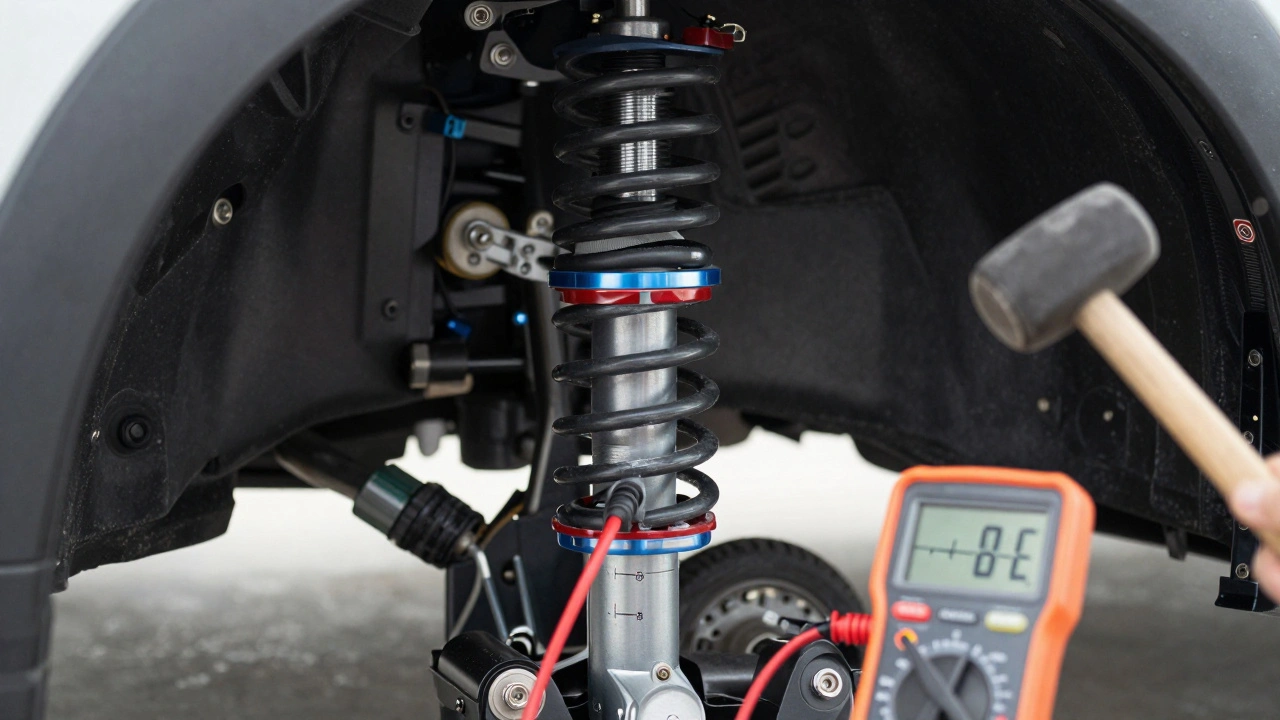
There are two main sensors in modern suspensions: position sensors and accelerometers. Position sensors are usually Hall effect sensors. They sit near the top of the strut. As the suspension moves, a magnet inside the sensor moves, changing the voltage. A healthy sensor should show a smooth, steady change as you push the car down. If the voltage jumps, drops, or stays flat, the sensor is bad. Accelerometers-also called vertical G sensors-mount on the shock tower. They measure body movement, not wheel movement. This helps the system tell the difference between a bump and a turn. To test one, you need a multimeter and a way to simulate motion. Tap the sensor lightly with a rubber mallet. Watch the voltage. It should spike and settle. No spike? Dead sensor. Most shops skip this. But if you’re getting random ride quality complaints, this is where you look. A failing accelerometer can make the car feel stiff on smooth roads and float on rough ones.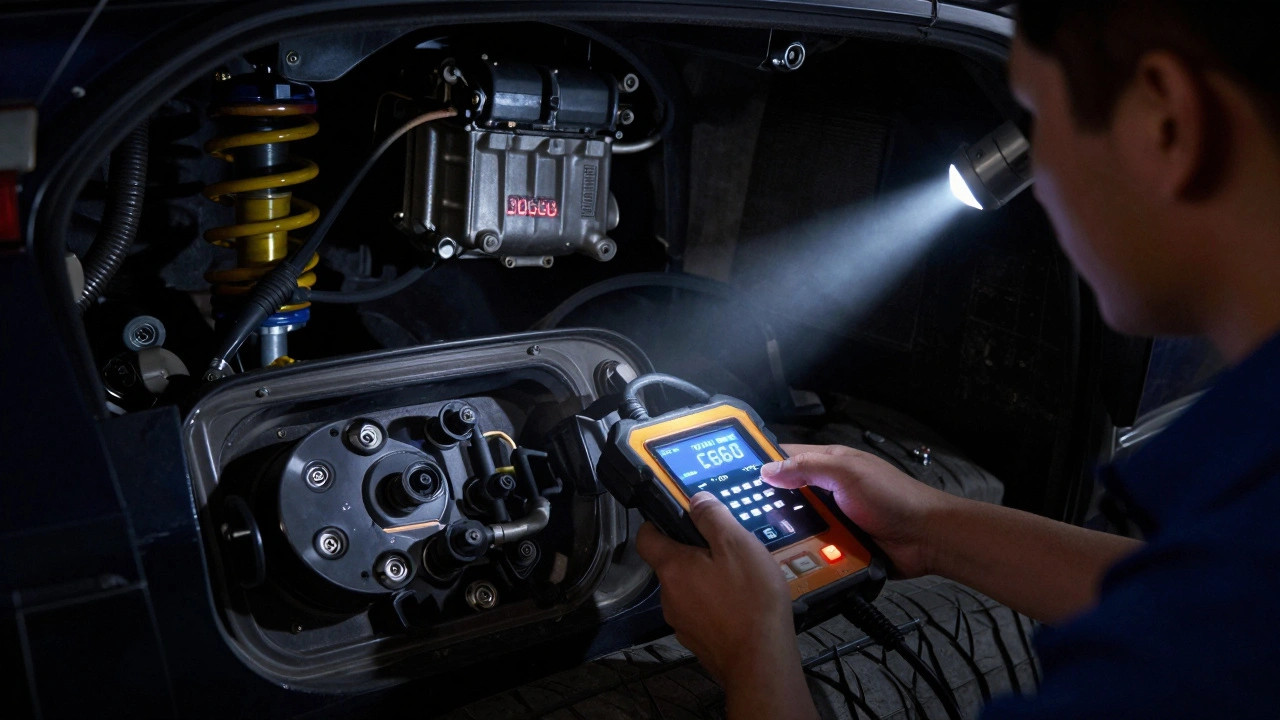
Stage 4: Testing the Actuators
Actuators are the muscles. In air suspension, it’s a compressor and solenoid valves. In adaptive damping, it’s an electric valve inside the shock that changes oil flow. For air systems: Turn on the ignition. Listen. You should hear the compressor kick on for 4 seconds. If it’s silent, check the fuse. If the fuse is good, the compressor might be dead. Or the pressure sensor might be lying. The compressor can’t tell if air is leaking. It just tries to build pressure. If it runs for 20 seconds and the suspension doesn’t rise, you’ve got a leak. For adaptive dampers: Use a scan tool to command the actuator manually. Set the damping to “firm” and then “soft.” Listen for a clicking sound inside the shock. If there’s no click, the valve is stuck. You can also measure resistance across the actuator’s terminals. Most are between 8-15 ohms. Outside that range? Replace it.Stage 5: The Road Test
No scanner can replace real driving. Take the car on a quiet road. Drive at 50 km/h. Slam the brakes hard. Watch the front end. Does it dive too much? That’s a sign the front dampers are weak. Does the car pull to one side? That’s not a brake issue-it’s a suspension geometry problem caused by a worn control arm or bushing. Do a slow corner. Lean should be smooth. If the car feels like it’s rolling over, the sensors might be telling the system to stay soft when it should be firm. A failing sensor can make the car feel unstable even if all parts are new.What Tools Do You Really Need?
You don’t need a $10,000 machine. But you do need:- A scan tool that reads suspension codes (not just engine codes)
- A multimeter (for sensor voltage and actuator resistance)
- A flashlight (for visual inspection of leaks, cracks, rust)
- A rubber mallet (to test accelerometer response)

Why This Matters
Worn shocks don’t just make the ride bouncy. They increase stopping distance. Studies show that worn dampers can add 10-15% to braking distance on dry roads. That’s the length of a car. On wet roads? It’s worse. A failing sensor can make the system think the car is leaning when it’s not. The actuator then stiffens the suspension, making the ride harsh. Or it does nothing when it should. Either way, safety is compromised. Modern suspensions are smart. But they’re not perfect. They rely on signals. If the signal is wrong, the car can’t react right. That’s why diagnostics now isn’t just about replacing parts. It’s about understanding how the system thinks-and fixing what’s fooling it.Common Mistakes
- Replacing shocks because the car feels bouncy-without checking the sensor first. The new shocks won’t fix a bad signal.
- Clearing codes without checking for history codes. The problem might be intermittent.
- Ignoring air leaks in air suspension. A small leak won’t trigger a code until the compressor runs too long.
- Assuming a compressor is bad because it’s noisy. Sometimes it’s just the relay. Check voltage first.
Final Check: When to Call a Pro
If you’ve done the bounce test, read the codes, checked sensor voltages, and tested actuator resistance-and still can’t find the issue-it’s time to go to a shop with a full diagnostic line. Some problems need dynamic testing: measuring how the suspension moves under real load, with laser sensors and inertial meters. That’s not DIY. But for 80% of cases, the fix is simple: replace a sensor, clean a connector, or fix a leak. You don’t need expensive gear. You just need to know what to look for-and how to listen to what the car is telling you.Can a bad sensor cause the suspension to feel stiff even with new shocks?
Yes. If the vertical accelerometer or position sensor sends false data-like saying the car is leaning hard when it’s not-the Electronic Suspension Control Module will command the dampers to stiffen unnecessarily. This makes the ride feel harsh, even if the shocks are brand new. The system is trying to correct a problem that doesn’t exist.
Why does my suspension warning light come on only in cold weather?
Cold temperatures can cause electrical connectors to contract slightly, creating intermittent connections. Sensors and actuators rely on steady voltage. A loose wire or corroded pin might work fine when warm but fail when cold. The system logs the fault after a few ignition cycles. Warming up the car or cleaning the connectors often fixes this.
Do I need to replace all four shocks if one is bad?
Not necessarily. But if your car has adaptive suspension, replacing just one shock can cause imbalance. The system expects all four to react the same way. If one is new and three are worn, the computer gets conflicting signals. That can trigger warning lights or odd ride behavior. For adaptive systems, replacing in pairs (front or rear) is often recommended.
Can air suspension leaks be fixed without replacing the entire strut?
Sometimes. Air leaks often come from the rubber bellows, air lines, or compressor fittings-not the strut itself. A leak down test with soapy water can pinpoint the source. Replacing a rubber seal or air line is cheaper than a whole strut. But if the strut’s internal seal is damaged, you’ll need a new unit.
How do I know if my ESCM is faulty or just receiving bad data?
The ESCM rarely fails. More often, it’s a sensor, wiring, or power issue. If multiple sensors show odd readings, check the power and ground connections to the module. A bad ground can make all signals erratic. If one sensor is bad but others are fine, the problem is isolated. Always test sensors and wiring before assuming the module is at fault.