Ever wondered why your side window shatters into tiny cubes while the windshield stays in one piece? It’s not a design flaw; it’s physics at work. Understanding the difference between tempered and laminated glass is crucial for anyone who wants to know exactly what protects them on the road. These two materials serve distinct roles in vehicle safety, each engineered for specific failure modes.
When you replace a broken window or assess damage after an accident, knowing which type of glass you are dealing with changes everything from cost estimates to repair options. Tempered glass is designed to break completely but safely, whereas laminated glass is built to hold together even when cracked. This article breaks down the manufacturing process, safety benefits, and practical implications of choosing one over the other in modern vehicles.
The Manufacturing Process: How They Are Made
To understand why these glasses behave differently, you have to look at how they are created. The fundamental difference lies in their internal structure and the layers involved during production.
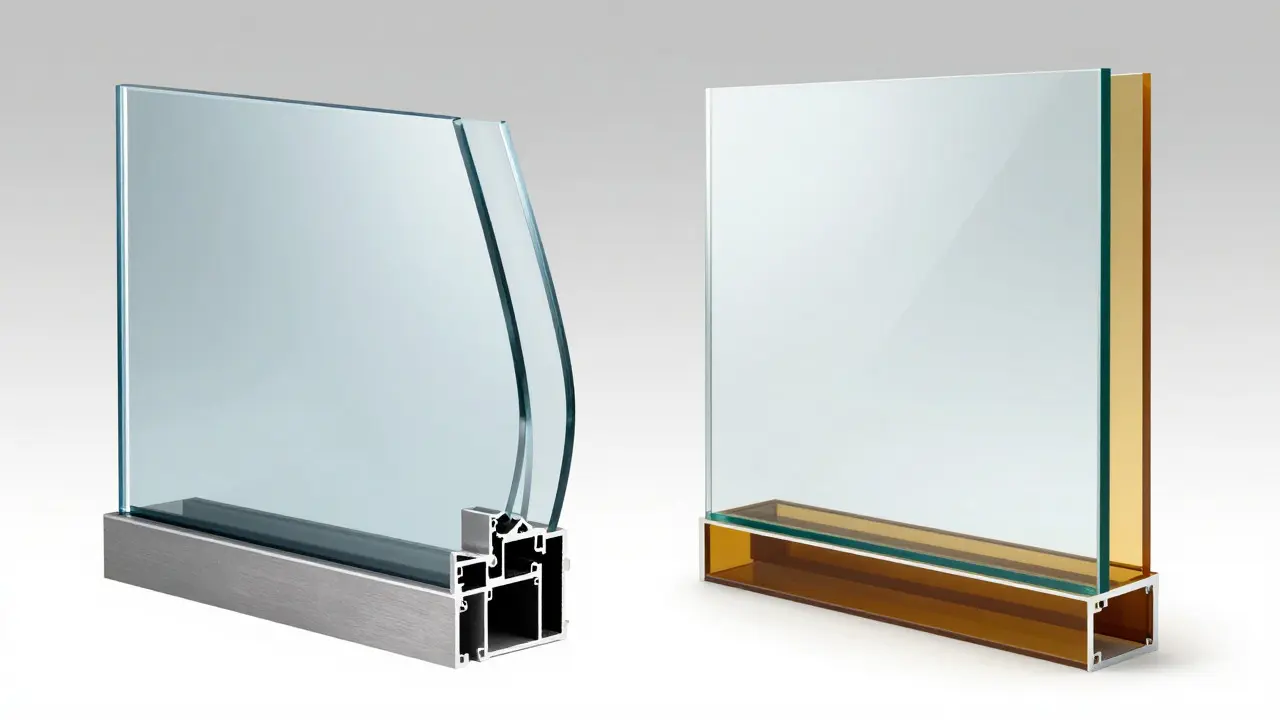
Tempered glass is a type of heat-strengthened glass that undergoes rapid cooling to create high compressive stress on its surface. The process involves heating standard annealed glass to around 1,000°F (538°C) and then blasting it with cool air. This rapid quenching locks the outer layer in place while the inner core remains under tension. The result is a pane of glass that is four to five times stronger than regular float glass. However, this strength comes with a trade-off: if the surface integrity is compromised, the entire panel releases its stored energy almost instantly.
In contrast, Laminated glass is a composite material consisting of two or more sheets of glass bonded together with an interlayer of polyvinyl butyral (PVB). Think of it like a sandwich. The PVB layer acts as an adhesive glue that holds the glass shards in place if the outer layer cracks. Unlike tempered glass, which relies on thermal stress for strength, laminated glass relies on the tensile strength of the plastic interlayer. This construction makes it significantly heavier and thicker, typically ranging from 4mm to 6mm per sheet, resulting in a total thickness of about 7mm to 12mm depending on the application.
Safety Mechanics: Shattering vs. Holding Together
The primary reason automakers use both types is that they fail differently, and each failure mode serves a specific safety purpose.
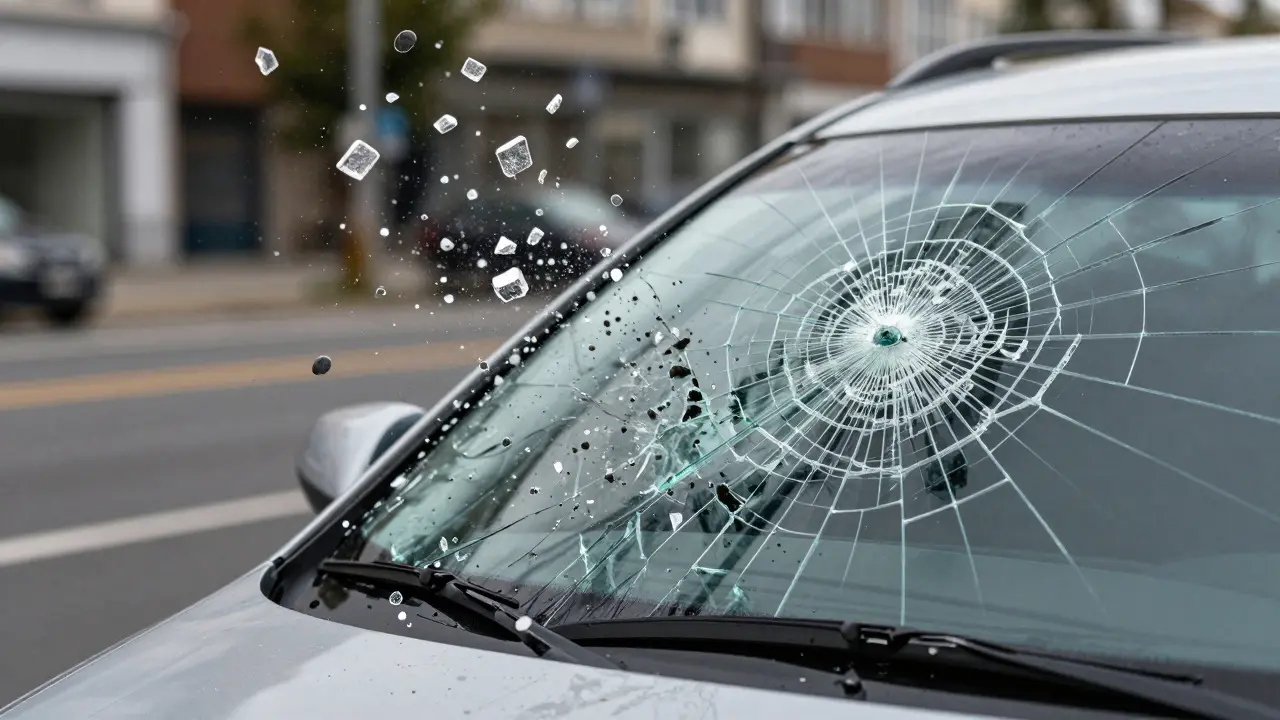
When tempered glass breaks, it disintegrates into small, pebble-like fragments. This might sound terrifying, but it is actually a safety feature. Large, sharp shards can cause severe lacerations. Small, rounded cubes are far less likely to cut deeply. This is why tempered glass is used for side windows and rear hatches. If a rock hits your driver’s side window, you want it to shatter so you can escape quickly if necessary, rather than having a large jagged hole that blocks egress.
Laminated glass, however, is designed to stay intact. When struck by a stone or debris, the outer layer may crack, spider-webbing across the surface, but the PVB interlayer keeps the pieces attached. This prevents objects from flying through the window and hitting passengers. It also provides a temporary barrier against intruders or wind pressure. This is why the windshield, which faces the most impact risk from the front, is always laminated. Additionally, laminated glass offers superior ultraviolet (UV) protection, blocking up to 99% of UV rays, which helps prevent interior fading and skin damage for occupants.
Where Each Type Is Used in Your Vehicle
You don’t get to choose which glass goes where; regulations and engineering standards dictate the placement based on risk assessment. Here is the standard configuration for most passenger vehicles manufactured in the last two decades:
- Windshield: Always laminated. It must withstand direct impacts from the front and support the structural integrity of the roof in rollover accidents.
- Side Windows (Front and Rear): Typically tempered. These need to be easy to remove in emergencies and provide clear visibility without the weight penalty of lamination.
- Rear Hatches/Glass Doors: Usually tempered. Similar to side windows, ease of egress is the priority.
- Roof Panels/Sunroofs: Often laminated or sometimes tempered, depending on the manufacturer and local regulations. Some premium cars use laminated glass here for noise reduction and added strength.
It is worth noting that some newer models are experimenting with laminated side windows for added security and acoustic insulation, but this remains the exception rather than the rule due to cost and weight considerations.
Repairability: Can You Fix It?
This is often the biggest concern for drivers. If you get a chip in your glass, does the type matter for repair? Yes, significantly.
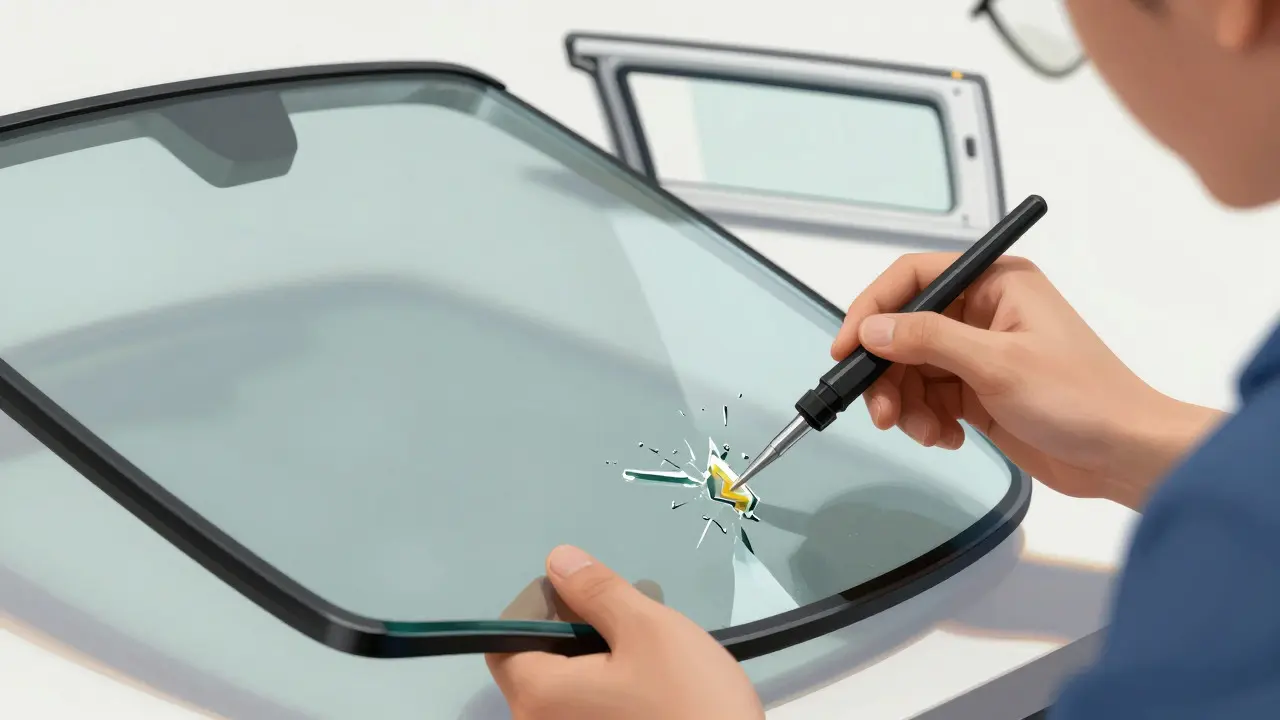
Laminated glass chips are generally easier to repair because the interlayer holds the fracture lines tight. A technician can inject resin into the crack, and the PVB helps keep the area stable during the curing process. As long as the chip is within the driver’s critical viewing zone and not too large, a windshield repair is usually successful and much cheaper than a full replacement.
Tempered glass chips are notoriously difficult to repair. Because the glass is under such high stress, any attempt to drill into it or inject resin risks triggering a complete shatter. Many technicians will tell you that a chipped side window is not worth repairing and should be replaced entirely. This is because the structural integrity is already compromised, and the risk of spontaneous breakage increases over time, especially with temperature fluctuations.
| Feature | Tempered Glass | Laminated Glass |
|---|---|---|
| Primary Location | Side windows, rear hatch | Windshield, sunroof |
| Breakage Pattern | Shatters into small cubes | Holds together with webbed cracks |
| Strength Factor | 4-5x stronger than annealed | Depends on layer count/thickness |
| Chip Repairability | Poor (high risk of shattering) | Good (interlayer stabilizes crack) |
| UV Protection | Moderate | High (up to 99% blockage) |
| Cost Impact | Lower material cost | Higher material cost |
Common Myths and Misconceptions
There are several myths circulating among car owners that can lead to poor decision-making when glass breaks.
Myth 1: Tempered glass is weaker. In reality, tempered glass has higher flexural strength than laminated glass of similar thickness. It resists bending and cracking from minor impacts better. Its weakness is only evident once the surface is breached.
Myth 2: You can swap them. You cannot simply put laminated glass in a side window frame designed for tempered glass. The mounting mechanisms differ. Laminated glass is often bonded with urethane sealant, while tempered glass is held in rubber seals. Swapping them requires modifying the door or windshield frame, which is rarely cost-effective.
Myth 3: All laminated glass is the same. Not quite. Windshields often include an acoustic layer (a second interlayer) to reduce road noise. Standard laminated glass for other applications might not have this. Also, the curvature of the glass affects how it is laminated, meaning a flat piece of laminated glass behaves differently than a curved windshield.
What To Do When Glass Breaks
If you encounter broken glass, your next steps depend entirely on the type of glass involved.
- Assess the location. If it’s the windshield, check if the crack is within the driver’s line of sight. If yes, plan for replacement. If no, it might be repairable.
- Check for sensor interference. Modern cars have cameras and sensors behind the windshield for lane-keep assist and automatic emergency braking. Replacing the windshield requires recalibrating these systems, which adds to the cost and time.
- For side windows, assume replacement is needed. Try to cover the opening with tape or a tarp to maintain climate control and security until the new part arrives.
- Document everything. Take photos before cleaning up. Insurance companies need visual proof of the damage extent, especially for tempered glass that shatters immediately.
Understanding these differences helps you communicate effectively with mechanics and insurers. Instead of just saying "my window broke," you can specify whether it was a laminated windshield chip or a shattered tempered side window, leading to faster and more accurate quotes.
Frequently Asked Questions
Is tempered glass safer than laminated glass?
It depends on the scenario. Laminated glass is safer for preventing intrusion and keeping debris inside the cabin, making it ideal for windshields. Tempered glass is safer for egress, allowing quick exit in crashes, making it ideal for side windows. Both meet strict safety standards for their respective positions.
Can I replace my side window with laminated glass?
Generally, no. Side window frames are designed for the thinner profile and different mounting style of tempered glass. Installing laminated glass would require custom fabrication or significant modification to the door structure, which is usually more expensive than buying a correct tempered replacement.
Why does my windshield crack but not shatter?
Your windshield is made of laminated glass. The plastic interlayer between the two sheets of glass holds the fragments together when impacted. This is a deliberate safety feature to prevent shards from flying into the driver's face and to maintain a barrier against external elements.
Does laminated glass reduce noise?
Yes, specifically if it includes an acoustic interlayer. Many modern windshields have a dual-layer PVB system where one layer is designed to dampen sound waves. This reduces highway wind noise and tire roar entering the cabin, contributing to a quieter ride experience.
How long does it take to replace a windshield versus a side window?
A side window replacement typically takes 30 to 60 minutes. A windshield replacement takes longer, usually 1 to 2 hours for installation, plus additional time for urethane bonding and potential ADAS camera calibration, which can add another hour or more depending on the vehicle's technology suite.