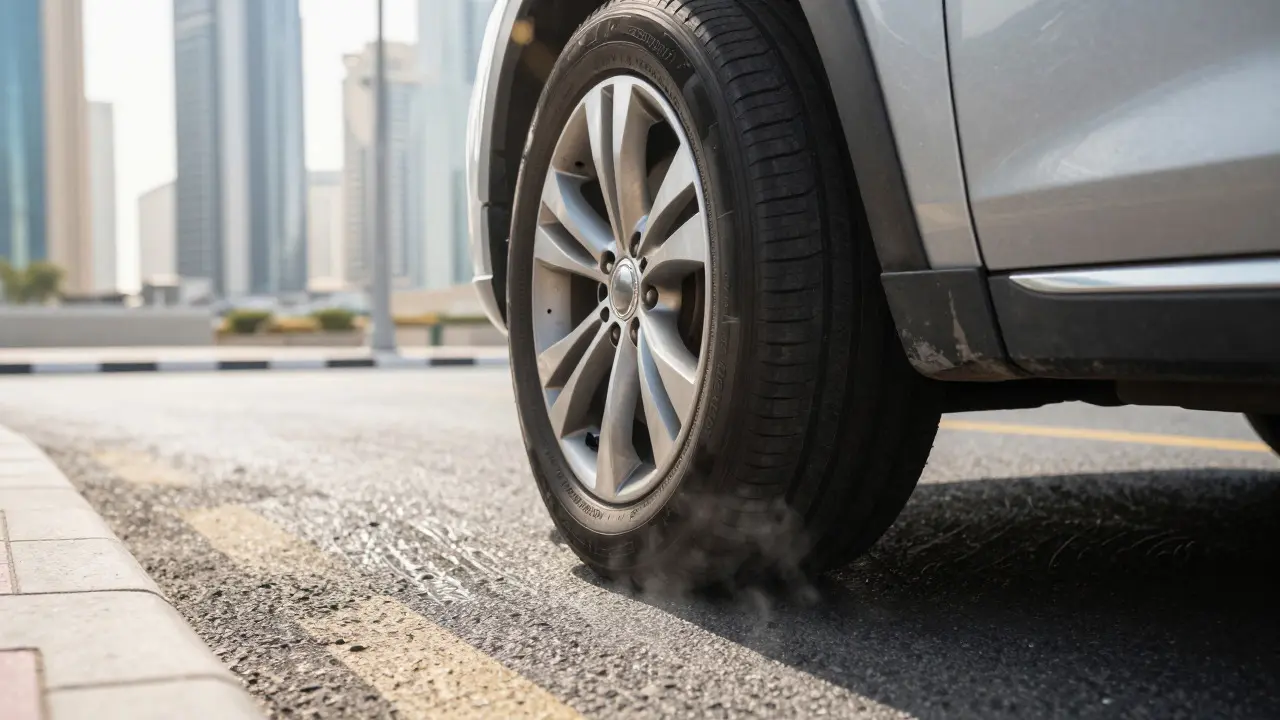
Driving in Dubai is a different beast than driving anywhere else in the world. The sun doesn't just shine; it presses down on your hood with a force that can feel physical. When you park under that midday glare, your car becomes an oven. This extreme heat directly impacts one critical component of your vehicle: your tires. Many drivers assume the pressure setting on their door jamb sticker is a permanent rule, but in the UAE, physics says otherwise. If you ignore how temperature affects air volume inside a tire, you risk uneven wear, reduced fuel efficiency, or even a blowout on the Sheikh Zayed Road.
Why Heat Changes Tire Physics
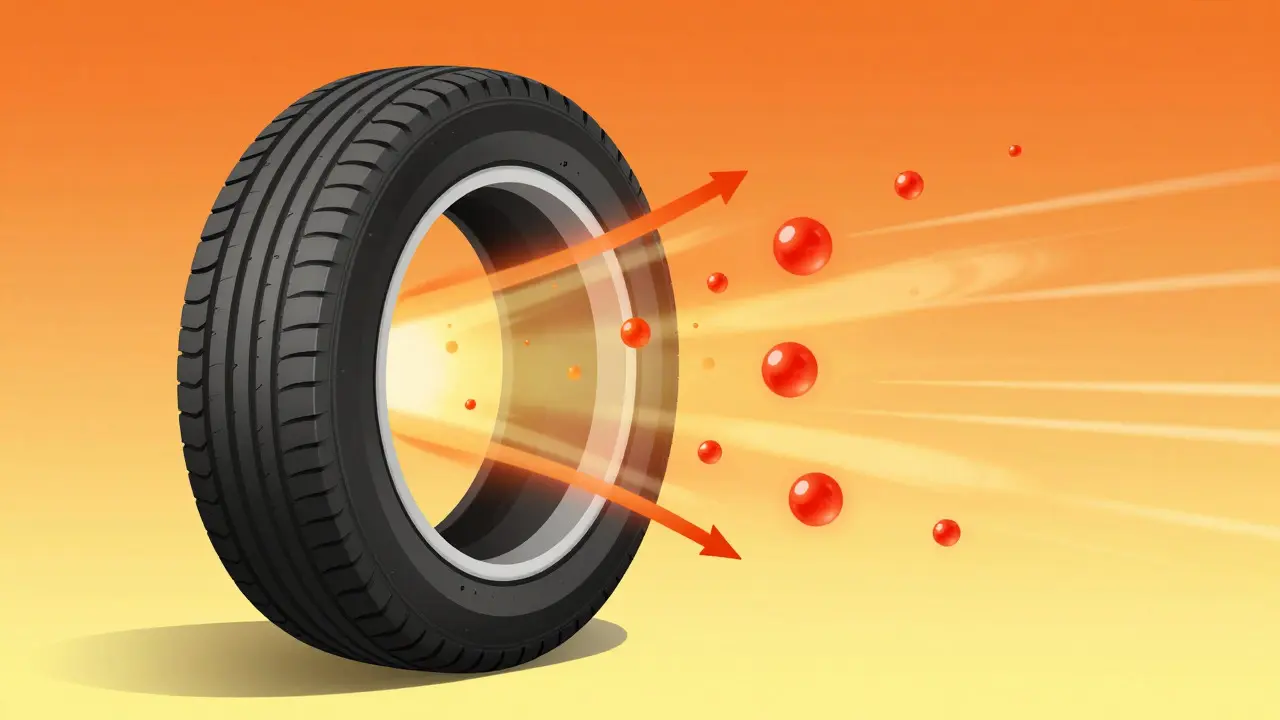
To understand why your tire pressure fluctuates, you have to look at basic gas laws. Air expands when heated. In a standard climate, this expansion is manageable. But in Dubai, where ambient temperatures regularly exceed 40°C (104°F) in summer, the air inside your rubber tube heats up significantly while driving. Friction from the road surface adds even more heat to the tire sidewalls and tread.
Here is the practical impact: if you inflate your tires to the manufacturer's recommended cold pressure in a cool garage, then drive for thirty minutes in 45°C weather, the internal pressure will rise by roughly 3 to 5 PSI. Conversely, if you check your pressure after a long drive without letting them cool down, you might see a reading that looks high, leading you to let air out unnecessarily. This "hot check" error leads to under-inflation during the next cold start, which causes the tire edges to scrub against the pavement, generating excess heat and accelerating wear.
Finding Your Specific Optimal PSI
The first step is finding your baseline. Look for the sticker on the driver’s side door jamb, inside the fuel filler door, or in the owner’s manual. This number represents the cold inflation pressure required for normal load conditions. For most sedans in the UAE market, such as the Toyota Camry or Nissan Altima, this range typically sits between 32 and 35 PSI. For larger SUVs like the Land Cruiser or Lexus LX, it may be higher, often around 36 to 40 PSI.
However, "optimal" isn't just about the sticker. It depends on your specific usage in Dubai:
- City Driving: Stick to the manufacturer's recommendation. You are rarely carrying heavy loads, and stop-and-go traffic generates less sustained heat than highway cruising.
- Highway Cruising: If you frequently drive from Dubai to Abu Dhabi or Sharjah at speeds above 120 km/h, consider adding 2-3 PSI to the rear tires. Higher speeds generate more aerodynamic drag and heat, and slightly higher pressure helps maintain the tire's shape and reduces rolling resistance.
- Heavy Loads: If you are transporting passengers or luggage for a trip to Al Ain or Hatta, check the maximum load rating on your tire sidewall. Manufacturers often provide a separate chart for fully loaded vehicles. Ignoring this can cause the tire to flex excessively, leading to internal structural damage.
The Role of TPMS Systems
Modern cars sold in the UAE come equipped with a Tire Pressure Monitoring System, or TPMS. There are two types: direct and indirect. Direct systems use sensors inside each wheel that transmit actual PSI data to your dashboard. Indirect systems use ABS wheel speed sensors to detect changes in rotational speed, which can indicate a pressure drop.
In Dubai's heat, direct TPMS is far superior for accuracy. However, both systems have a quirk: they calibrate based on your current driving habits. If you consistently run your tires 3 PSI below the recommended level, the system may reset its baseline to that lower level, effectively hiding the problem until a sudden leak occurs. To keep your monitoring accurate, perform a full manual pressure check every two weeks during peak summer months. Use a digital gauge for precision, as analog gauges can drift over time.
| Vehicle Type | Standard Cold PSI | Summer Adjustment (Ambient >40°C) | Reasoning |
|---|---|---|---|
| Sedan (e.g., Camry, C-HR) | 32 - 35 PSI | Maintain Standard | Light weight, low heat generation in city traffic. |
| Crossover/SUV (e.g., RAV4, X-Trail) | 33 - 36 PSI | +2 PSI Rear | Higher center of gravity requires stability; slight increase aids handling. |
| Luxury SUV (e.g., Range Rover, GX) | 36 - 40 PSI | Check Load Chart | Heavier vehicle mass means greater heat buildup; always verify max load ratings. |
| Performance Car | Variable | -1 to -2 PSI (Track Only) | Only reduce for track days to increase contact patch; do not do this for street driving in heat. |
Common Mistakes Drivers Make in the Gulf
One prevalent myth is that you should lower your tire pressure in the summer to improve grip. This is dangerous advice for street driving. Lower pressure increases the contact patch, yes, but it also increases sidewall flex. In 45°C heat, that flex turns into friction heat, which cooks the tire from the inside out. You might get better initial cornering feel, but you're sacrificing longevity and safety.
Another mistake is checking pressure only when the tank hits empty. By the time you notice the low-pressure warning light, you may have already driven hundreds of kilometers with under-inflated tires. In hot climates, under-inflation is particularly damaging because the tire operates at its thermal limit faster. Aim for a routine: check pressure every two weeks, or before any trip longer than 100 kilometers.
Monitoring Tools and Best Practices
You don't need expensive equipment to manage this correctly. A quality digital tire gauge costs less than a tank of fuel and provides readings accurate to within 0.5 PSI. Avoid relying solely on the gauge at the gas station, as these can be off by several PSI due to wear and tear.
Keep a log. Yes, really. Write down the date, ambient temperature, and pressure reading for each tire. Over three months, you’ll see patterns. If your front left tire consistently loses 1 PSI per week while others hold steady, you have a slow leak or a valve issue. Catching this early prevents a roadside breakdown in the middle of the desert highway.
Finally, pay attention to your tire tread. Uneven wear patterns-like feathering on one edge or cupping across the tread-are visual indicators that your pressure was wrong for an extended period. Once wear is visible, adjusting pressure won't fix the tire, but it will prevent the next set from suffering the same fate.
Seasonal Considerations in the UAE
While Dubai is hot year-round, there is a distinct difference between the scorching summer (May to September) and the milder winter (November to February). In winter, ambient temperatures can drop to 15°C or lower overnight. Air contracts in the cold. If you calibrated your tires in July, you might find they are 2-3 PSI low by January. This is why regular checks are non-negotiable regardless of season. The goal is not to chase the temperature, but to ensure the tire starts every drive at the correct cold pressure for the current conditions.
Frequently Asked Questions
Should I adjust my tire pressure for the extreme heat in Dubai?
Generally, no. You should always inflate to the manufacturer's recommended cold pressure. The heat will naturally raise the pressure while driving, which is expected and safe within limits. Do not manually deflate tires to compensate for heat, as this leads to under-inflation when the car cools down.
How often should I check my tire pressure in the UAE?
Every two weeks is ideal during summer months due to rapid pressure fluctuations. At minimum, check once a month and before any long-distance travel. Consistency is key to detecting slow leaks early.
What happens if my tires are under-inflated in hot weather?
Under-inflation causes excessive sidewall flexing, which generates significant internal heat. Combined with external ambient heat, this can lead to premature tire failure, increased fuel consumption (up to 3-5%), and uneven tread wear.
Is it okay to check tire pressure while the tires are warm?
You can check it, but you must account for the temperature rise. Warm tires will read 3-5 PSI higher than cold tires. If you adjust based on a warm reading, you will likely under-inflate the tires for the next cold start. Always aim for cold checks for accuracy.
Do electric vehicles require different tire pressures in Dubai?
Yes, often higher. EVs are heavier due to battery packs, which increases load on the tires. Additionally, regenerative braking and instant torque can generate more heat. Check your specific EV model's manual, as many recommend pressures 2-4 PSI higher than comparable ICE vehicles to maximize range and durability.