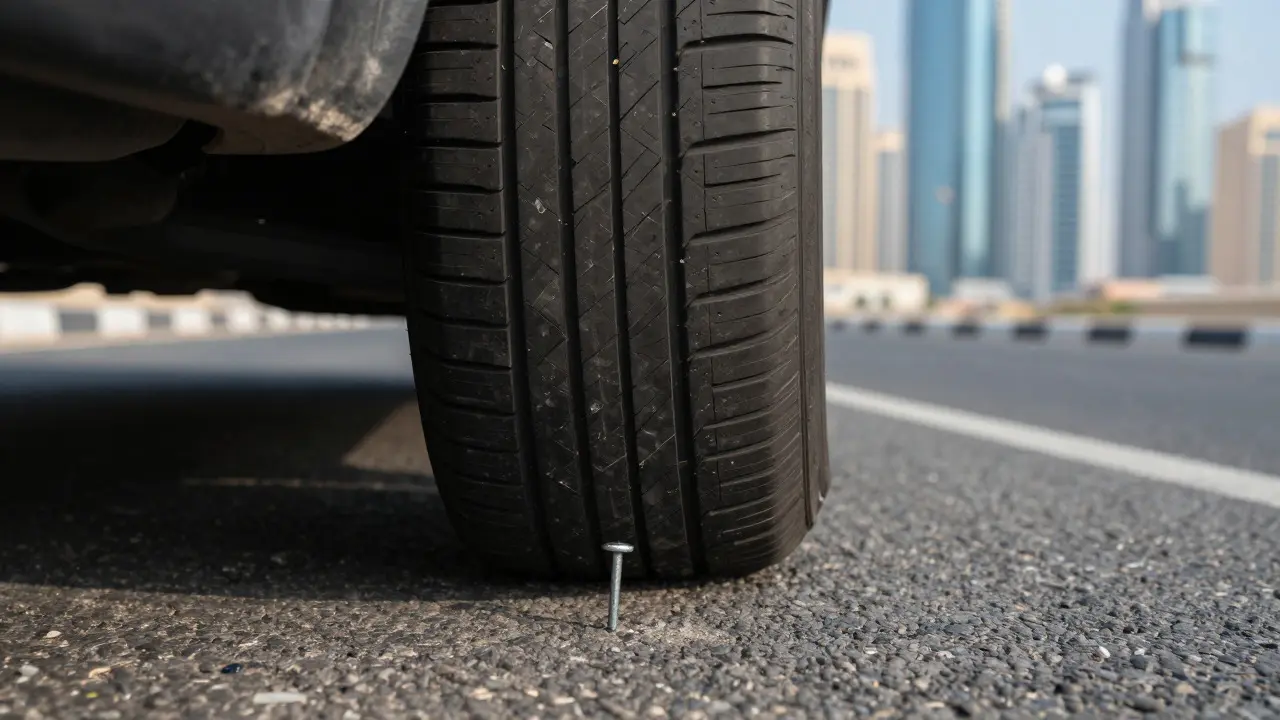
You just paid for a new set of tires, and you’re driving home feeling good about the purchase. Then, two weeks later, you hit a deep pothole or run over a piece of rebar on the highway. Your heart sinks. Is it covered? The answer isn’t always a simple yes. Most people assume that because they bought the tires from a reputable shop, any damage is free to fix. But tire repair warranty policies are specific contracts with fine print that often surprises drivers. Understanding these terms can save you hundreds of dollars in unexpected repairs or force you to buy a replacement tire out of pocket.
The core problem most drivers face is confusion between manufacturer warranties and dealer-added service plans. A standard manufacturer warranty covers defects in materials and workmanship, like a sidewall bubble caused by bad rubber. It does not cover external damage. If you want protection against nails, cuts, and potholes, you need a separate Road Hazard Protection (RHP) plan. Many shops bundle these together at checkout, but if you didn’t sign up for RHP, your "warranty" might only cover factory flaws, leaving you exposed to real-world road hazards.
Manufacturer Warranties vs. Road Hazard Plans
To understand your coverage, you first need to distinguish between the two types of protection you likely have. The manufacturer warranty is attached to the tire itself. It guarantees that the tire won’t fail due to poor construction for a certain period, usually ranging from 50,000 to 80,000 miles depending on the brand and tier. This is non-negotiable; you get it just by buying the tire. However, this warranty excludes almost everything that happens on the road. Punctures, curbing, hydroplaning, and weather-related cracking are typically considered "abuse" or "wear and tear," not defects.
Road Hazard Protection, on the other hand, is an optional add-on sold by the tire retailer or installer. This is the policy that actually pays for repairs when you hit something. Think of it as insurance specifically for the tire’s physical integrity against external objects. When you see a shop advertise "lifetime warranty," check carefully. Often, "lifetime" refers to the tread life guarantee (the manufacturer side), while the repair coverage (the RHP side) has its own limits, such as a maximum number of repairs per tire or a cap on the total value of claims.
| Feature | Manufacturer Warranty | Road Hazard Protection (RHP) |
|---|---|---|
| Covers Defects? | Yes | No |
| Covers Nails/Punctures? | No | Yes |
| Covers Cuts/Gashes? | No | Yes (if repairable) |
| Duration | Miles-based (e.g., 60k miles) | Time-based (e.g., 3 years) or Lifetime |
| Cost | Included in price | Separate fee ($10-$50 per tire) |
What Counts as a "Repairable" Damage?
Even if you have full Road Hazard Protection, not every scratch qualifies for a free fix. Shops follow strict industry standards for what can be safely repaired. Generally, a puncture in the tread area is the gold standard for repairability. If a nail goes straight through the center of the tread, it’s almost always covered and fixed with a plug or patch. The cost to you is usually zero if you have RHP.
Things get trickier with cuts and gashes. A small cut less than half an inch long in the tread might be repaired with a special sealant or patch, provided it doesn’t expose the internal cords. However, if the cut reaches the shoulder area (where the tread meets the sidewall), many shops will deny the claim because repairing the shoulder is considered risky for high-speed stability. Sidewall damage is the biggest red flag. While some modern tires allow minor sidewall scuffs to be repaired, most warranty terms state that any visible cord exposure in the sidewall requires replacement. If you don’t have RHP, or if your RHP plan excludes sidewalls, you’re paying full price for a new tire.
It’s also worth noting that age matters. Some RHP plans require the tire to be under a certain age to qualify for repair rather than replacement. For example, a tire that is five years old might be deemed too degraded to safely hold a repair, forcing a replacement even if the damage was minor. Always check the "age limit" clause in your receipt or contract.

Common Exclusions That Void Your Coverage
Reading the fine print reveals several scenarios where your tire repair warranty becomes void. The most common exclusion is improper maintenance. If your tire pressure is significantly low (usually below 25% of recommended PSI) when the damage occurs, the shop may argue that the low pressure caused the structural failure, not the object. Similarly, if you’ve driven on a flat tire for more than a few miles, the internal structure is compromised, and the shop will likely deny the claim, citing "misuse."
Another frequent pitfall is the "four-tire rule." If you bought four tires and one gets damaged, you can repair that one. But if you replace three tires and keep one old one, or if you mix brands, some warranties become invalid for the entire set. Consistency in tire type and brand across all four wheels is often a requirement for maintaining valid coverage. Additionally, cosmetic damage like curb rash usually doesn’t count unless it exposes the ply. If the metal rim is scratched but the tire rubber is intact, it’s rarely covered under a tire-specific warranty.

How to File a Claim Successfully
When you do need to use your warranty, preparation is key. First, don’t drive on the damaged tire longer than necessary. If possible, take photos of the damage before the shop starts working. This protects you if there’s a dispute about whether the damage existed before. Second, ask for a written estimate or diagnosis. Ask specifically: "Is this repairable under my Road Hazard Protection?" Get the answer in writing or on the invoice. Verbal promises from technicians can be forgotten or disputed later.
If the shop denies your claim, ask for the specific reason. Was it the location of the damage? The age of the tire? Did they find evidence of prior neglect? Understanding the exact denial reason helps you decide if it’s worth appealing. Sometimes, switching to a different authorized dealer for the same tire brand can yield a different result, as individual shop managers have discretion on borderline cases. Keep your original receipt and any warranty cards safe; without proof of purchase and RHP enrollment, you’re on your own.
Pro Tips for Maximizing Your Tire Investment
Don’t wait until you’re stranded to think about warranty details. At the time of purchase, ask the salesperson to explain the difference between the manufacturer warranty and the RHP plan in plain English. If the RHP fee seems high, compare it to the cost of a single new tire. If a new tire costs $150 and the RHP for four tires is $40, it’s a no-brainer for most drivers who live in areas with poor road conditions. Also, consider your driving habits. If you mostly drive smooth suburban roads, you might skip RHP. If you commute on highways with construction zones or rural roads with debris, RHP is essential.
Finally, maintain your tires properly. Check your tire pressure monthly, especially during seasonal changes. Proper inflation extends the life of the tire and ensures that any future damage is clearly attributed to an external cause rather than mechanical stress. By keeping your tires healthy, you protect your warranty eligibility and ensure that when you do need a repair, the process is smooth and hassle-free.
Does a tire warranty cover nail punctures?
Not automatically. A standard manufacturer warranty covers defects, not punctures. You need a separate Road Hazard Protection (RHP) plan to have nail punctures covered for free repair. Without RHP, you pay the labor and material cost for the plug or patch.
Can sidewall damage be repaired under warranty?
Rarely. Most tire repair warranties exclude sidewall damage because it affects structural integrity. If the cords are exposed, the tire usually needs replacement. Even with RHP, many shops will only offer a discount on a new tire rather than a free repair for sidewall issues.
How long does a tire repair warranty last?
Manufacturer warranties are based on mileage (e.g., 60,000 miles). Road Hazard Protection plans vary; some last for the life of the tread, others for a fixed period like 3 or 5 years. Always check the specific terms on your receipt, as "lifetime" can mean different things for repairs versus tread wear.
What voids a tire warranty?
Common voiding factors include running on a flat tire for extended distances, significant under-inflation, mixing different tire brands on the same axle, and off-road use on tires not designed for it. Cosmetic damage usually doesn't void the warranty unless it leads to structural failure.
Is Road Hazard Protection worth buying?
For most drivers, yes. It typically costs $10 to $50 per tire. If you avoid one major repair or replacement, you break even. Given that road debris is common, RHP acts as cheap insurance against unexpected costs, especially for premium or high-performance tires.