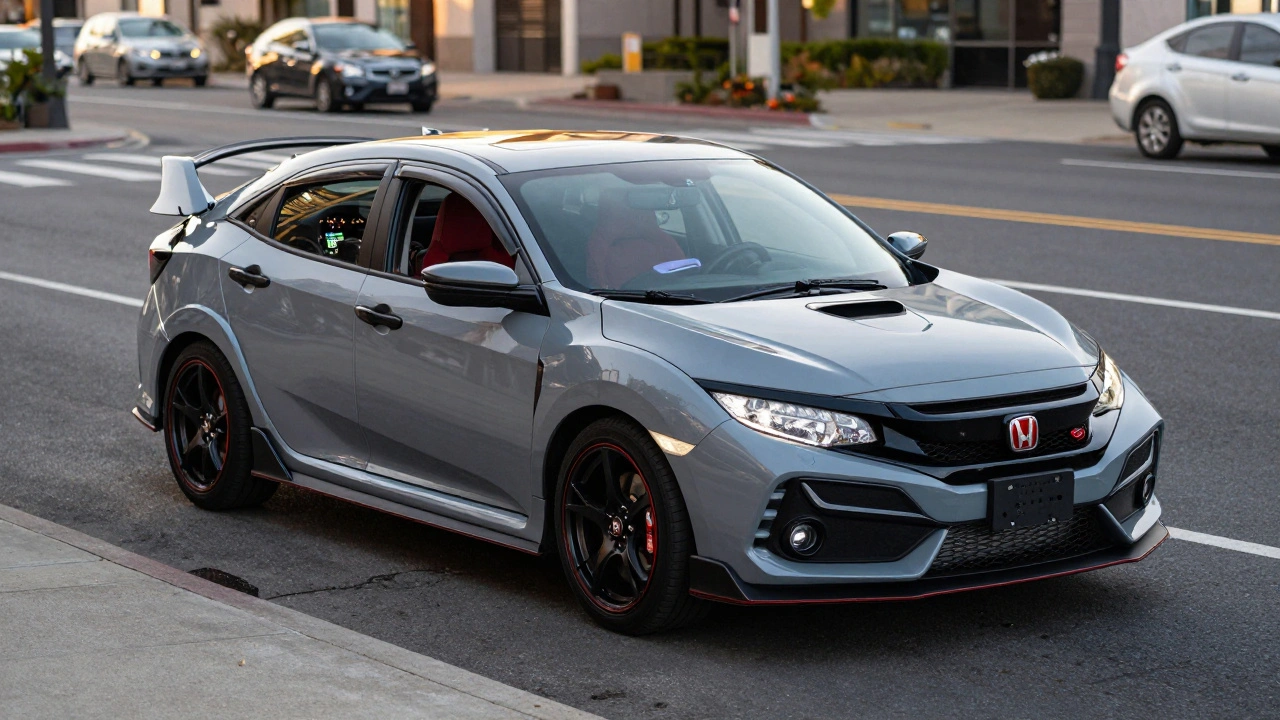
Most people think tuning a car means turning it into a track monster-loud exhaust, stiff suspension, and a throttle that snaps like a rubber band. But if you drive every day, that’s not what you want. You want more power, sure. But you also want to pull out of a stoplight without jerking, get decent gas mileage, and not worry about your engine throwing a fit on a hot commute. That’s where daily driver tuning comes in. It’s not about going fast for the sake of it. It’s about making your car feel more alive without breaking it or your budget.
Start with the ECU: The Brain of the Operation
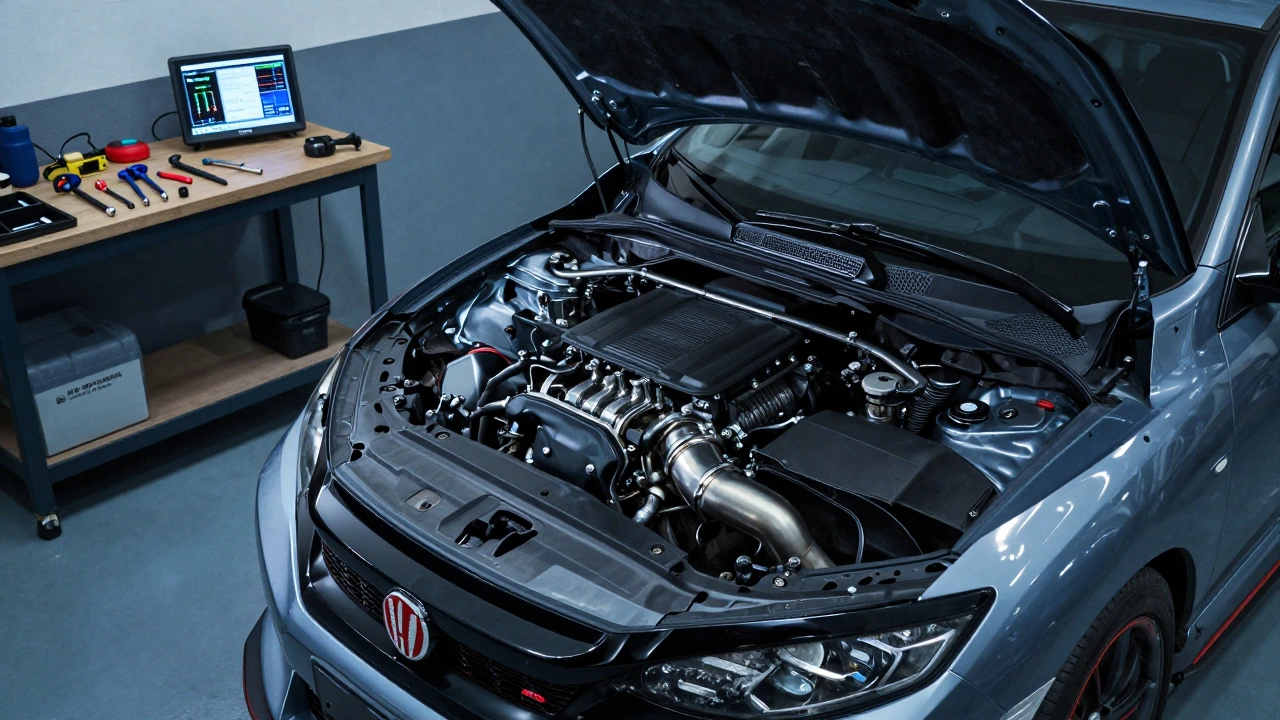
The ECU, or Engine Control Unit, is the computer that decides how much fuel to inject, when to spark the plugs, and how much boost to give a turbo. Factory settings are built for the average driver, emissions rules, and worst-case scenarios. That means they’re conservative. A professional ECU remap reprograms this computer to unlock hidden potential. It doesn’t just add horsepower-it smooths out throttle response, tightens up shifts, and makes the car feel more connected to your foot.Here’s the thing: a good tune doesn’t push everything to the max. It finds the sweet spot. For example, a 2023 Honda Civic Type R with a stock tune might make 315 horsepower. After a proper remap, it can hit 345 hp-without changing a single hardware part. But more importantly, it pulls harder from 2,000 rpm, shifts smoother in traffic, and even gets 1-2 mpg better on highway cruises because the fuel map is optimized for real-world driving, not just peak dyno numbers.
Don’t skip the diagnostic step. A tuner should run a full scan before touching anything. They need to know your engine’s current health: oil pressure, coolant temps, knock sensor activity. If your car’s already running lean or has a weak O2 sensor, a tune won’t fix that-it’ll make it worse. Good tuning starts with a clean slate.
Supporting Mods: Don’t Just Add Power, Improve Flow
An ECU tune alone is like giving a runner better shoes but still making them run through waist-deep mud. You need to help the engine breathe better. That’s where simple hardware upgrades make a huge difference.A cold-air intake isn’t just for show. It pulls in cooler, denser air, which means more oxygen for combustion. That’s free power. Pair that with a high-flow cat-back exhaust-something that reduces backpressure without being obnoxiously loud-and you’re giving the engine a better way to breathe in and out. The result? More torque across the rev range, especially in the midrange where you actually use it on the road.
And no, you don’t need a full race exhaust. A system designed for daily use keeps drone levels low, doesn’t rattle your fillings on rough roads, and still passes emissions. Look for brands that test their exhausts on real-world roads, not just dyno cells. Brands like Invidia, APR, and Milltek have daily driver-specific setups that balance sound, flow, and durability.
Maintenance: Tuned Cars Don’t Just Need More Power-They Need More Care
A tuned engine works harder. That means it generates more heat and stress. Factory maintenance schedules? They’re outdated for a modified car.Oil changes should happen every 5,000 miles instead of 7,500. Use full synthetic oil rated for high-heat conditions-something like 0W-40 or 5W-50 with high ZDDP content. Synthetic breaks down slower under heat, and it protects bearings and turbochargers better. Change your air filter every 15,000 miles, and inspect it monthly. A clogged filter kills performance faster than a bad tune.
Brakes are non-negotiable. More power means more speed, and more speed means more stopping force. Stock pads and rotors will fade after a few hard stops. Upgrade to performance street pads-like Hawk HPS or EBC Yellowstuff-and slotted rotors. They handle heat better and give consistent pedal feel. Check brake fluid every year. Moisture in the fluid lowers its boiling point, and under hard use, that can lead to spongy brakes.
Tires are your only contact with the road. If you’re getting 30% more torque, your stock tires won’t handle it. Look for all-season performance tires like the Michelin Pilot Sport 4S or Continental ExtremeContact Sport. They grip better in rain and dry, last longer than track tires, and don’t turn into ice skates in winter. Rotate them every 7,500 miles and check pressure weekly. Even a 3 psi drop kills fuel economy and handling.
Transmission Tuning: Smooth Shifts Matter More Than You Think
If your car has an automatic, you’ve probably felt it: that harsh downshift when you tap the gas in traffic. Or the lag when you try to pass on the highway. That’s not normal. It’s the factory transmission control unit (TCU) being overly cautious.TCU tuning smooths out those shifts. It changes how fast the clutch engages, how hard the transmission downshifts, and when it holds gears. For turbo cars, it prevents the transmission from over-revving during hot days-something that can cause overheating and premature wear. A properly tuned TCU makes the car feel more responsive without any added stress. It’s like having a smarter driver behind the wheel.
Some tuners offer combined ECU+TCU maps. That’s ideal. You want the engine and transmission working as one unit, not fighting each other. A well-tuned TCU can also extend transmission life by reducing shock loads during shifts.
Comfort and Safety: Tuning Isn’t Just About Speed
A daily driver still needs to be a car you can live with. That means comfort and safety aren’t afterthoughts-they’re part of the tuning process.Sound dampening helps. A louder exhaust doesn’t mean a noisy cabin. Add acoustic foam behind the dashboard, under the floor, and around the wheel wells. It cuts road noise without adding weight. You’ll still hear the growl when you punch it, but the ride home at 11 p.m. won’t feel like a warzone.
Headlights matter. If you’re driving more aggressively, you need better visibility. Swap halogen bulbs for LED or HID kits that are DOT-compliant. Add auxiliary fog lights if you live somewhere with rain or fog. And don’t ignore driver aids. Modern stability control and traction control systems can be recalibrated to work with your new power levels. A tune that disables these systems entirely is a red flag. You want them to work better-not be turned off.

Driving Style: The Final Piece of the Puzzle
No amount of tuning fixes bad habits. If you’re slamming the throttle every time the light turns green, you’re killing your tires, your transmission, and your fuel economy. Daily driver tuning rewards smooth inputs.Plan your acceleration. Ease into it. Let the car build boost naturally. Use engine braking on hills instead of riding the brake. These small changes add up. One owner of a tuned Subaru WRX reported a 7% increase in fuel economy after learning to drive his car more patiently. He wasn’t driving slower-he was driving smarter.
Consider a performance driving course. Not to race. To learn how to handle your car’s new capabilities. A day at a track like Portland International Raceway, focused on street driving techniques, teaches you how to use grip, how to brake later, and how to recover from a slide. It’s not about being fast. It’s about being in control.
The Bottom Line: Balance Is Everything
Daily driver tuning isn’t about making your car the fastest on the block. It’s about making it the most enjoyable to drive every single day. You want more power? Get it. But you also want reliability, comfort, and peace of mind. The best tunes don’t scream-they whisper. They don’t break things; they make them better.Start with the ECU. Add smart supporting mods. Keep up with maintenance. Tune the transmission. Improve comfort and safety. And learn to drive with intention. Do that, and your car won’t just be faster. It’ll feel more alive.
Can I tune my daily driver myself with an off-the-shelf map?
Off-the-shelf maps are risky. They’re made for generic conditions and don’t account for your car’s specific wear, fuel quality, or climate. A custom tune, done on a dyno with real-time data logging, adjusts for your exact setup. A generic map might work-but it could also cause lean conditions, overheating, or even engine damage. Professional tuning is worth the cost for reliability.
Will tuning void my warranty?
Yes, if the dealer can prove the tune caused the failure. But many reputable tuners offer their own warranties on the software, and some manufacturers (like Ford and Hyundai) now offer factory-backed performance programs. Always choose a tuner who works with OEM software and avoids hard resets. Some ECU tunes can be temporarily reverted to stock for service visits, which helps avoid detection.
Does tuning hurt fuel economy?
It can, but it doesn’t have to. A well-executed tune optimizes fuel delivery for efficiency as much as power. Many drivers report improved mileage because the engine runs more efficiently at cruising speeds. The key is avoiding aggressive driving. If you’re flooring it every time, yes-you’ll burn more gas. But if you drive smoothly, you’ll likely see better numbers than before the tune.
How long does a tune last?
The tune itself doesn’t wear out. It’s software. But as your car ages-fuel injectors get dirty, sensors fail, oxygen sensors degrade-the tune may start to run less optimally. Most tuners recommend a check-up every 2-3 years or after major repairs. Think of it like a tune-up for your car’s brain.
What’s the most common mistake people make with daily driver tuning?
Going too far too fast. People add a cold-air intake, then a turbo upgrade, then a bigger fuel pump, then a full exhaust-all at once. That’s a recipe for reliability issues. The best daily driver tunes start small: ECU + intake + exhaust. Then, once you’ve lived with it for six months, you decide what else you really need. Less is more.