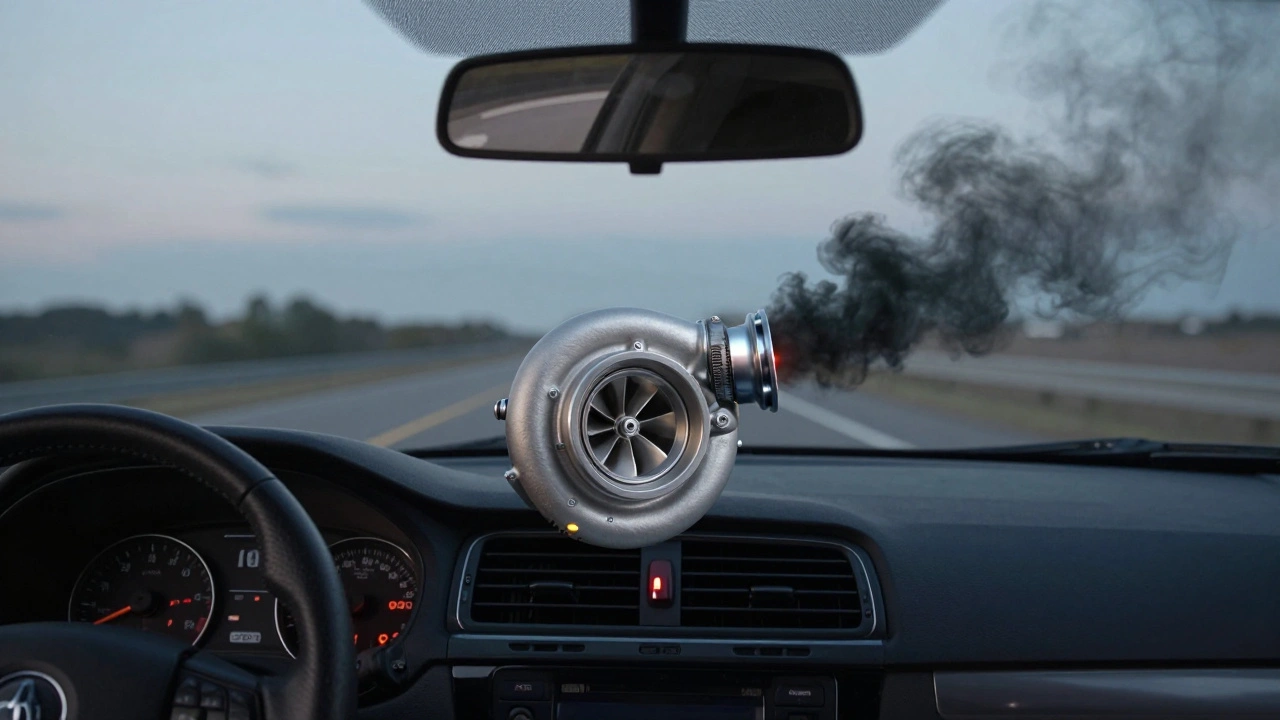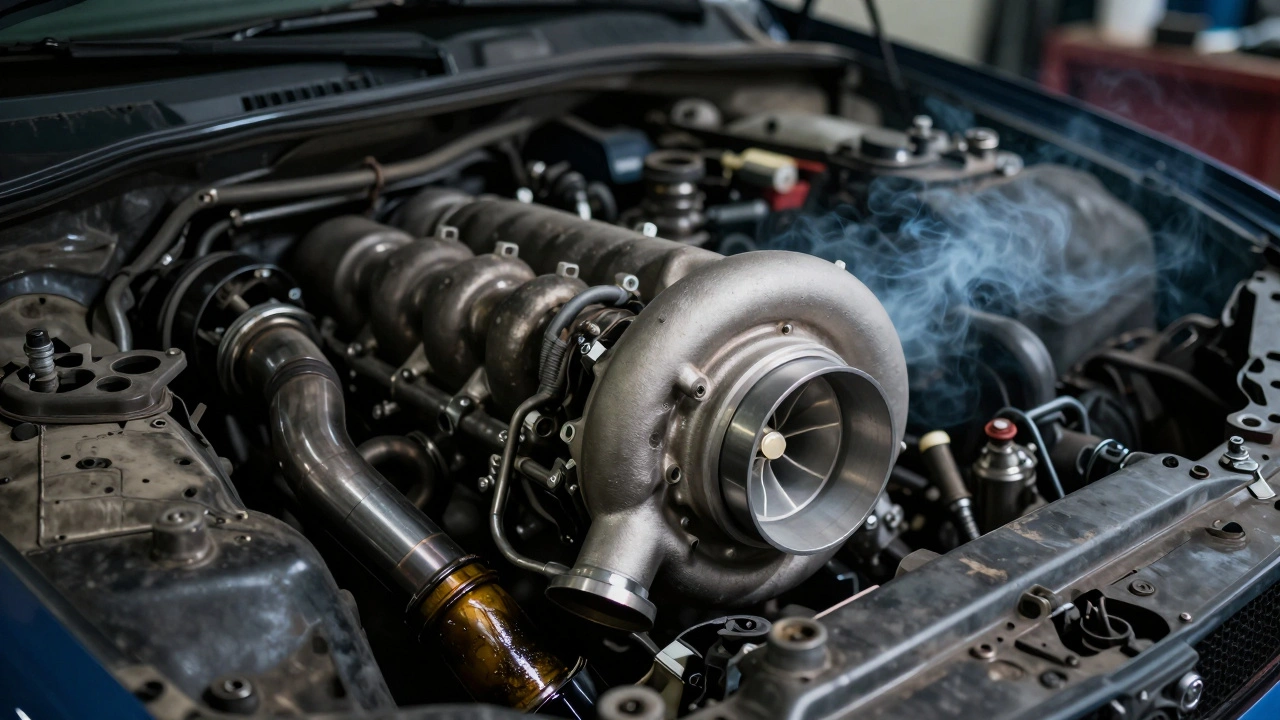
When your car suddenly feels sluggish, like it’s dragging through mud even on flat roads, it’s not just in a bad mood. More than likely, your turbocharger is on its way out. Turbochargers are the unsung heroes under the hood-they squeeze extra air into the engine, turning a modest four-cylinder into a performance beast. But when they fail, they don’t just stop working. They start wrecking other parts. And if you ignore the early signs, you could end up replacing not just the turbo, but the whole engine.
Power Loss That Gets Worse Over Time
You might not notice it at first. Maybe your car just doesn’t feel as peppy as it used to. Overtaking on the highway takes longer. Climbing hills feels like a chore. You think, “Maybe it’s just old.” But if your car used to zip from 0 to 60 in 7 seconds and now it takes 10, that’s not aging. That’s a turbo losing its grip. Turbochargers work by using exhaust gases to spin a turbine that forces more air into the engine. No boost? No extra power. As the turbo’s internal components wear out-bearings, seals, blades-the airflow drops. And with less air, the engine can’t burn fuel efficiently. The result? A car that feels like it’s running on half its cylinders. This isn’t a quick failure. It’s a slow leak in performance. By the time you’re really noticing it, the damage is already spreading.Blue or Black Smoke Coming Out the Tailpipe
If you’ve ever looked in your rearview mirror and seen a thick cloud of smoke puffing out behind you, that’s not normal. Blue smoke? That’s oil burning. Grey-blue? Still oil. Black smoke? Too much fuel, not enough air. A healthy turbo keeps oil sealed inside its bearings. When those seals crack or wear down, oil leaks into the hot exhaust stream and burns. You’ll see it most clearly when you press the gas hard-like when merging onto the freeway. The smoke isn’t just annoying. It’s a red flag that the turbo is leaking oil internally, which means it’s running dry. Without proper lubrication, the spinning parts will seize. Black smoke, on the other hand, means the turbo isn’t pushing enough air into the engine. The fuel system keeps pumping in fuel, but without the right air-to-fuel ratio, it just smolders. This isn’t just inefficient-it’s a sign the turbo’s compressor wheel might be damaged or clogged.Noises That Don’t Belong Under the Hood
Your engine should make a steady hum. Not a whistle. Not a screech. Not a rattle. A high-pitched whining, like a dentist’s drill on steroids, usually means the turbine blades are unbalanced or cracked. You’ll hear it most when you accelerate. If it turns into a loud metallic clang or screech? That’s the bearing failing. The shaft inside the turbo is wobbling, and the spinning parts are starting to hit the housing. That’s not repairable. That’s a total failure waiting to happen. Some people mistake this noise for a belt or pulley. But those sounds come from the front of the engine. Turbo noise comes from the side or back, near the exhaust manifold. If you hear it when you rev the engine in park, it’s not your imagination. It’s the turbo screaming for help.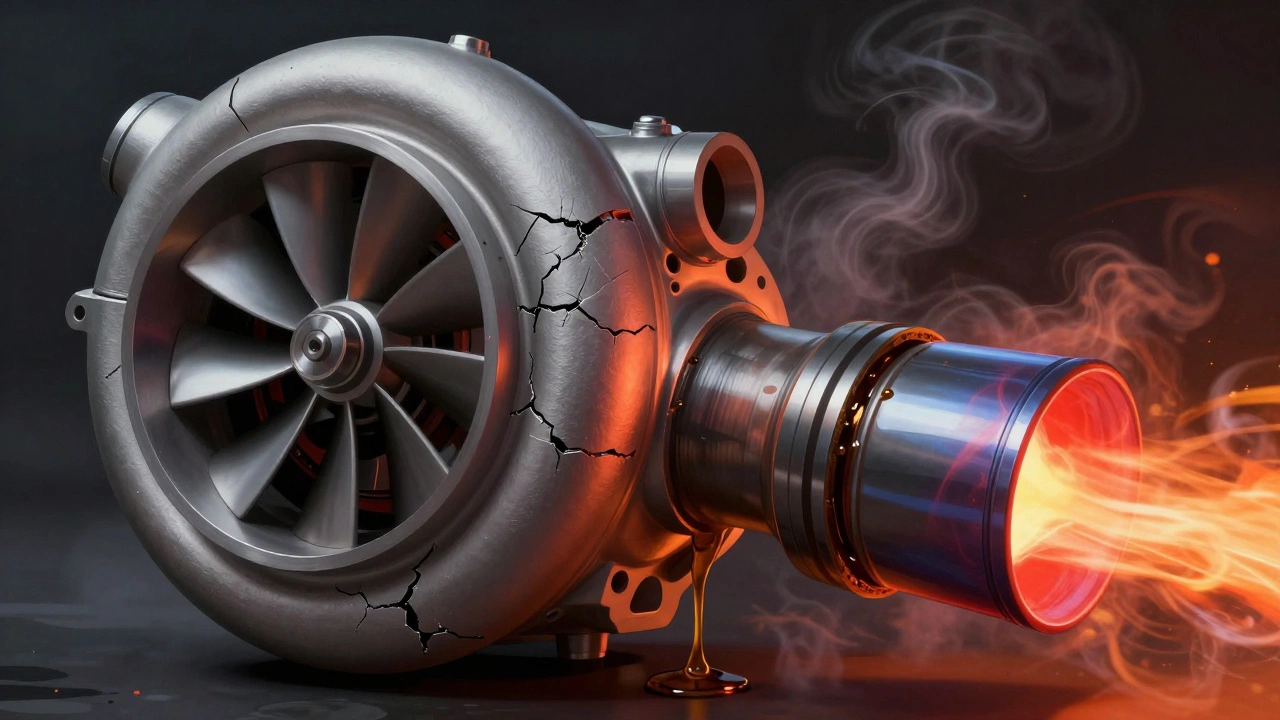
The Check Engine Light Isn’t Just Being Dramatic
Modern cars have sensors everywhere. One of them monitors boost pressure-the amount of air the turbo is pushing into the engine. If that number drops below what it should be, the computer triggers the check engine light. But here’s the catch: the check engine light can mean dozens of things. A loose gas cap. A bad sensor. A clogged fuel injector. So why pay attention to it? Because if it comes on and you’re also losing power or seeing smoke, you’re not dealing with a sensor glitch. You’re dealing with a turbo that’s failing. Don’t ignore it. Don’t wait for the code to clear. Pull over, check for other symptoms, and get it scanned. The code might say “P0299 - Underboost Condition.” That’s turbo code. And it’s your last warning before things get expensive.Oil Consumption That Doesn’t Add Up
You used to change your oil every 5,000 miles. Now you’re topping it off every 1,500. What’s going on? Turbochargers rely on engine oil to lubricate their high-speed bearings. If oil is leaking out of the turbo, your engine is losing it. And if you’re not seeing oil on the ground, it’s probably leaking into the exhaust system-where it burns up. Check the downpipe-the metal tube that connects the turbo to the catalytic converter. If you see a greasy, oily residue inside it, that’s your smoking gun. You can even pop the air intake hose off the turbo and look inside. If you see oil glistening on the turbine blades? That’s bad. That means the seals are shot. This isn’t just about oil levels. It’s about the turbo starving itself. No oil? No life. And once the bearings start grinding, they’ll tear the shaft apart. Then you’re looking at a complete engine rebuild.What Causes Turbo Failure in the First Place?
Turbochargers spin at over 100,000 RPM. That’s faster than a jet engine. They’re built tough, but they’re not invincible. The #1 killer? Dirty air. If your air filter is clogged or missing, dust and debris get sucked into the turbo. That tiny turbine blade? It’s thinner than a credit card. One rock or piece of gravel, and it’s game over. Another big cause? Bad oil. If you skip oil changes or use cheap oil, sludge builds up and clogs the tiny passages that feed oil to the turbo. That’s like starving a race car driver mid-race. And then there’s heat. Turbochargers get hotter than a stove burner. If you shut off the engine right after a hard drive-say, after towing or racing-the oil in the turbo can cook and turn to varnish. That’s why letting the engine idle for 30 seconds before turning it off matters. It lets the turbo cool down.