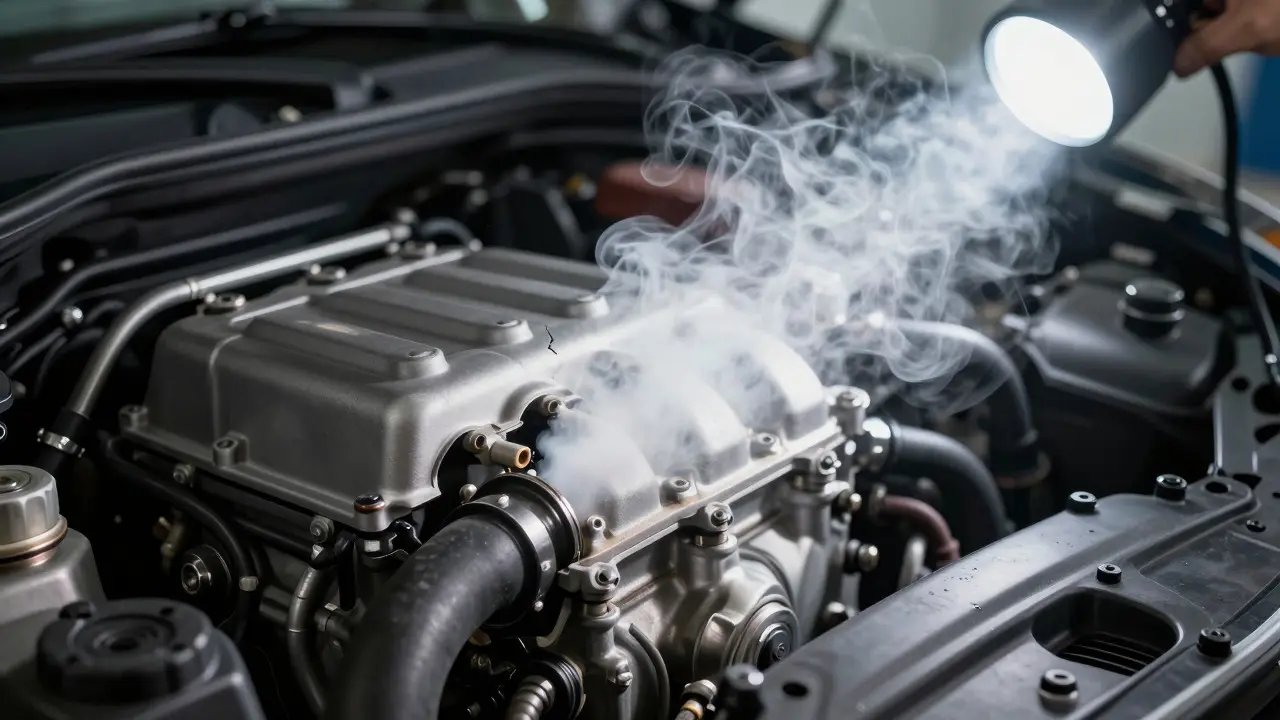
Your car runs rough at idle. The check engine light is on. You’ve checked the spark plugs, swapped the coils, and even replaced the mass airflow sensor. Yet that shudder remains. Before you tear apart the engine bay or buy expensive parts, there is one diagnostic step that solves 90% of these mystery cases: a vacuum smoke test.
Most modern engines run lean (too much air, not enough fuel) when there is an uncontrolled entry point in the intake system. This extra air bypasses the throttle body and goes straight into the cylinders. The computer tries to compensate by adding more fuel, but it often can’t keep up, leading to misfires, hesitation, and poor fuel economy. A smoke test reveals exactly where this hidden air is entering the system.
Why Vacuum Leaks Are So Hard to Find
Unlike a broken hose that sprays coolant or oil, a vacuum leak is invisible. It’s just air. In older carbureted cars, mechanics could hear the hiss. In modern fuel-injected vehicles, the intake manifold operates under negative pressure (a vacuum). If a gasket fails or a fitting cracks, it doesn't spray; it sucks. That makes auditory detection nearly impossible without specialized tools.
The symptoms are subtle but distinct. You might notice:
- A high or fluctuating idle speed (the RPMs bounce between 800 and 1,200).
- Hesitation when accelerating from a stop.
- Rough running at low speeds that smooths out at highway speeds.
- Poor fuel mileage that drops suddenly without other changes.
If your mechanic suggests replacing the entire intake manifold gasket set because they "suspect" a leak, ask if they have performed a smoke test. Guesswork leads to unnecessary costs. Verification saves money.
How Smoke Testing Works
Smoke Testing is a diagnostic procedure that introduces non-toxic vapor into the engine's intake system to visualize air leaks. Instead of using compressed air, which can blow debris around or be hard to see, technicians use a machine that generates a thick, visible mist.
The process is straightforward:
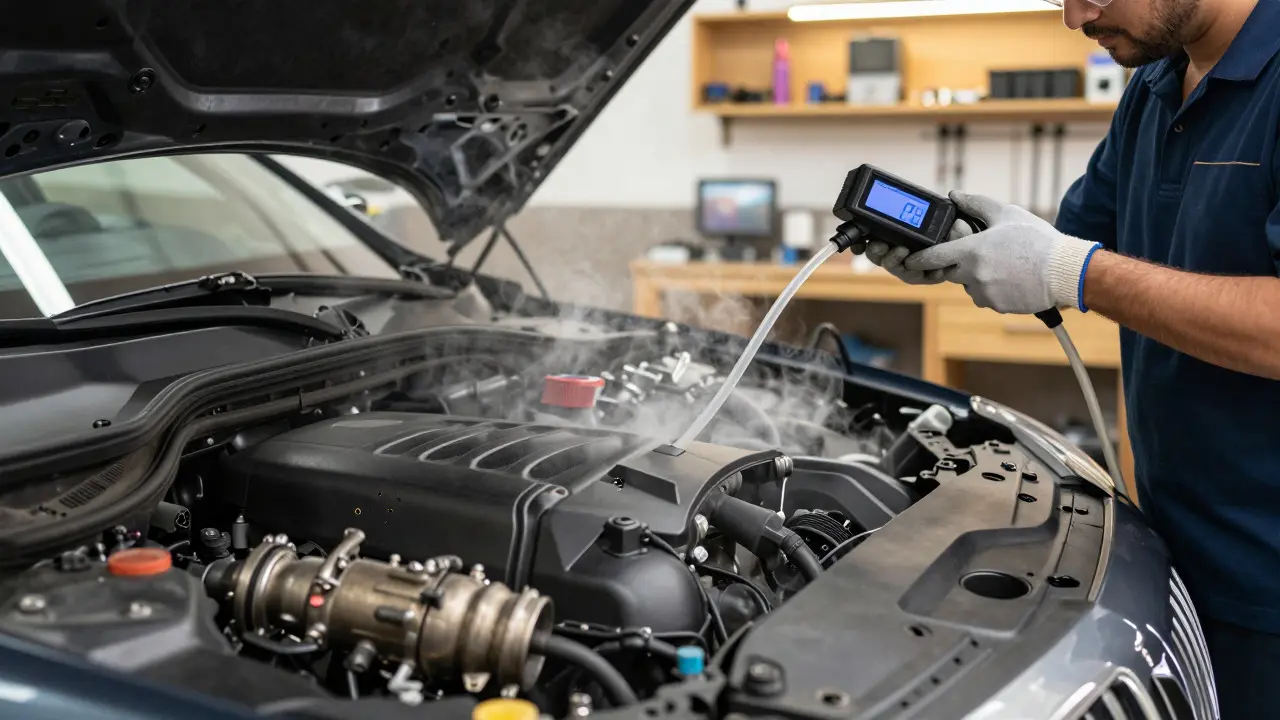
- Isolate the Intake: The technician removes the air intake tube from the throttle body. They may also remove the Mass Air Flow (MAF) sensor housing to prevent damage from the smoke.
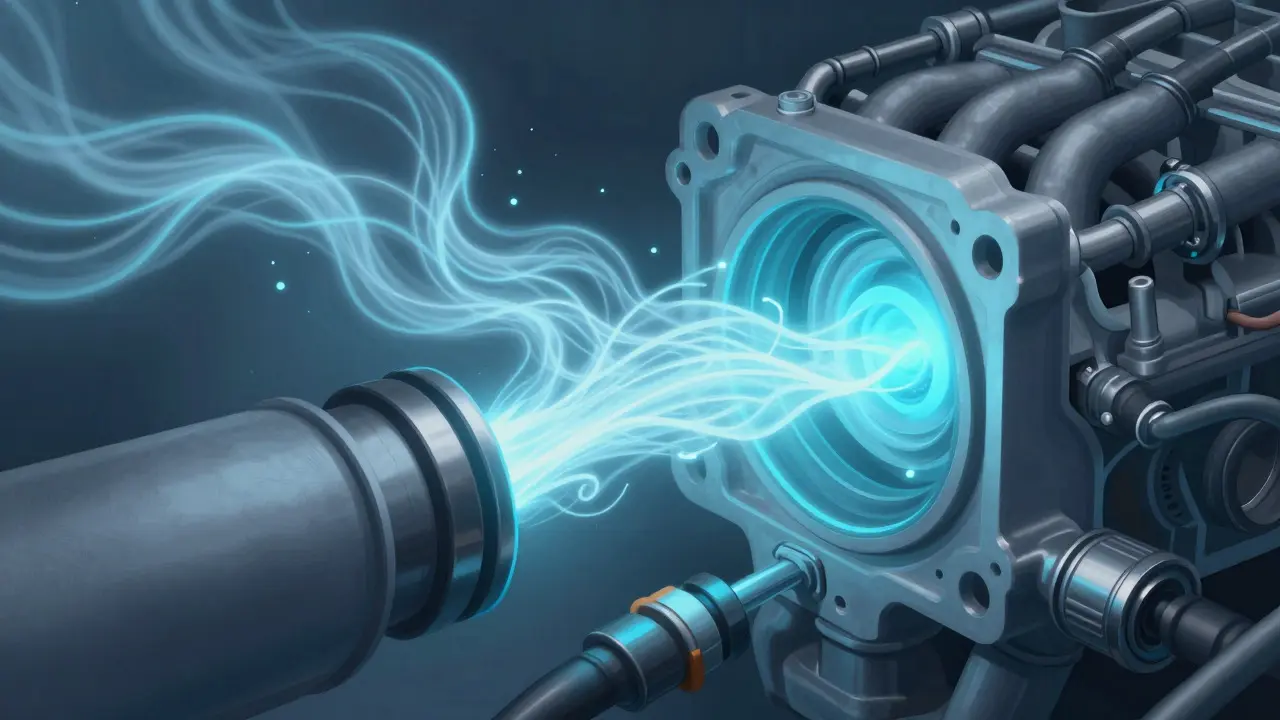
- Create Pressure: The smoke machine pumps vapor into the intake plenum until the system reaches about 5-7 PSI of positive pressure. This simulates the vacuum conditions of a running engine but makes leaks easier to spot.
- Observe: The technician watches for wisps of smoke escaping from seals, hoses, or gaskets. They use a flashlight to illuminate dark areas behind the engine.
Because the smoke is heavier than air, it tends to settle, making small pinhole leaks visible as thin threads rather than large billows. This precision allows for pinpoint repairs instead of wholesale part replacement.
Common Leak Points in Modern Engines
Not all leaks are created equal. Some components fail frequently due to heat cycling or material degradation. Knowing where to look helps you verify the diagnosis.
| Component | Failure Cause | Visible Sign |
|---|---|---|
| PCV Valve Hose | Crisping rubber, clogging | Smoke escaping from the valve cover connection |
| Intake Manifold Gasket | Heat expansion, bolt torque issues | Smoke seeping from the junction between manifold and cylinder head |
| Throttle Body Seal | Dry-out, age | Smoke leaking around the perimeter of the throttle plate housing |
| Vacuum Hoses (Brake Booster) | Brittle rubber | Smoke hissing from small diameter lines near the firewall |
The PCV (Positive Crankcase Ventilation) system is a frequent culprit. These hoses connect the crankcase to the intake manifold. Over time, the rubber dries out and cracks. Because these hoses are often tucked away in tight spaces, they are easy to miss during a visual inspection but obvious under smoke pressure.
Preparation: What to Do Before the Test
You don’t need to do the work yourself, but understanding the preparation ensures the test is accurate. Here is what happens before the smoke hits the engine:
- Cool Engine Check: The engine should be cool to the touch. Hot components can melt certain types of smoke fluid or make plastic fittings brittle.
- Sensor Protection: The MAF sensor is delicate. Smoke residue can coat its wires, causing false readings later. Technicians usually cap or remove it.
- Turbocharger Isolation: On turbocharged engines, the intercooler piping must be sealed off. Otherwise, the smoke will travel down the charge pipe and never show the actual intake leaks.
If you are working on your own vehicle, ensure you have a smoke machine with a regulator. Consumer-grade machines are available for around $100-$150. They come with various adapters for different throttle body sizes. For a professional shop, this equipment is standard, so the cost is typically included in the diagnostic fee.
Interpreting the Results
Seeing smoke doesn't always mean a major repair. Sometimes, a tiny weep at a gasket line is normal for an older vehicle. The key is determining if the leak is significant enough to affect performance.
Here is how to interpret what you see:
- Steady Stream: Indicates a broken hose or missing clamp. Easy fix ($20-$50 parts).
- Thin Wisp from Gasket Line: Suggests a failing seal. May require re-torquing bolts or replacing the gasket ($100-$400 labor/parts depending on access).
- No Visible Smoke but High Idle: Could indicate a stuck throttle plate or a faulty IAC (Idle Air Control) valve, not a physical leak. Further electrical testing is needed.
Always take photos. If you are DIY, photograph the exact location of the leak. If you are at a shop, ask them to show you the photo or video. This prevents disputes about whether the leak was found or if the wrong part was blamed.
When Not to Smoke Test
While effective, smoke testing isn't the right tool for every problem. Avoid it in these scenarios:
- Blown Head Gasket: If coolant is mixing with oil or combustion gases are in the coolant, a compression test or block leak test is more appropriate. Smoke can enter the cylinders and cause confusion.
- Exhaust Leaks: Smoke tests the intake side. Exhaust leaks require a stethoscope or back-pressure gauge.
- Fuel System Issues: If the car floods or starves for fuel, the problem is likely injectors or the pump, not vacuum.
Use smoke testing specifically for air-related symptoms: idle issues, lean codes (P0171/P0174), and rough running that improves with load.
Cost and Time Expectations
In Portland and most urban areas, a smoke test is a quick diagnostic. It takes 15-30 minutes. Shops typically charge between $75 and $150 for the labor alone. If you find the leak, the repair cost varies widely based on the part involved.
For example, replacing a cracked vacuum hose might cost $100 total. Replacing an intake manifold gasket on a V6 engine could run $600-$900 due to labor complexity. The value of the smoke test lies in avoiding the $900 repair if the real issue was a $15 hose.
FAQ
Is smoke testing safe for my engine?
Yes, provided the correct fluid is used. Most commercial smoke fluids are glycol-based and non-corrosive. However, avoid getting smoke on the MAF sensor wires or inside the turbocharger bearings. Proper isolation of sensors prevents any risk.
Can I use compressed air instead of a smoke machine?
You can, but it is less effective. Compressed air is harder to see unless you add soap suds or water. Smoke provides a continuous, visible trail that settles in low spots, making micro-leaks easier to identify. For a definitive diagnosis, smoke is superior.
What does a P0171 code mean in relation to vacuum leaks?
P0171 indicates a lean condition in Bank 1. This means the engine is receiving more air than expected. While this can be caused by a dirty MAF sensor or low fuel pressure, a vacuum leak is the most common mechanical cause. A smoke test is the first step to rule out intake air intrusion.
Do hybrid vehicles need smoke testing?
Yes, if the internal combustion engine is running. Hybrids still rely on the ICE for power and efficiency. Vacuum leaks affect the ICE performance, reducing regenerative braking efficiency and increasing fuel consumption. The diagnostic process is identical to conventional vehicles.
How long does a smoke test take?
Typically 15 to 30 minutes. This includes removing the intake duct, connecting the machine, pressurizing the system, and inspecting the engine bay. Complex engines with deep-seated components may take longer to fully inspect.