
You just paid for a car AC refill, and you expect ice-cold air the moment you hit the button. Instead, the vents are blowing lukewarm breeze that feels more like a gentle fan than a cooling system. It’s frustrating, especially when you were told the system was "topped up" and ready to go. But here is the reality: simply adding refrigerant doesn’t fix broken components. If your air conditioning is still underperforming after a regas, something deeper is wrong. You might be dealing with a hidden leak, a failing compressor, or an electrical issue that no amount of gas can solve.
The Myth of the Simple Top-Up
Many drivers think of their car's climate control like a fuel tank. Empty? Fill it up. Done. That logic fails because the AC system is a closed loop, not an open reservoir. Refrigerant doesn't get "used up" like gasoline. If you needed a refill, it means the system lost gas somewhere. Unless you seal the hole, the new gas will escape within weeks or months. Worse, if the initial diagnosis skipped a pressure test, you might have overfilled the system, which actually reduces cooling efficiency. Think of it like wearing two heavy coats in summer; more isn't always better.
A proper service involves checking pressures before and after the fill. If the low-side pressure remains high while the high-side pressure stays low, the compressor isn't pumping correctly. This is a mechanical failure, not a fluid level issue. Ignoring this leads to expensive repairs later, as a struggling compressor can send metal shavings into the rest of the system, contaminating the condenser and expansion valve.
Diagnosing the Leak Before It Kills Your System
Leaks are the number one reason for weak performance post-refill. They aren't always dramatic sprays of white mist. Often, they are slow seeps through rubber O-rings or porous aluminum lines. Over time, these tiny gaps allow moisture to enter the system. Moisture is the enemy of AC health. It reacts with refrigerant to form acid, which corrodes internal parts from the inside out. This corrosion creates blockages in the expansion valve or orifice tube, restricting flow even if the gas levels look normal on a gauge.
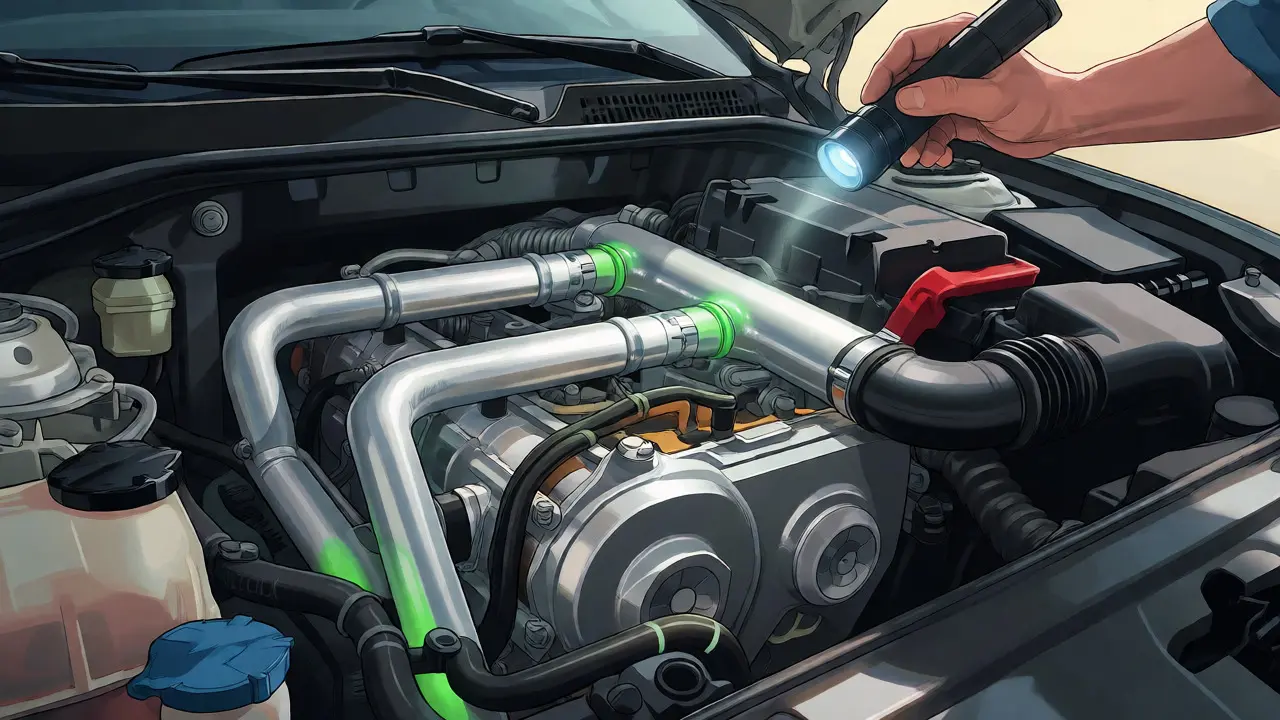
To find these stealthy leaks, technicians use UV dye injected during the refill process. You shine a specialized light over the engine bay, looking for glowing green spots. Common culprits include:
- O-Rings: Rubber seals at connection points harden and crack with age.
- Condenser: Located at the front of the car, it takes hits from rocks and debris, causing pinhole leaks.
- Evaporator Core: Hidden behind your dashboard, this part is difficult to replace but often leaks due to corrosion.
If you don't see a visible leak, the issue might be internal. A clogged receiver-drier (the filter for the system) can trap moisture and restrict flow, mimicking a low-gas symptom without actual leakage.
Compressor Health: The Heart of the System
The compressor is the pump that circulates refrigerant. If it’s weak, your AC won’t cool, regardless of how much gas you add. How do you know if the compressor is the culprit? Listen to it. When you turn on the AC, does the clutch engage with a distinct click? Does the engine RPM rise slightly to compensate for the load? If the clutch spins freely without engaging, or if you hear grinding noises, the compressor is likely failing.
Another sign is inconsistent cooling. If the AC works fine at idle but gets weaker when you accelerate, or vice versa, the compressor’s internal valves may be worn. These valves regulate pressure differences between the high and low sides of the system. When they wear out, the pressure differential drops, and heat exchange stops happening efficiently. Replacing just the compressor is risky if the system wasn't flushed properly. Metal debris from the old unit can destroy the new one within hours.
Electrical Gremlins and Sensor Failures
Sometimes, the mechanics are fine, but the brain is confused. Modern cars rely on sensors to manage AC operation. The most common offender is the ambient temperature sensor. If this sensor reads incorrectly-say, thinking it’s -40°F outside when it’s actually 90°F-the system might limit compressor output to prevent freezing. Conversely, a faulty pressure switch can cut power to the compressor entirely if it detects unsafe pressure levels, even if those levels are actually normal due to a bad reading.
Check your fuses and relays first. They are cheap and easy to swap. Next, scan the vehicle’s computer for error codes. Many modern cars store specific AC-related faults, such as "Compressor Clutch Circuit Malfunction" or "Refrigerant Pressure Too High." These codes point you directly to the problem, saving you from guessing games. Don't ignore warning lights on the dashboard; they are trying to tell you exactly what’s wrong.
Blending Air and Cabin Filter Issues
Here is a scenario that confuses many owners: the AC system is working perfectly, but the air coming out of the vents isn't cold. Why? Because hot air from the heater core is mixing with the cold air. This is controlled by blend door actuators. If an actuator motor breaks or the linkage snaps, the door might stay partially open, letting hot engine coolant warm up the chilled air. You’ll feel a mix of warm and cold, making the system seem ineffective.
Don't overlook the cabin air filter either. A clogged filter restricts airflow significantly. If air can’t pass through the evaporator core quickly enough, it doesn't absorb enough heat. The result? Weak airflow and reduced cooling capacity. It’s the easiest fix on the list, costing less than $20, yet it’s often skipped during quick refills. Check your owner’s manual for location; it’s usually behind the glove box or under the windshield cowl.

When to Seek Professional Help
DIY kits work for minor top-ups, but they lack diagnostic depth. If your AC remains weak after a professional refill, return to the shop. Ask them to perform a vacuum test. A healthy system should hold a deep vacuum (-29 inHg) for at least 15 minutes. If the needle rises, air is leaking back in. This confirms a leak exists, even if it’s invisible.
Consider the cost-benefit analysis. If your car is older and the compressor has failed, replacing the entire system (compressor, condenser, drier, hoses) might be cheaper than repeated repairs. For newer cars, warranty coverage might apply. Always ask for a written estimate detailing parts versus labor. Transparency prevents surprise bills.
| Symptom | Likely Cause | Diagnostic Step | Repair Complexity |
|---|---|---|---|
| Cooling fades after 10-15 mins | Slow leak or moisture contamination | UV Dye Test / Vacuum Hold Test | Moderate |
| Vents blow warm despite cold pipes | Blend Door Actuator Failure | Listen for clicking behind dash | Moderate to Hard |
| AC cuts off randomly | Faulty Pressure Switch or Relay | Scan for Error Codes | Easy |
| Weak airflow volume | Clogged Cabin Filter or Blower Motor | Visual Inspection of Filter | Easy |
| No change after refill | Compressor Internal Failure | Pressure Gauge Analysis | Hard |
Frequently Asked Questions
Can I drive my car with a weak AC?
Yes, you can drive safely, but it depends on the cause. If it’s just a comfort issue, it’s fine. However, if the compressor is seized or dragging, it could stall your engine or break the serpentine belt, leading to overheating. Monitor your engine temperature closely.
Why did my AC stop working right after a refill?
This usually indicates an immediate leak or an incorrect charge amount. Overfilling the system causes high pressure that trips safety switches, shutting down the compressor. Alternatively, a pre-existing major leak allowed the new gas to escape instantly.
Is R-134a refrigerant compatible with my car?
Most cars built between 1994 and 2017 use R-134a. Newer vehicles (2018+) often use R-1234yf, which is more environmentally friendly but more expensive. Mixing them can damage seals and compressors. Check the sticker under your hood for the correct type.
How long does a car AC refill last?
In a sealed, healthy system, refrigerant lasts the life of the car. If you need refills every year, you have a leak. Small amounts of natural permeation occur over years, but frequent top-ups signal a maintenance issue.
Does running the AC affect fuel economy?
Yes, using the AC increases fuel consumption by 5-10% typically. The compressor draws power from the engine. At highway speeds, opening windows creates drag that can consume more fuel than running the AC. In city driving, AC is generally more efficient than open windows.