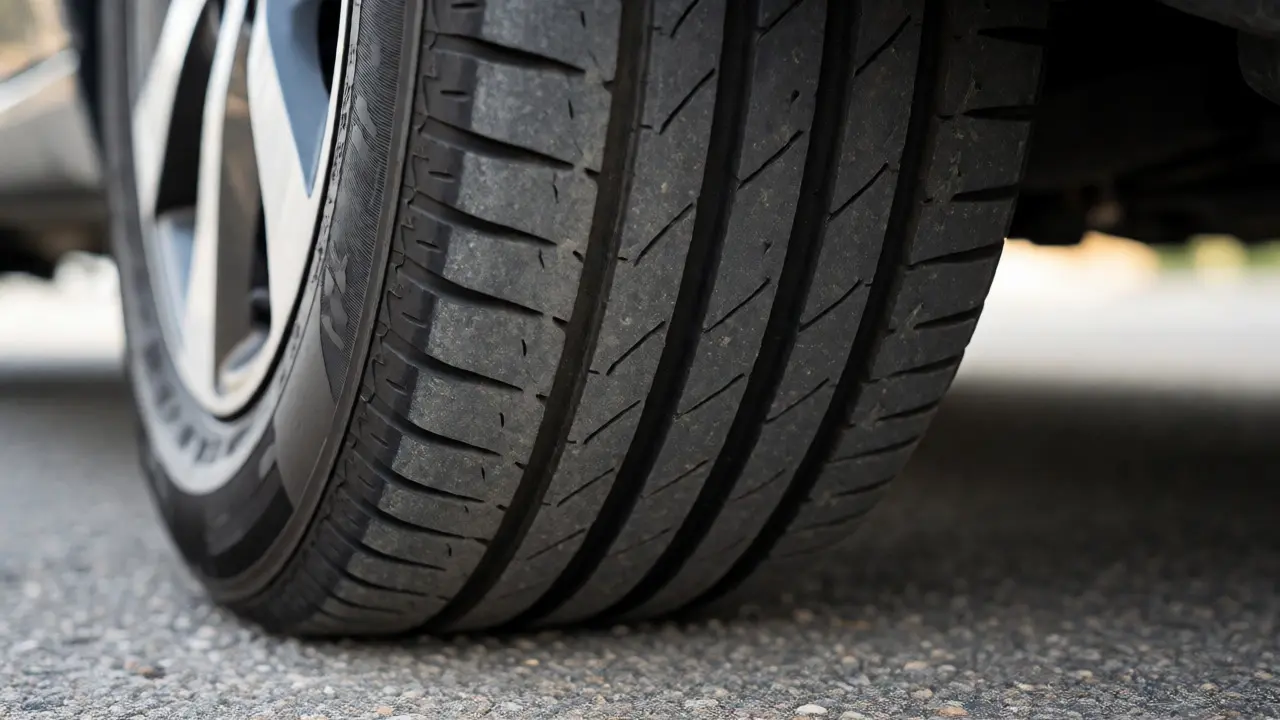
You’re driving down a straight road, but your steering wheel is tilted slightly to the left. Or maybe you notice that the inside edge of your front tires is balding way faster than the outside. These aren’t just annoying quirks; they are physical symptoms of misaligned wheel alignment angles. Most drivers think of alignment as a simple "straighten the wheels" service, but it’s actually a precise geometric adjustment involving three specific angles: camber, caster, and toe. If you don’t understand what these do, you can’t effectively communicate with your mechanic or diagnose why your tires are chewing through rubber like crazy.
Why Alignment Angles Matter More Than You Think
Tires are expensive. A set of decent all-season tires for a sedan costs between $400 and $800. When your alignment is off, you aren’t just wasting money on gas due to rolling resistance; you are destroying that investment prematurely. The National Highway Traffic Safety Administration estimates that improper tire inflation and maintenance cost Americans billions annually, with alignment issues being a major contributor to uneven wear patterns.
The goal of an alignment isn’t just to make the car go straight. It’s to ensure the tires maintain maximum contact with the road surface during acceleration, braking, and cornering. Each angle-camber, caster, and toe-plays a distinct role in this dynamic process. Getting one wrong might be tolerable for daily commuting, but getting them all out of spec will ruin your handling and your wallet.
| Angle | Visual Definition | Primary Effect | Common Symptom if Off |
|---|---|---|---|
| Camber | Tilt inward or outward at the top | Cornering stability & even tread wear | Inside or outside edge wear |
| Caster | Forward or backward tilt of the steering axis | Straight-line stability & returnability | Drifting, vague steering feel |
| Toe | Front edges pointing in or out relative to each other | Tire scrubbing & initial turn-in response | Rapid feathered wear, squealing |
Camber: The Vertical Tilt That Saves Your Corners
Imagine looking at your car from the front. If the tops of the tires lean toward the center of the car, you have negative camber. If they lean away, you have positive camber. Zero camber means the tires are perfectly vertical.
So, why would anyone want a tire leaning? Physics. When you turn a corner, the weight of the car shifts to the outside wheels. This causes the suspension to compress on the outside and extend on the inside. Without camber adjustment, the outside tire would roll onto its inner edge, drastically reducing the contact patch-the actual rubber touching the asphalt.
Negative camber compensates for this body roll. By tilting the top of the tire inward, the vehicle ensures that when you’re hard into a right-hand turn, the outside (left) tire flattens out against the road, maximizing grip. Sports cars often run aggressive negative camber (-1.5 degrees or more) because they prioritize cornering speed over tire life. Daily drivers usually sit closer to -0.5 to -1.0 degrees.
If your camber is too negative, you’ll see wear on the inside shoulder of the tire. If it’s too positive (rare on modern cars unless modified), the outside edge wears out. Fixing camber often requires shims, eccentric bolts, or adjustable control arms. On many economy cars, camber is fixed by the factory and can only be corrected by bending components or installing aftermarket kits.
Caster: The Invisible Hand Keeping You Straight
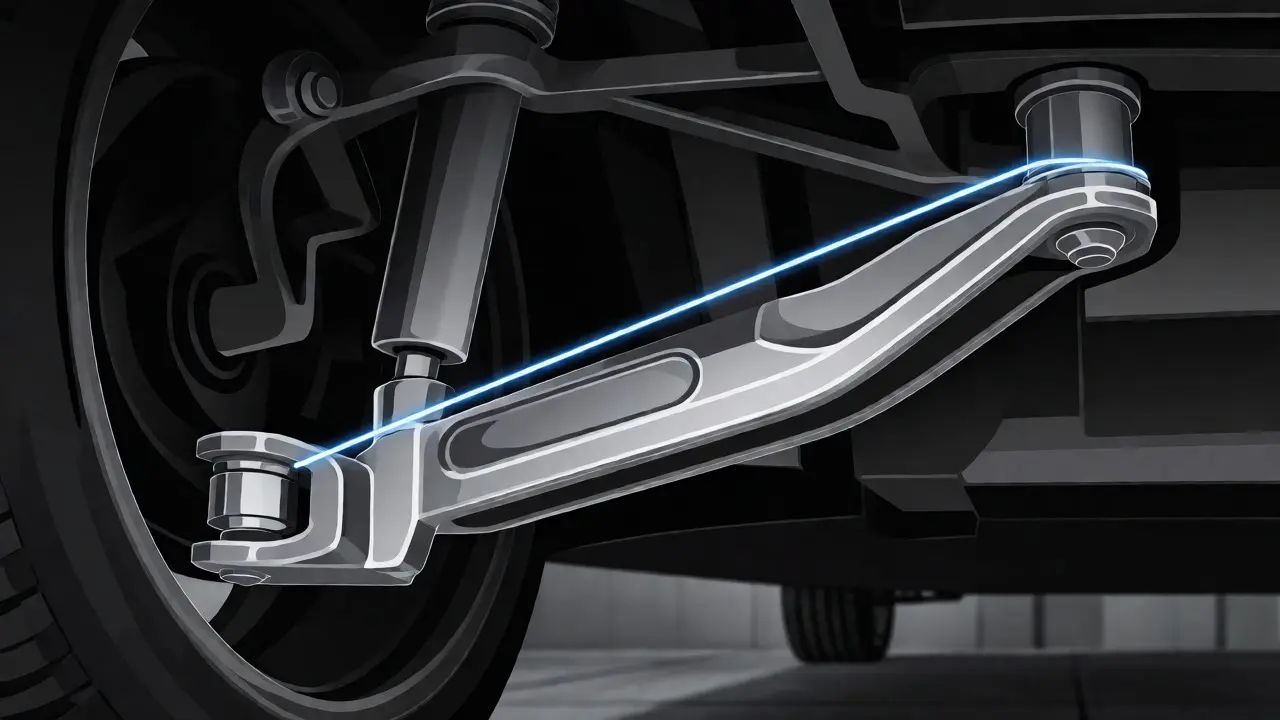
Caster is the hardest angle for most people to visualize because you can’t really see it without looking under the hood or using specialized tools. It refers to the angle of the steering axis-the line running through the upper and lower ball joints or strut mounts.
Think about the casters on your office chair. They swivel easily but tend to trail behind the direction of movement, providing stability. That’s positive caster. In cars, positive caster means the steering axis tilts backward toward the driver. This creates a self-centering effect. When you turn the wheel, the geometry forces the wheel to want to return to the straight-ahead position once you let go.
Most modern vehicles are designed with significant positive caster (often between 3 and 7 degrees). This gives you that solid, planted feeling on the highway. If you’ve ever driven a truck where the steering feels loose and you have to constantly correct your path, you likely have low or negative caster.
Unlike camber and toe, incorrect caster doesn’t typically cause rapid tire wear. Instead, it destroys drivability. Low caster makes the car wander. High caster makes the steering heavy and resistant to turning. While you rarely adjust caster yourself, hitting a deep pothole can bend a control arm or strut mount, throwing your caster out of whack. If your car pulls to one side but the steering wheel is centered, check your caster first.
Toe: The Fastest Tire Killer
If camber and caster are slow killers, toe is the executioner. Toe refers to the relationship between the left and right wheels when viewed from above. Toe-in means the front edges of the tires point slightly toward each other. Toe-out means they point away.
Why not just set them perfectly parallel? Because suspension systems move. As you accelerate, the torque twists the subframe and suspension components, causing the wheels to splay out. Designers add a tiny bit of static toe-in so that when the car starts moving, the wheels align perfectly parallel to the road. Conversely, some performance setups use toe-out for sharper turn-in response.
Tires hate toe. Even a fraction of a degree of excessive toe causes the tire to scrub sideways every time it rotates. Imagine dragging a shoe across a carpet while walking forward. That’s what toe does to your tread. It creates a "feathered" wear pattern-you can run your hand across the tread and feel sharp edges going one way and smooth going the other.
Because toe has such a dramatic impact on tire life, it’s the most critical measurement for a standard alignment. A slight error in toe can ruin a set of tires in less than 5,000 miles. Most alignment specs call for very tight tolerances here, often within ±0.1 degrees total.
How to Spot Alignment Issues Before Buying New Tires
You don’t need a computerized alignment rack to spot trouble. Your eyes and hands are surprisingly effective diagnostic tools. Here is what to look for:
- Uneven Wear Patterns: Run your hand across the tread. Is one side smoother than the other? That’s camber. Does it feel like corduroy or sawtooth? That’s toe.
- Steering Wheel Position: Drive on a flat, straight road at 30-40 mph. Let go of the wheel briefly. If the car goes straight but the wheel logo is tilted, your toe or caster is off. If the car drifts left or right, it could be any angle, or even tire pressure differences.
- Noise: Squealing tires during gentle turns often indicate excessive toe-out or severe camber issues.
- Vibration: While usually a balance issue, severe misalignment can cause shimmy, especially at higher speeds.
Don’t wait for the tire to blow out. If you notice any of these signs, get a check-up. An inspection usually costs between $50 and $100, which is cheap insurance compared to replacing four tires.
DIY Checks vs. Professional Alignment
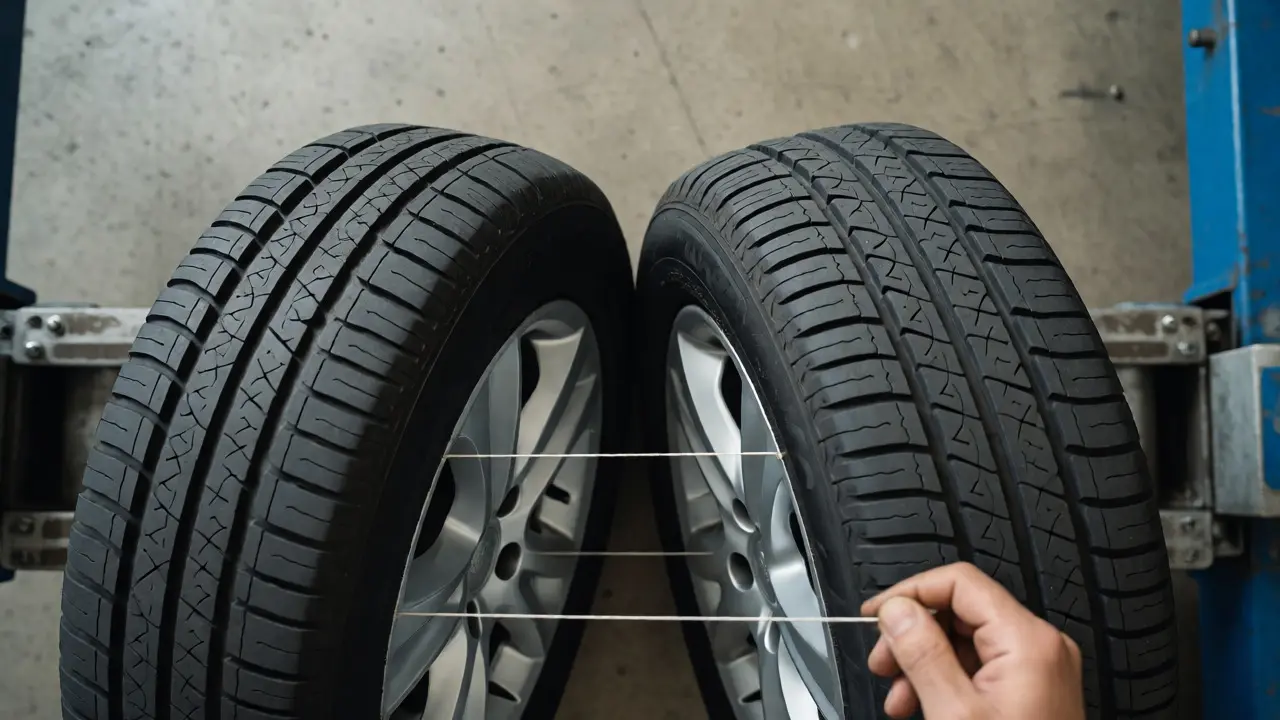
Can you do this yourself? For toe, yes. There are inexpensive string alignment kits available for under $30. You wrap a string around the rims and measure the distance between the string and the rim at the front and back of the wheel. If the distances differ, you have toe.
However, adjusting camber and caster usually requires lifting the car, removing wheels, and loosening specific bolts on control arms or struts. It’s labor-intensive and easy to mess up if you don’t know which bolt controls which angle. Furthermore, professional shops use laser-guided sensors that account for suspension deflection-meaning they measure the angles while the car is sitting at its normal ride height, loaded with fuel and fluids.
Here’s the reality: DIY string alignment gets you close enough to drive safely to a shop. It won’t give you the precision needed to maximize tire life. Unless you are modifying a track car, leave the final calibration to the pros.
When Should You Get an Alignment?
Manufacturer recommendations vary, but a good rule of thumb is every 6 months or 10,000 miles. However, certain events demand immediate attention:
- Hitting a Pothole or Curb: If you hear a loud thud or feel a jolt, check your alignment. Hitting a curb hard enough to bend a rim can also shift your steering geometry.
- New Tires: Always align before mounting new tires. Otherwise, you’re starting your warranty period with uneven wear.
- Suspension Work: If you replace shocks, struts, control arms, or tie rods, the alignment must be reset.
- Vehicle Lift: If you install a lift kit or lowering springs, the angles change significantly.
In Portland, Oregon, where I live, we deal with a lot of rain and occasional freeze-thaw cycles that degrade road surfaces. Our local roads are notorious for potholes that appear overnight. Drivers here should be particularly vigilant about checking alignment after winter storms.
Can bad alignment cause my car to shake?
Usually, no. Shaking or vibration is almost always caused by unbalanced tires, warped brake rotors, or bent wheels. Misalignment typically causes pulling, wandering, or uneven wear. However, extreme toe-out can sometimes cause a high-speed shimmy, but it’s rare compared to balance issues.
Is it safe to drive with bad alignment?
For short distances, yes. But prolonged driving with bad alignment accelerates tire wear exponentially. If the toe is severely out, you risk overheating the tires and potential blowouts. If the caster is extremely off, handling becomes unpredictable, increasing accident risk. Get it fixed as soon as practical.
Why did my steering wheel pull after an alignment?
This is common. Many roads crown in the middle for drainage. Your car naturally wants to follow the slope. Mechanics often compensate by setting a slight "thrust angle" or adjusting caster/camber asymmetrically to counteract the road crown. If the pull is strong, ask your shop to re-check the thrust angle and tire pressures.
Do electric vehicles need different alignments?
Yes. EVs are heavier due to battery packs, which puts more stress on suspension components. They also regenerate braking, which affects load transfer. Many EV manufacturers recommend more frequent alignment checks and specify tighter tolerance ranges to maximize range and tire life.
What is the difference between 2WD and 4WD alignment?
A 2WD (front-wheel drive) alignment adjusts only the front wheels. A 4WD alignment adjusts both front and rear wheels. Rear-wheel alignment is crucial for trucks and SUVs to prevent dog-tracking, where the rear end swings out during turns. Always specify which type you need when booking.