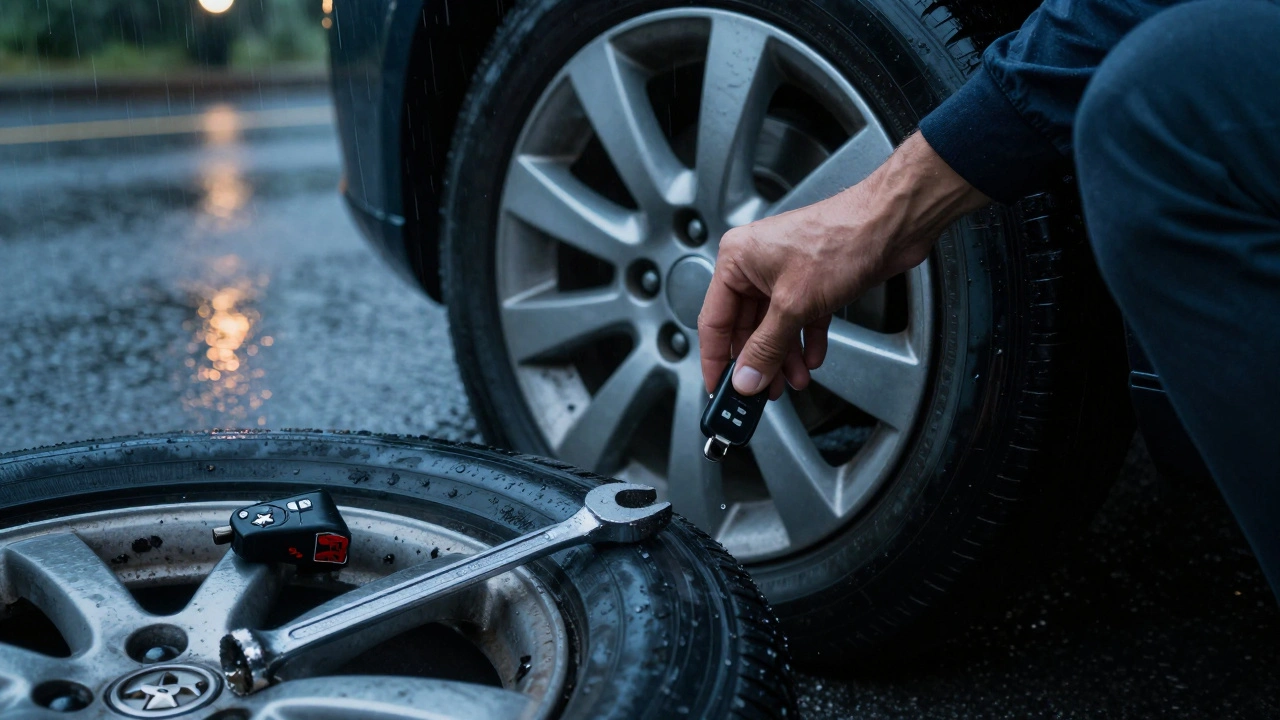
Imagine this: you are standing on the side of a busy road in the rain. Your tire is flat. You pop the trunk, grab your jack, and reach for the wrench to loosen the lugs. But one nut doesn't budge. It has a weird star or spline pattern instead of a standard hex shape. You dig through your glove box, checking every pocket. Nothing. The locking wheel nut key that matches that specific pattern is gone. This is a nightmare scenario for many car owners. These special fasteners, also known as locking lug nuts or wheel locks, are designed to stop thieves from stealing your wheels. But when you lose the matching key, they become a major headache. You cannot simply force them off with a standard socket without risking damage to your expensive alloy rims or stripping the threads. Don't panic yet. While it feels like you are stuck, there are several proven ways to get that wheel off. Some methods require buying a specific tool, others need a bit of mechanical skill, and some just require calling a professional. Here is exactly how to handle losing your wheel lock key, ranked from the safest DIY fix to the last-resort options.
The Professional Route: Call a Locksmith or Tire Shop
If you are not handy with tools, or if you are worried about scratching your wheels, the best move is often to pay someone else to do it. This is the most reliable method because professionals have access to "master" sets of keys and specialized extraction tools that cover almost every brand of wheel lock on the market.
Automotive locksmiths carry large kits containing hundreds of different key patterns. They can often match the unique code stamped on your wheel lock (usually found on the original packaging or sometimes etched into the lock itself) to a master key in their set. If they don't have the exact key, they use universal extractor sockets that bite into the lock's surface to turn it out.
Tire shops and dealerships are another good option. Many mechanics keep generic removal kits behind the counter specifically for customers who buy used cars without the keys. Calling ahead saves time; ask if they have a "universal wheel lock removal kit" before you drive over. Yes, you will pay a labor fee, but it is usually cheaper than replacing a damaged wheel stud or rim.
The Sacrificial Socket Method (Best DIY Fix)
If you prefer to fix this yourself and want to avoid spending money on a new kit, try the sacrificial socket method. This is widely considered the most effective DIY technique by mechanics and forum users alike. It works on most standard-sized locking nuts, though it may struggle with larger OEM locks that have free-spinning outer collars.
You will need a 12-point deep socket that is slightly smaller in diameter than your locking nut. For example, if your lock looks like a 19mm nut, grab an 18mm or even a 17mm 12-point socket. Why 12-point? Because the angled teeth provide more biting surface area than a standard 6-point socket.
- Prep the area: Loosen all the other regular lug nuts on the wheel first. Jack up the vehicle so the wheel is just barely off the ground-enough to relieve weight, but stable enough to not spin wildly.
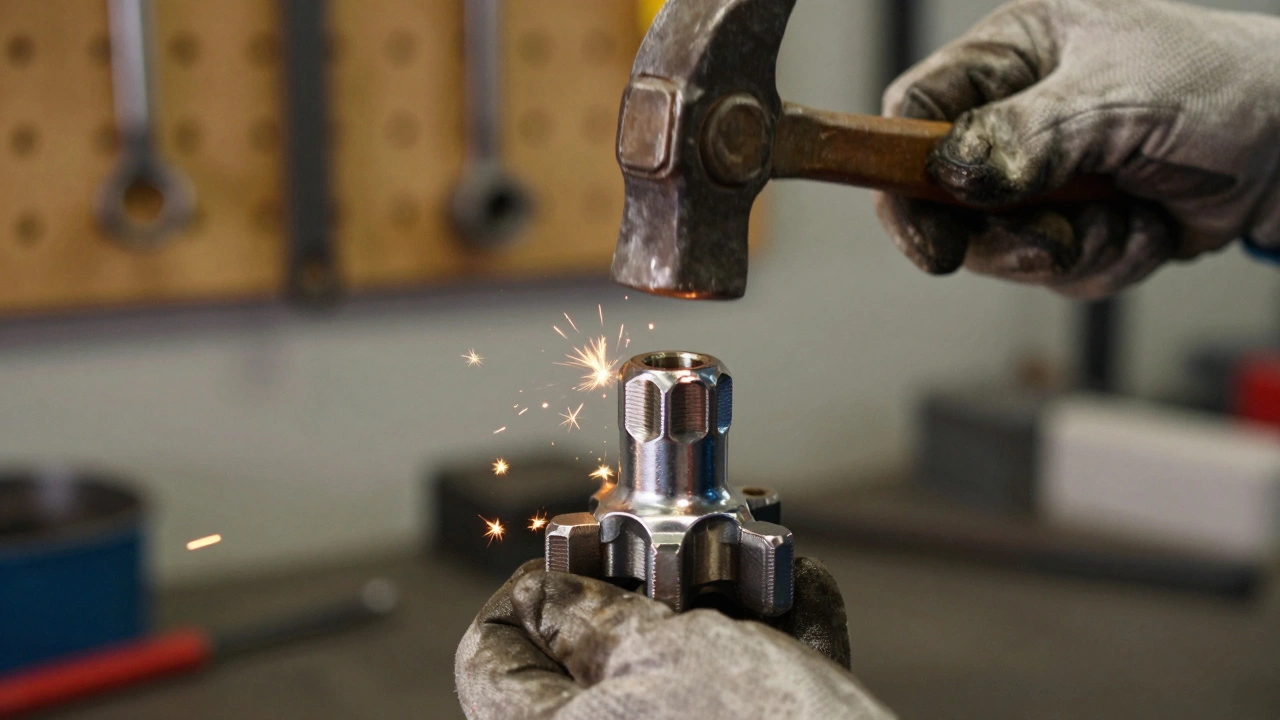
- Hammer it on: Place the smaller socket over the locking nut. Using a hammer, strike the end of the socket firmly several times. You are trying to deform the soft steel of the socket so it bites into the harder steel of the lock. It should fit tightly now.
- Break the tension: Attach a breaker bar or long ratchet to the socket. Give it a sharp, hard strike with the hammer in the counter-clockwise direction to break the rust bond.
- Unscrew: Once loose, unscrew the lock completely by hand or with steady pressure on the ratchet.
Warning: The socket is likely ruined after this. That is why we call it "sacrificial." Do not reuse it for torque specs later. Also, be careful not to hit the wheel rim with the hammer; place a rag between the hammer head and the socket if needed to protect your finish.
Universal Wheel Lock Extractor Kits
If the sacrificial socket method fails, or if you want a cleaner approach, invest in a wheel lock extractor kit. These are purpose-built tools available at auto parts stores like AutoZone, O'Reilly, or online retailers. They typically cost between $20 and $50.
These kits usually contain a set of fluted sockets or reverse-threaded extractors. The design is similar to an "easy-out" screw extractor. As you turn the socket counter-clockwise, the internal flutes dig deeper into the exterior of the locking nut, gripping it tighter the more resistance you meet.
| Method | Cost | Skill Level | Risk to Wheel |
|---|---|---|---|
| Sacrificial Socket | $0 - $10 (if you own sockets) | Low | Low (with care) |
| Extractor Kit | $20 - $50 | Medium | Very Low |
| Grinding Flats | $0 (if you own grinder) | High | Medium (sparks/debris) |
| Welding Nut On | Free (if you own welder) | Expert | High (heat damage) |
| Drilling Out | $0 - $10 | Medium | High (stud damage risk) |
When buying a kit, check the size range. Some cheap kits only go up to 1-inch diameter, which might be too small for larger truck or SUV wheel locks. Look for kits that specify they work on M12 x 1.5 threads (the most common automotive thread pitch) and include adapters for various driver sizes.
Mechanical Improvisation: Grinding and Grips
If you don't have a socket or an extractor kit, you can create your own grip using basic tools. This requires more effort and carries a higher risk of damaging the wheel's cosmetic finish.
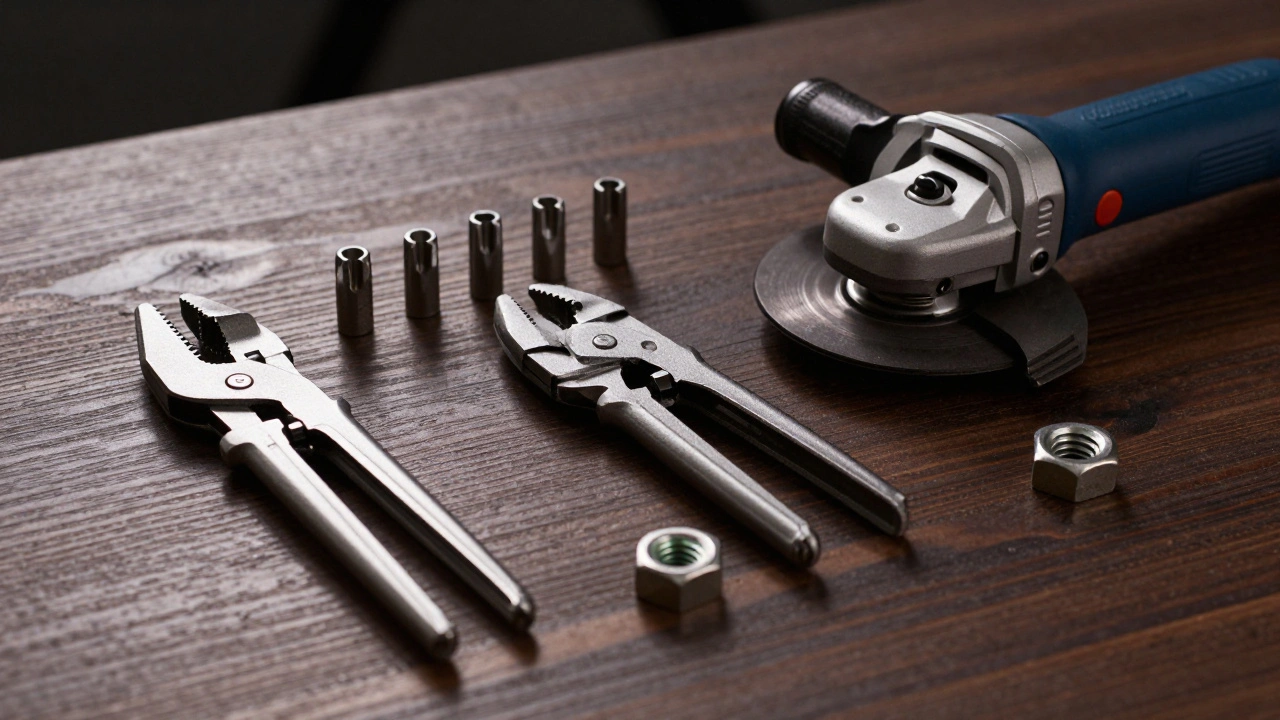
Vise-Grips: Some people try using locking pliers (vise-grips). Tighten them onto the lock as hard as possible. To get enough leverage, slide a pipe over the handles to act as a cheater bar. This often slips because the lock surface is rounded or hardened. It is worth a quick try, but don't rely on it if the grips won't hold tight.
Grinding Flats: A more reliable improvisation is using an angle grinder with a cutting disc. Carefully grind two flat sides onto opposite edges of the locking nut. Once you have created a makeshift hex shape, you can use a heavy-duty open-end wrench or channel-lock pliers to turn it off. Be very careful to mask off the wheel rim with tape to prevent sparks from scoring the metal.
Cold Chisel: An old-school mechanic trick involves placing a cold chisel against the edge of the lock at a slight angle and striking it with a hammer to rotate it counter-clockwise. This is slow and risky. One slip can gouge your wheel deeply. Only attempt this if you have no other options and are comfortable with hand tools.
Advanced Methods: Welding and Drilling
For those with access to a workshop and advanced tools, welding or drilling offers definitive solutions, but they come with significant caveats.
Welding a Nut On: If you have a MIG or stick welder, you can weld a standard hex nut directly onto the face of the locking wheel nut. Use a nut that is slightly larger than the lock to ensure a strong bond. After welding, let it cool, then use a standard socket to remove the assembly. Pro tip: Weld inside the nut rather than around the outside to minimize spatter on your wheel. Heat can discolor clear-coated alloys, so this is best done in a shop where you can polish the wheel afterward.
Drilling Out: This is the nuclear option. You drill through the center of the locking nut until it shatters or comes apart. This destroys the lock permanently. You must be extremely precise to avoid drilling into the wheel stud or the hub bearing. Misalignment here can ruin your wheel assembly entirely. Most experts advise against this unless the lock is already stripped and unturnable by any other means.
Pro Tips for Success
Before you start banging on your wheel, follow these steps to increase your chances of success and reduce stress on the hardware:
- Tighten the other nuts first: Ensure all non-locking lug nuts are tightened properly. This compresses the wheel evenly against the hub, relieving some clamping force on the single locking nut.
- Shock the threads: Give the locking nut a sharp tap with a hammer before applying turning force. This helps break rust bonds and vibrates the threads loose.
- Relieve vertical load: Jack the wheel up just enough so it lifts slightly off the ground. Even a fraction of an inch reduces the downward pressure holding the nut in place.
- Protect your eyes: Whether you are hammering, grinding, or drilling, metal shards fly. Wear safety glasses.
If one method starts rounding off the lock or failing after a few attempts, stop. Switch techniques immediately. Continuing to hammer a slipping socket will only make the next step harder.
How to Prevent This Next Time
Once you get the wheel off, replace the locking nuts with standard ones if theft isn't a major concern in your area. If you keep the locks, store the key in multiple places: one in the car's emergency kit, one in your home toolbox, and perhaps taped inside the gas cap door or under the spare tire well (hidden from plain sight).
Also, consider upgrading to high-quality locks that include a second key or a digital code system, though these are less common. The simplest rule is: treat your wheel lock key like your house keys. Don't leave it in the ignition or toss it loosely in the glove box where it can roll away during a bump.
Can I remove a wheel lock without a key using a standard socket?
No, a standard socket will not fit the unique pattern of a locking wheel nut. However, you can use a slightly undersized 12-point socket and hammer it onto the lock to create a temporary grip, effectively sacrificing the socket to remove the lock.
How much does it cost to have a locksmith remove a wheel lock?
Prices vary by location, but typically range from $50 to $150 per wheel. Mobile locksmiths may charge extra for travel fees. Tire shops might offer lower rates if you are purchasing new tires or services.
Will drilling out a wheel lock damage my car?
Yes, there is a high risk. If the drill bit slips, it can damage the wheel stud, the hub, or the brake rotor. It can also scratch the wheel finish. Drilling should only be attempted by experienced individuals as a last resort.
Where is the code for my wheel lock key usually located?
The code is typically printed on the plastic sleeve that holds the key, on the original packaging, or sometimes etched into the metal body of the key itself. Check your vehicle's glove box or owner's manual folder for these documents.
Can I use vise-grips to remove a wheel lock?
It is possible but difficult. Vise-grips often slip on the rounded surfaces of wheel locks. If you try this, tighten them extremely hard and use a pipe extension for leverage, but be prepared for it to fail and potentially round off the lock further.