
When you’re driving through Dubai’s wide, smooth highways and sun-baked city streets, every turn, every lane change, every sudden brake feels different depending on what’s under your car. That’s where low-profile tires come into play. They’re the go-to choice for many who want that sharp, responsive feel - the kind that makes a sports car feel like it’s reading your mind. But here’s the catch: that same tire that hugs the corner like glue can turn every pothole, crack, or dust patch into a jarring punch to your spine.
What Makes Low-Profile Tires Different
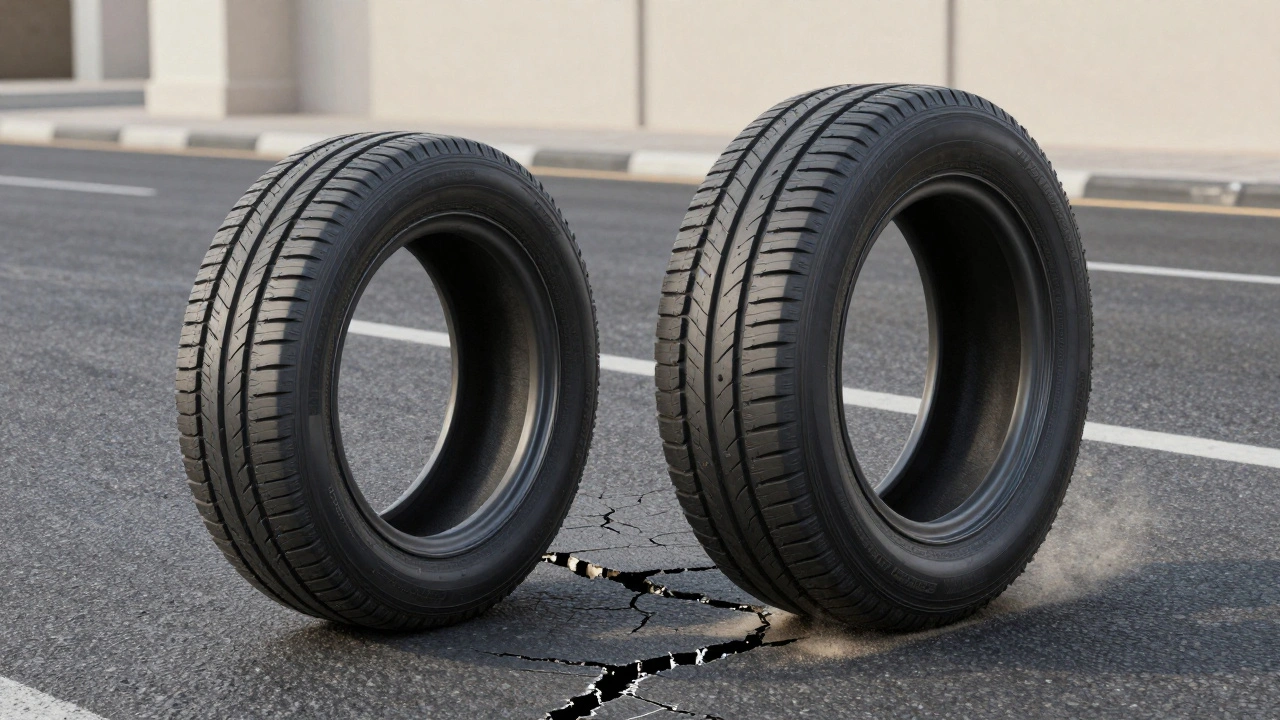
Low-profile tires are defined by their short sidewall - the part of the tire between the rim and the road. If your tire has an aspect ratio of 40 or lower (like a 225/40R18), you’re looking at a low-profile tire. These tires pair with larger wheels, often 18 inches or more, to keep the overall diameter the same. The result? A wider tread and a stiffer sidewall.
This design isn’t just for looks. It’s built for control. The shorter sidewall doesn’t flex as much when you turn, so your steering input translates faster. The wider contact patch grips the road better, especially during hard cornering. On a dry, clean road - like most of Dubai’s urban highways - this means quicker response, less body roll, and tighter handling. It’s why performance cars like the Porsche 911, BMW M3, or even modified sedans here in Dubai are almost always fitted with them.
Handling Advantages on Dubai’s Roads
Dubai’s roads are mostly smooth, well-maintained, and built for speed. With temperatures often hitting 45°C in summer, the asphalt stays hard and grippy. That’s perfect for low-profile tires. Their stiff construction and wide tread create maximum contact with the road surface. Studies show they can reduce braking distances by up to 8% on dry pavement compared to standard tires with taller sidewalls.
When you’re merging onto Sheikh Zayed Road at 120 km/h or carving through the curves near Jumeirah Beach, the difference is clear. There’s no mushy feeling. No delay between turning the wheel and the car responding. You feel every nuance of the road - and that’s the point. For drivers who enjoy spirited driving, this direct connection is worth it.
Also, the aesthetic matters. Low-profile tires look aggressive. They fill the wheel wells, give the car a planted stance, and match the modern design language of luxury and performance vehicles. In Dubai, where image is part of the driving experience, that visual appeal is a real factor.
The Ride Comfort Trade-Off
But here’s where things get uncomfortable - literally. The same stiff sidewall that improves handling does nothing to absorb bumps. On Dubai’s older neighborhoods, construction zones, or even just a poorly patched stretch of road, low-profile tires transmit every imperfection straight into the cabin.
Think about it: a pothole that a standard tire might roll over with a soft thud? On a low-profile tire, it’s a sharp clang. A cracked pavement joint? You feel it through the steering wheel. Even dust patches or minor road seams can cause noticeable vibrations. Many drivers report waking up after a long drive with sore shoulders or a stiff lower back - not from driving too long, but from the constant pounding.
And it’s not just the ride. Noise levels go up. With less rubber between the rim and the road, there’s no cushion to dampen the sound of tire tread hitting pavement. On Dubai’s wide highways, you’ll hear more road hum - especially at 100+ km/h. It’s not loud, but it’s constant. And constant noise = mental fatigue.
Damage Risk on Real-World Dubai Roads
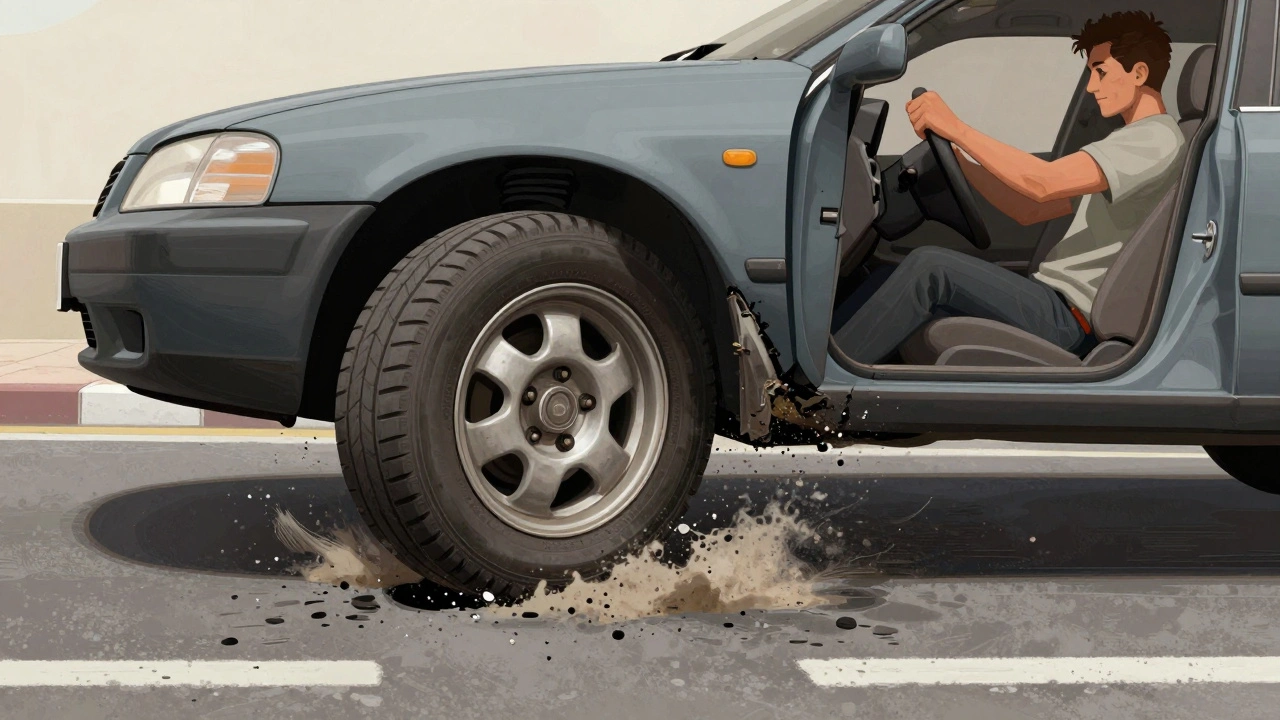
Here’s a hidden danger most people overlook: curb damage and rim cracks. Low-profile tires leave very little room for error. A slight misjudgment pulling into a parking spot, a curb that’s slightly higher than expected, or even a sudden bump from a loose manhole cover can crack your rim - and that’s expensive to fix.
While Dubai’s main roads are well-kept, side streets, parking lots, and construction areas aren’t always smooth. A single impact can cost $800-$2,000 just to replace a rim, not even counting the tire. And because low-profile tires are thinner, they’re more prone to sidewall cuts from sharp debris. Dust and sand don’t wear tires down faster, but they can get trapped between the tire and rim, accelerating corrosion over time.
Cost and Long-Term Wear
Low-profile tires aren’t just pricier upfront - they cost more over time. A set of premium low-profile tires for a mid-size sedan can run $1,200-$1,800. Compare that to $700-$1,000 for standard tires. And they wear out faster. The wider tread and harder compound designed for grip also mean they degrade quicker under heavy use. In Dubai’s heat, rubber breaks down faster anyway. Add aggressive driving, and you might be replacing them every 25,000-30,000 km instead of 40,000+ km.
Also, replacement options are limited. Not every shop stocks low-profile sizes. If you get a flat in Al Quoz or Deira, you might be waiting hours for a specialized tire to be delivered. Standard tires? You can find them anywhere.
Who Should Use Low-Profile Tires in Dubai?
If you drive a performance car, love the feel of precise steering, and stick mostly to highways and smooth city roads - go for it. You’ll enjoy the grip, the look, and the confidence in high-speed corners.
But if your daily drive includes:
- Commutes through older neighborhoods with rough patches
- Weekend family trips with kids in the back
- Driving during early morning or late night when road conditions are less predictable
- Or you just want a quiet, smooth ride without constant vibration
-then you’re better off with a tire that has a taller sidewall. Look for tires with an aspect ratio of 50-60. They’ll still look good on 17- or 18-inch wheels, offer plenty of grip, and absorb bumps like a champ.
The Middle Ground: Performance All-Season Tires
You don’t have to choose between comfort and handling. Modern performance all-season tires - like the Michelin Pilot Sport 4, Continental ExtremeContact Sport, or Bridgestone Potenza RE050A - are designed to strike a balance. They have stiffer sidewalls than regular tires but still offer enough cushioning to handle Dubai’s rougher patches. They’re quieter, more durable, and still deliver sharp handling.
These tires are becoming the smart choice for Dubai drivers who want sporty performance without the daily punishment. They’re not as extreme as ultra-low-profile tires, but they give you 80% of the benefits with only 30% of the downsides.
Final Verdict: It’s About Your Priorities
Low-profile tires aren’t right or wrong - they’re just a trade-off. They give you razor-sharp handling and a bold look, but at the cost of comfort, noise, durability, and price. In Dubai’s dry, smooth environment, they perform well. But if your life includes potholes, long commutes, or just the simple desire to arrive at your destination without aching, they might not be worth it.
Ask yourself: Do I drive for the thrill - or the peace? If it’s the thrill, go low-profile. If it’s the peace, stick with something a little taller. Either way, make sure your tires match your driving life - not just your Instagram feed.
Are low-profile tires better for Dubai’s hot climate?
Yes, in dry heat, low-profile tires perform better because the asphalt stays hard and grippy, maximizing their wide tread contact. The stiff sidewalls don’t soften or deform under high temperatures like taller sidewalls might. But heat does accelerate tire wear, so they’ll degrade faster than in cooler climates. Regular inspections and proper inflation are critical.
Do low-profile tires increase the risk of blowouts in Dubai?
Not directly. Blowouts are usually caused by underinflation, impact damage, or worn tread. Low-profile tires are more vulnerable to rim damage from potholes or curbs, which can lead to slow leaks or sudden air loss. But if you avoid road hazards and keep pressure at the manufacturer’s recommendation, blowout risk is no higher than with standard tires.
Can I use low-profile tires year-round in Dubai?
Absolutely. Dubai has no snow or freezing temperatures, so winter tires aren’t needed. Performance all-season or summer tires with low profiles are ideal. Just avoid using ultra-soft compound tires meant for track use - they’ll wear out too fast on regular roads.
How often should I rotate low-profile tires in Dubai?
Every 8,000-10,000 km. Because of their wider tread and performance focus, low-profile tires often wear unevenly, especially if you drive aggressively. Front tires on rear-wheel-drive cars wear faster. Regular rotation helps extend life and maintain even grip.
Is it worth upgrading to low-profile tires on a regular sedan?
Only if you’re willing to accept the trade-offs. A regular sedan with low-profile tires won’t suddenly handle like a sports car. The suspension isn’t designed for it. You’ll get a harsher ride, more noise, and higher costs - with little real performance gain. Stick with OEM tire sizes unless you’ve upgraded the suspension too.